
An administrator is troubleshooting a pilot deployment and wants the most appropriate next step. For IBM Certified watsonx Data Lakehouse Engineer, the topic is SQL access. What should the team do?
Select an answer to reveal the explanation.
Short Explanation and Infographic
Here's the deal: the consumption layer in watsonx.data is designed around governed access — BI tools connect through supported JDBC/ODBC drivers, and data scientists work through JupyterLab or the API, all routing through Presto's query engine against governed Iceberg tables. Letting users query raw files directly bypasses the governance layer and defeats the entire reason you built a lakehouse instead of a shared network drive. Guide users to the supported path, every time.
Full explanation below image
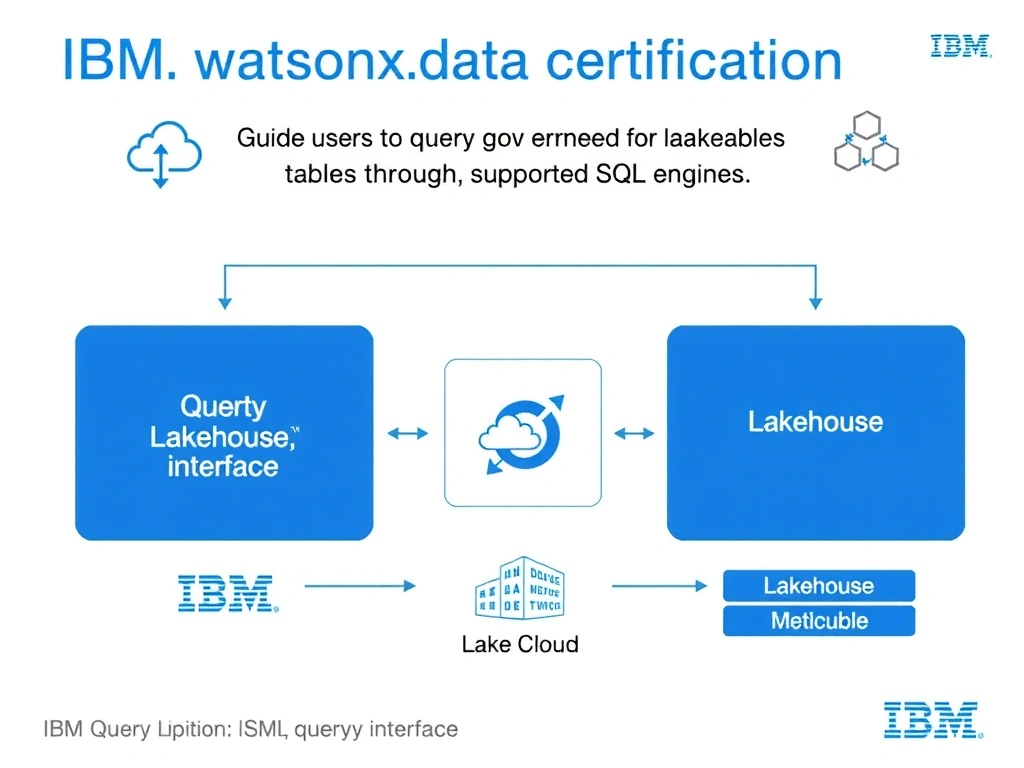
Full Explanation
The correct answer is option A: Guide users to query governed lakehouse tables through supported SQL engines and interfaces.. This aligns with IBM's Data consumption and analytics guidance, which emphasizes guide users to query governed lakehouse tables through supported sql engines and interfaces as the recommended approach for production deployments. Option B (Tell users to download raw object files) is incorrect because it either bypasses IBM's recommended architecture or introduces operational risk that the correct approach is specifically designed to avoid. Option C (Require application teams to bypass metadata catalogs) is incorrect because it either bypasses IBM's recommended architecture or introduces operational risk that the correct approach is specifically designed to avoid. Option D (Use only screenshots for data delivery) is incorrect because it either bypasses IBM's recommended architecture or introduces operational risk that the correct approach is specifically designed to avoid. Understanding this distinction is critical for the C9007300 exam: IBM watsonx.data is designed to enforce governance, performance, and operational best practices through its built-in architecture, and the correct answers consistently reflect those architectural constraints rather than shortcut alternatives.