
A project lead is turning a proof of concept into a governed production workflow. For IBM Certified watsonx Data Lakehouse Engineer, the topic is watsonx.data components. What should the team do?
Select an answer to reveal the explanation.
Short Explanation and Infographic
Here's the deal: watsonx.data's architecture is the whole package — object storage for low-cost scale, open table formats (Iceberg) for ACID transactions, query engines for compute, a metadata catalog for governance, and workload management to keep it all running. You can't optimize just one layer and call it a lakehouse; the value comes from coordinating all five components under a unified governance model. The exam tests whether you can see the whole picture, not just one piece.
Full explanation below image
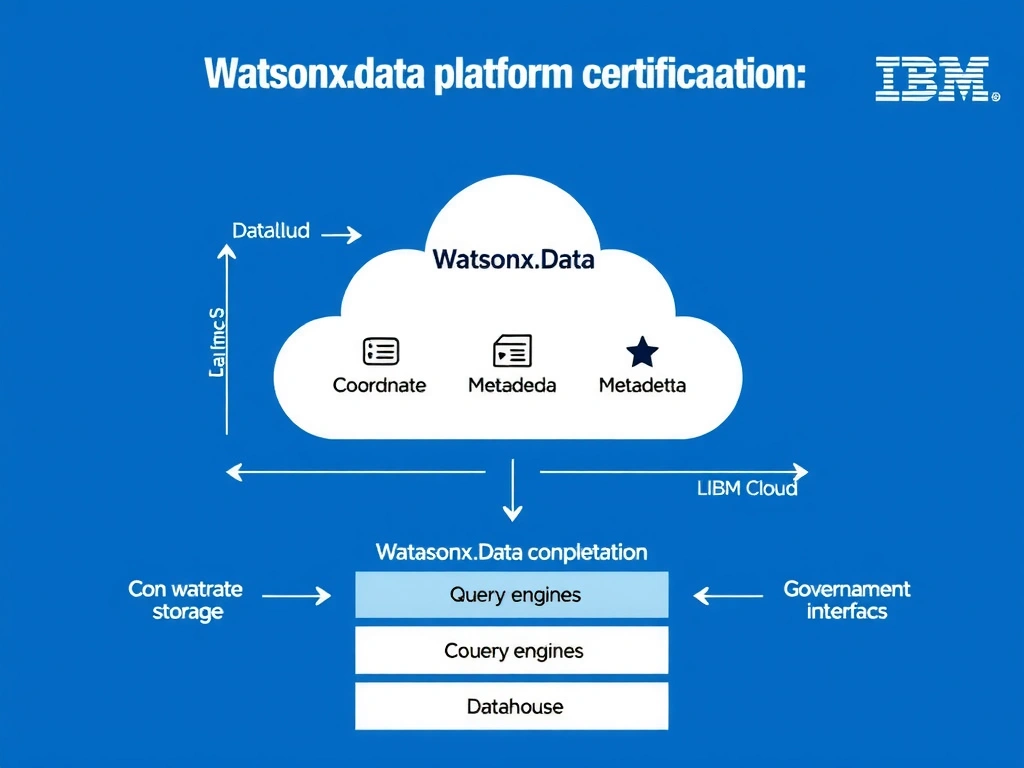
Full Explanation
The correct answer is option B: Coordinate storage, metadata, query engines, governance, and management interfaces as parts of one platform.. This aligns with IBM's IBM watsonx.data platform architecture guidance, which emphasizes coordinate storage, metadata, query engines, governance, and management interfaces as parts of one platform as the recommended approach for production deployments. Option A (Treat the query workspace as the only component) is incorrect because it either bypasses IBM's recommended architecture or introduces operational risk that the correct approach is specifically designed to avoid. Option C (Manage access only in external BI tools) is incorrect because it either bypasses IBM's recommended architecture or introduces operational risk that the correct approach is specifically designed to avoid. Option D (Put all metadata in user spreadsheets) is incorrect because it either bypasses IBM's recommended architecture or introduces operational risk that the correct approach is specifically designed to avoid. Understanding this distinction is critical for the C9007300 exam: IBM watsonx.data is designed to enforce governance, performance, and operational best practices through its built-in architecture, and the correct answers consistently reflect those architectural constraints rather than shortcut alternatives.