
A team is preparing a production rollout and needs to avoid a design mistake. What is the best way to handle data tiering while staying aligned with the certification objectives?
Select an answer to reveal the explanation.
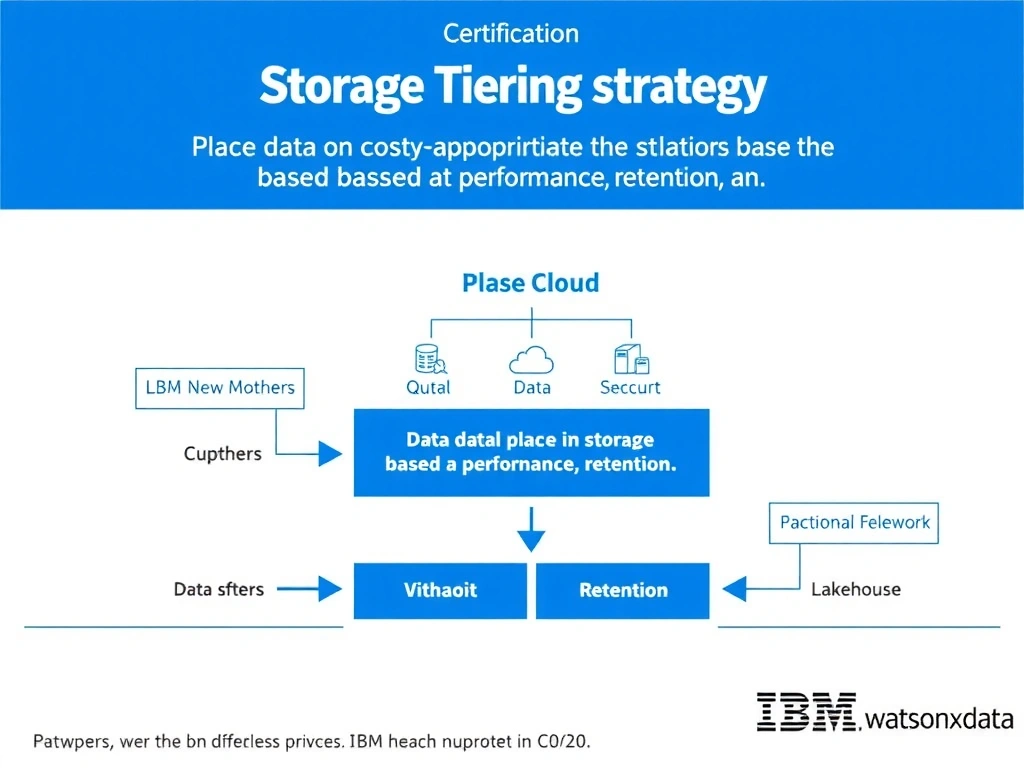
Short Explanation and Infographic
Here's the deal: hot storage costs money, and cold storage trades cost for latency — the right answer is always to match data to the tier that fits its access pattern. Frequently queried operational data belongs on fast storage; historical data that gets hit once a quarter belongs on the cheap tier. Keeping everything on the fastest tier is like running the AC in every room of a hotel whether the room is occupied or not — technically possible, wildly expensive.
Full explanation below image
Full Explanation
The correct answer is option C: Place data on cost-appropriate storage tiers based on performance, retention, and access patterns.. This aligns with IBM's Data lakehouse fundamentals guidance, which emphasizes place data on cost-appropriate storage tiers based on performance, retention, and access patterns as the recommended approach for production deployments. Option A (Keep all historical data on the fastest tier) is incorrect because it either bypasses IBM's recommended architecture or introduces operational risk that the correct approach is specifically designed to avoid. Option B (Archive active query data to cold storage) is incorrect because it either bypasses IBM's recommended architecture or introduces operational risk that the correct approach is specifically designed to avoid. Option D (Choose tiers only by file extension) is incorrect because it either bypasses IBM's recommended architecture or introduces operational risk that the correct approach is specifically designed to avoid. Understanding this distinction is critical for the C9007300 exam: IBM watsonx.data is designed to enforce governance, performance, and operational best practices through its built-in architecture, and the correct answers consistently reflect those architectural constraints rather than shortcut alternatives.