
A senior engineer reviews the current plan and notices that one key control is missing. What is the best way to handle ingestion design while staying aligned with the certification objectives?
Select an answer to reveal the explanation.
Short Explanation and Infographic
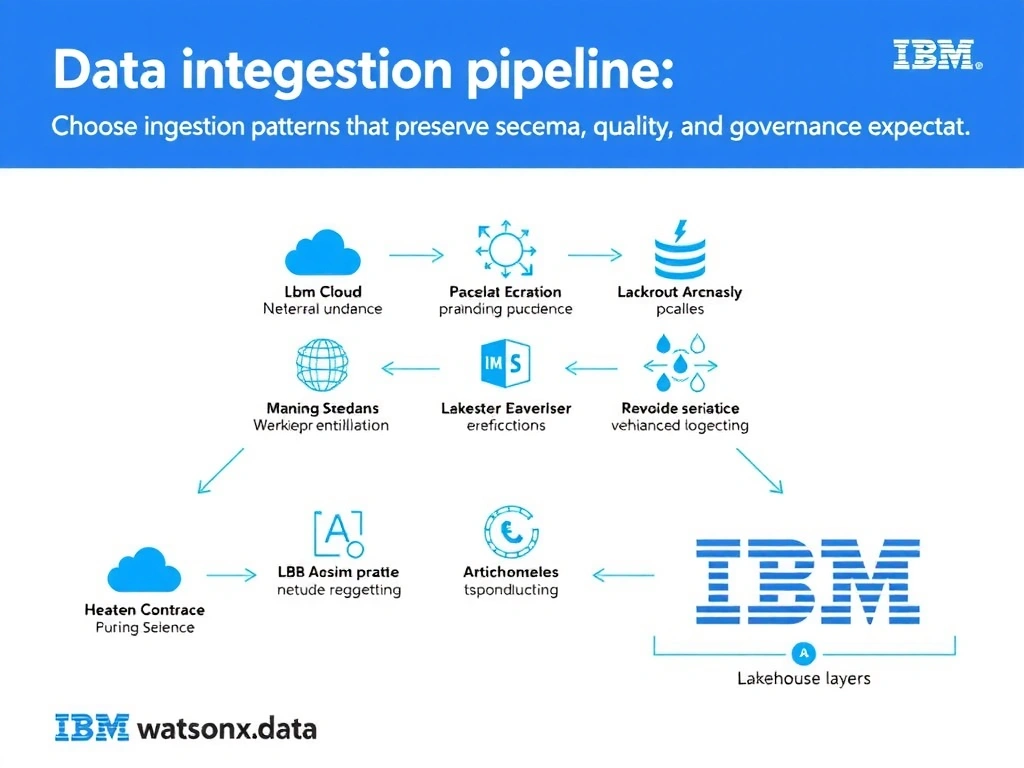
Here's the deal: ingestion without schema validation is like accepting a shipment without checking the manifest — you'll discover the problem after the data is already sitting in production tables. IBM's guidance is clear: preserve schema, enforce quality checks, and capture governance metadata at ingest time so downstream consumers can trust what they query. Skipping those steps doesn't save time; it creates debugging sessions at 2 a.m.
Full explanation below image
Full Explanation
The correct answer is option B: Choose ingestion patterns that preserve schema, quality, and governance expectations.. This aligns with IBM's Data integration patterns guidance, which emphasizes choose ingestion patterns that preserve schema, quality, and governance expectations as the recommended approach for production deployments. Option A (Load data without validating structure) is incorrect because it either bypasses IBM's recommended architecture or introduces operational risk that the correct approach is specifically designed to avoid. Option C (Skip metadata capture until after production) is incorrect because it either bypasses IBM's recommended architecture or introduces operational risk that the correct approach is specifically designed to avoid. Option D (Ingest only final dashboard aggregates) is incorrect because it either bypasses IBM's recommended architecture or introduces operational risk that the correct approach is specifically designed to avoid. Understanding this distinction is critical for the C9007300 exam: IBM watsonx.data is designed to enforce governance, performance, and operational best practices through its built-in architecture, and the correct answers consistently reflect those architectural constraints rather than shortcut alternatives.