
After a major deployment, the watsonx Assistant Analytics dashboard shows a containment rate of 82%. Your VP asks what improvement this represents. Which interpretation is accurate?
Select an answer to reveal the explanation.
Short Explanation and Infographic
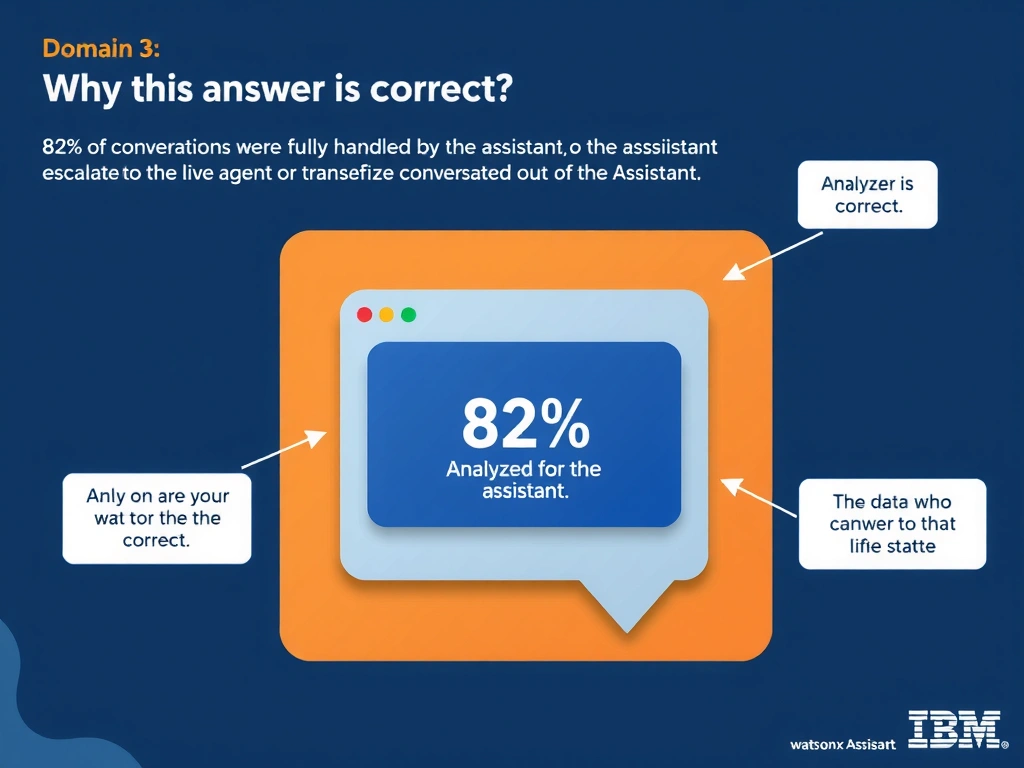
Todd Lammle: 'Imagine you're building a chatbot and this exact situation comes up — 82% of conversations were fully handled by the assistant without being escalated to a live agent or transferred out of the assistant is your go-to move. Containment rate measures the percentage of conversations that the assistant resolved autonomously, without routing to a human agent. This is a classic Domain 3: Analyze and Improve the Assistant concept you'll want locked in before exam day.'
Full explanation below image
Full Explanation
Containment rate measures the percentage of conversations that the assistant resolved autonomously, without routing to a human agent. A higher containment rate indicates greater self-service effectiveness. It is not a measure of confidence thresholds, node completion rates, or repeat user behavior. The correct answer, "82% of conversations were fully handled by the assistant without being escalated to a live agent or transferred out of the assistant", directly satisfies the scenario because it aligns with watsonx Assistant's design principles and the specific capability being tested. The incorrect options ("82% of intents were matched with a confidence score above the configured threshold", "82% of conversation paths reached a designated successful endpoint node", "82% of users returned to use the assistant for a second session within 30 days") may appear relevant but each misses a key requirement or introduces a step that is either unnecessary or belongs to a different workflow. Mastering the distinction between these approaches is essential for effective watsonx Assistant implementations and is a core focus of the Domain 3: Analyze and Improve the Assistant section of the certification exam.