
A project manager reviews the watsonx Assistant Analytics dashboard and sees a Coverage metric of 65%. A stakeholder asks what this figure represents. Which explanation is correct?
Select an answer to reveal the explanation.
Short Explanation and Infographic
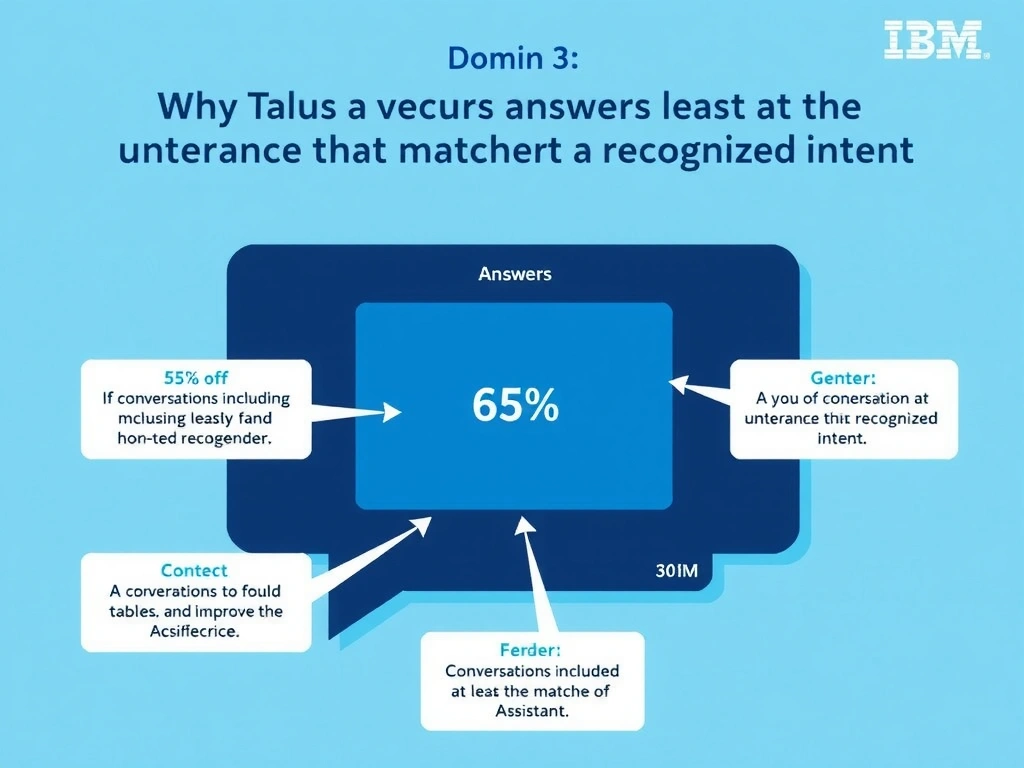
Todd Lammle: 'Imagine you're building a chatbot and this exact situation comes up — 65% of conversations included at least one utterance that matched a recognized intent is your go-to move. Coverage measures the percentage of conversations in which the assistant recognized at least one user intent. This is a classic Domain 3: Analyze and Improve the Assistant concept you'll want locked in before exam day.'
Full explanation below image
Full Explanation
Coverage measures the percentage of conversations in which the assistant recognized at least one user intent. A higher coverage indicates that the assistant successfully matches more user inputs to defined intents rather than falling through to the 'Anything else' handler. It does not reflect node visits, training accuracy, or satisfaction scores. The correct answer, "65% of conversations included at least one utterance that matched a recognized intent", directly satisfies the scenario because it aligns with watsonx Assistant's design principles and the specific capability being tested. The incorrect options ("65% of dialog nodes were visited at least once during user conversations", "65% of training examples were correctly classified during the most recent model training run", "65% of user sessions ended with a positive satisfaction rating") may appear relevant but each misses a key requirement or introduces a step that is either unnecessary or belongs to a different workflow. Mastering the distinction between these approaches is essential for effective watsonx Assistant implementations and is a core focus of the Domain 3: Analyze and Improve the Assistant section of the certification exam.