
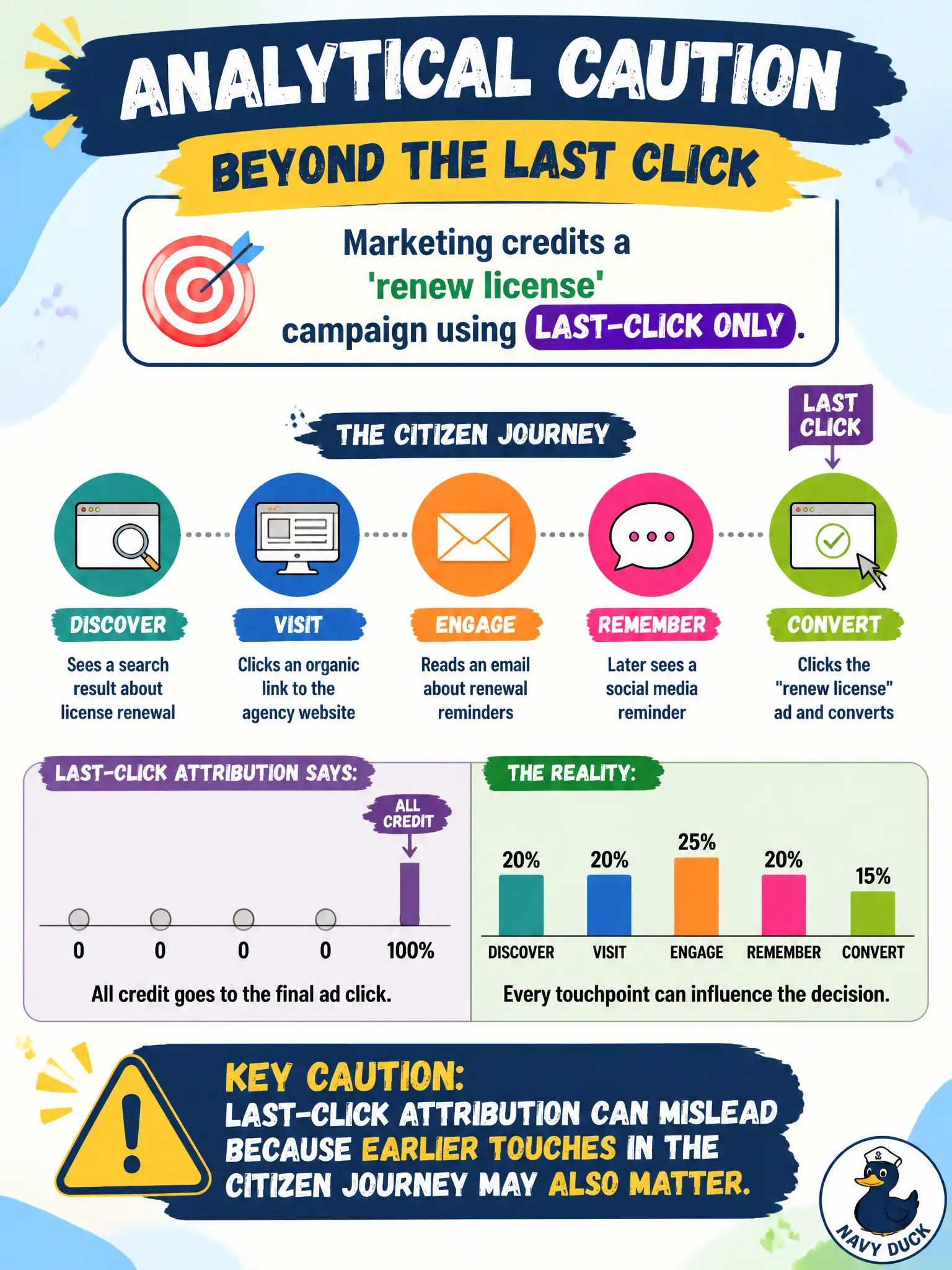
Marketing credits a 'renew license' campaign using last-click only. What analytical caution should the web analyzer’s consumers remember?
Select an answer to reveal the explanation.
Short Explanation
Last click is the teammate who scored—but someone else may have passed the ball. Civic journeys often include reminders, emails, and earlier visits before the renew button. Treat last-click dashboards as a clue, not the whole courtroom verdict.
Full Explanation
Last-click attribution can mislead because earlier touches in the citizen journey—reminders, emails, prior visits—may also matter before a ‘renew license’ success. Web-analyzer consumers should treat last-click dashboards as a clue, not courtroom proof of sole causation. Cap. 10 literacy includes humility about attribution on civic journeys where public communications are multi-step.
Last-click credit is not always complete proof of every cause of renewal success. Attribution models are not unnecessary merely because portals have multiple pages; journeys still involve sequences and campaigns. Ignoring all campaign tags does not improve causal certainty—it removes evidence needed for any careful model of municipal outreach.
Exam caveat: public-sector ethics may limit aggressive tracking even when commercial attribution wants more identifiers; prefer aggregated, privacy-aware methods. Operational check: for a renewal cohort, compare last-click campaign share to a simple multi-touch report of assisted paths and present both to marketing with explicit caveats. Document the verified decision in the municipal architecture runbook so future on-call and audit staff inherit the same standard. Document the verified decision in the municipal architecture runbook so future on-call and audit staff inherit the same standard.