
A transit mobile app shows screens that behave like portal pages for analytics purposes. How should the city reuse its web-analyzer patterns?
Select an answer to reveal the explanation.
Short Explanation
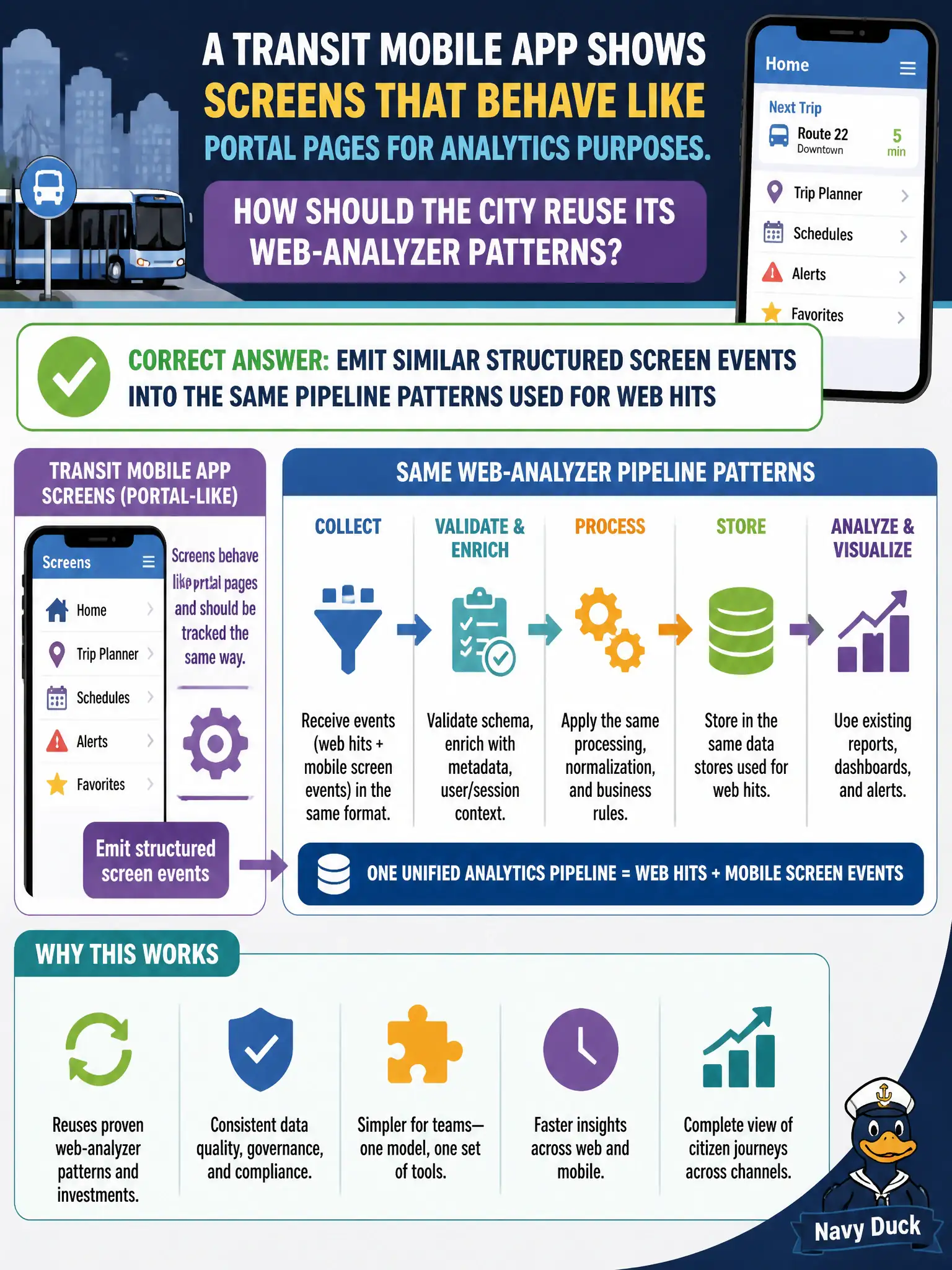
A screen in the transit app is just a page wearing a different jacket. Emit the same style of events—ids, timestamps, steps—into the pipelines you already trust. Web-analyzer patterns travel fine to mobile when the event model stays coherent.
Full Explanation
Transit mobile app screens that behave like portal pages should emit similar structured screen events into the same pipeline patterns used for web hits. Reusing Cap. 10 analyzer patterns on mobile keeps schemas, sessions, and funnels coherent across channels. The event model travels even when the client jacket changes from HTML to app screens for municipal services.
Inventing an unrelated batch-only process that never shares schemas or topics with web guarantees duplicated effort and incomparable metrics. Refusing mobile telemetry because Cap. 10 patterns supposedly apply only to desktop HTML files misreads the chapter’s applied architecture. Storing mobile screenshots alone without event fields, sessions, or funnels cannot power journey analytics.
Exam caveat: mobile identifiers, offline buffering, and permission prompts differ from web cookies—reuse patterns carefully without copying unsafe identity practices. Operational check: complete a mobile task that mirrors a web funnel step, confirm parallel event fields land on the shared pipeline, and compare mobile versus web completion in one governed dashboard. Document the verified decision in the municipal architecture runbook so future on-call and audit staff inherit the same standard.