
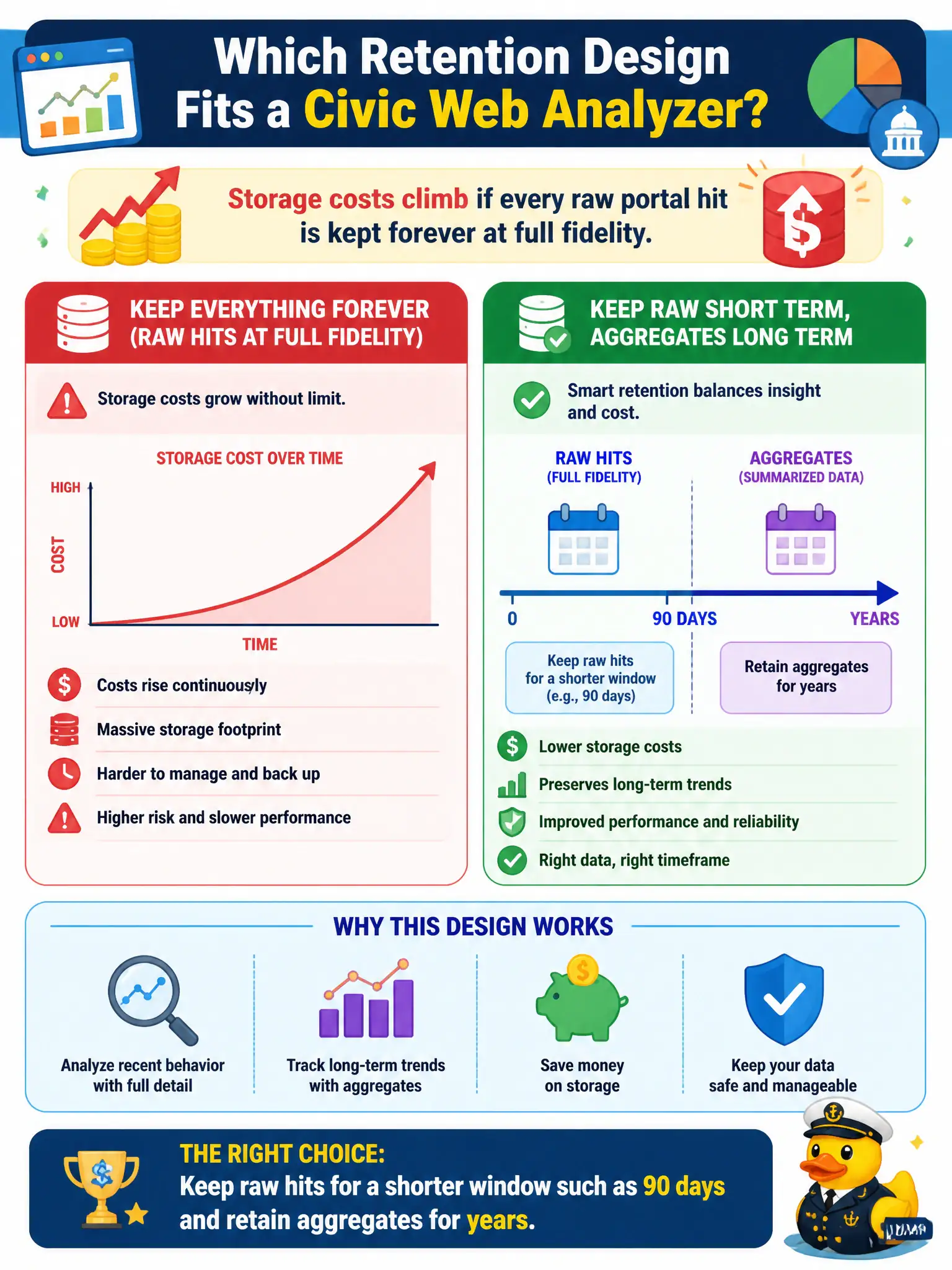
Storage costs climb if every raw portal hit is kept forever at full fidelity. Which retention design fits a civic web analyzer?
Select an answer to reveal the explanation.
Short Explanation
Raw hits are heavy groceries; aggregates are the frozen meals you keep. Hold detailed clickstream for a bounded window, roll up the stats that executives still need years later. That tiered retention keeps the analyzer useful without buying infinite disks.
Full Explanation
Keep raw portal hits for a shorter window such as 90 days and retain aggregates for years to control storage cost while preserving executive history. Tiered retention fits civic web analyzers that would otherwise drown in full-fidelity clickstream forever. Volume management is part of Cap. 10 operations, not only Cap. 3 theory for municipal lakes.
Deleting aggregates nightly while keeping every raw hit forever inverts the cost-value tradeoff and harms long-term reporting. Storing nothing beyond seven minutes because dashboards never need history is false for municipal trend and accountability uses. Duplicating raw hits into citizen-facing open data without aggregation or redaction creates privacy and volume problems.
Exam caveat: retention windows must align with legal holds and audit requirements—some investigations need raw events longer than the default UX window. Operational check: confirm lifecycle rules expire raw hits after the published window, verify yearly aggregates remain queryable, and document a legal-hold override path that pauses deletion when required. Document the verified decision in the municipal architecture runbook so future on-call and audit staff inherit the same standard.