
Parks, libraries, and the main city site all need analytics without mixing their data incorrectly. What architecture approach fits?
Select an answer to reveal the explanation.
Short Explanation
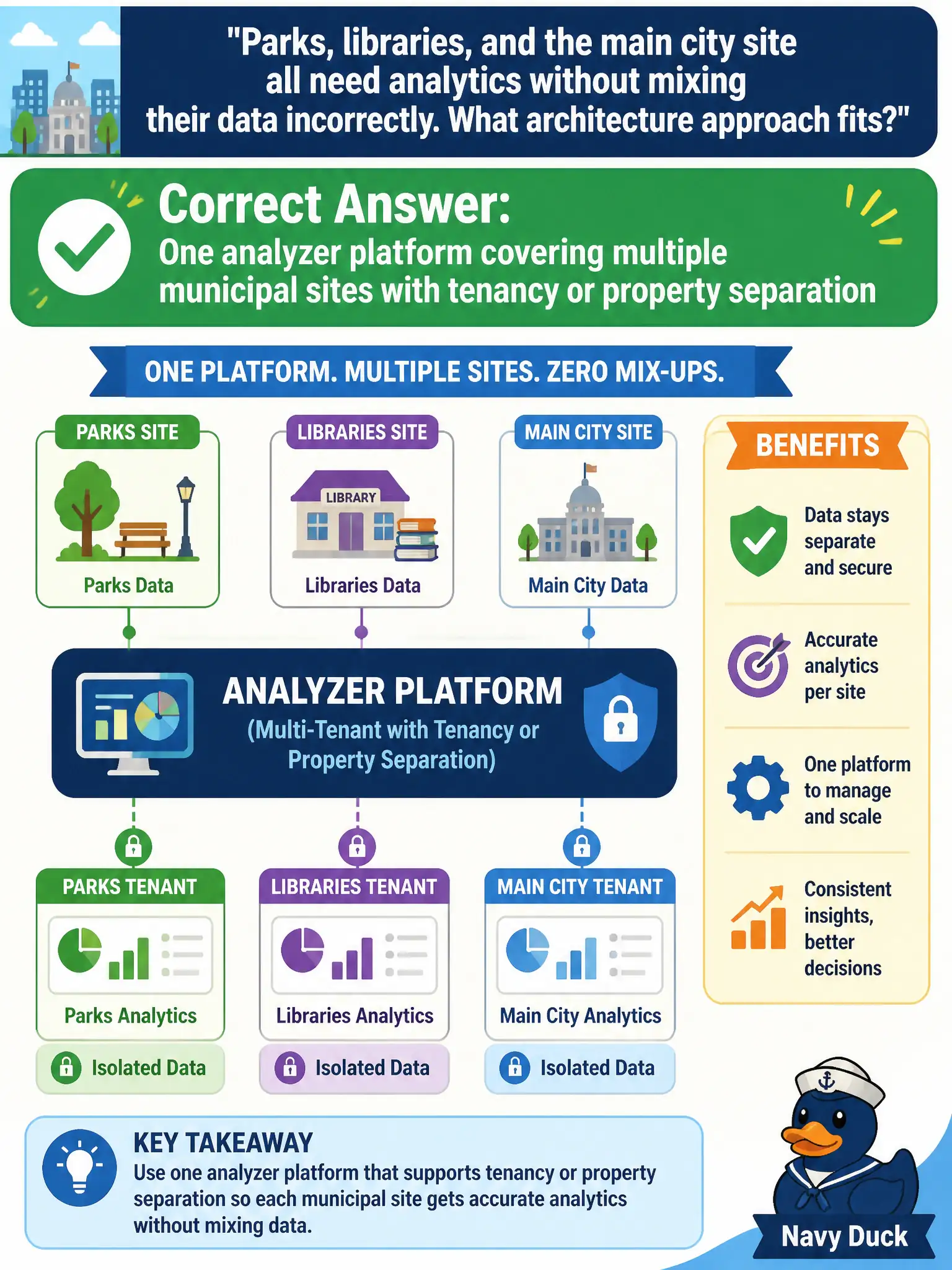
Cities run a portfolio of sites, not one lonely homepage. One analyzer platform with tenancy—or clear property IDs—lets parks, libraries, and the main portal share plumbing without scrambling the scoreboard. Shared platform, separated stories.
Full Explanation
One analyzer platform with tenancy—or clear property IDs—lets parks, libraries, and the main portal share plumbing without scrambling each site’s scoreboard. Multi-property civic estates need separation of metrics with shared collection and processing patterns. Cap. 10 expects that portfolio framing rather than one lonely homepage assumption for city digital properties.
Forcing every department to build a completely separate unsupported analyzer multiplies cost and drifts event contracts. Merging all properties into a single unlabeled traffic heap without site identifiers destroys comparability and accountability. Requiring paper surveys at each building entrance does not measure digital portal journeys across the estate.
Exam caveat: tenancy boundaries must align with privacy and access control so parks analysts do not automatically see sensitive flows from other properties. Operational check: emit events with distinct property ids for two sites, confirm dashboards filter correctly per property, and verify a shared admin view can still compare adoption without mixing raw identity across tenants. Document the verified decision in the municipal architecture runbook so future on-call and audit staff inherit the same standard.