
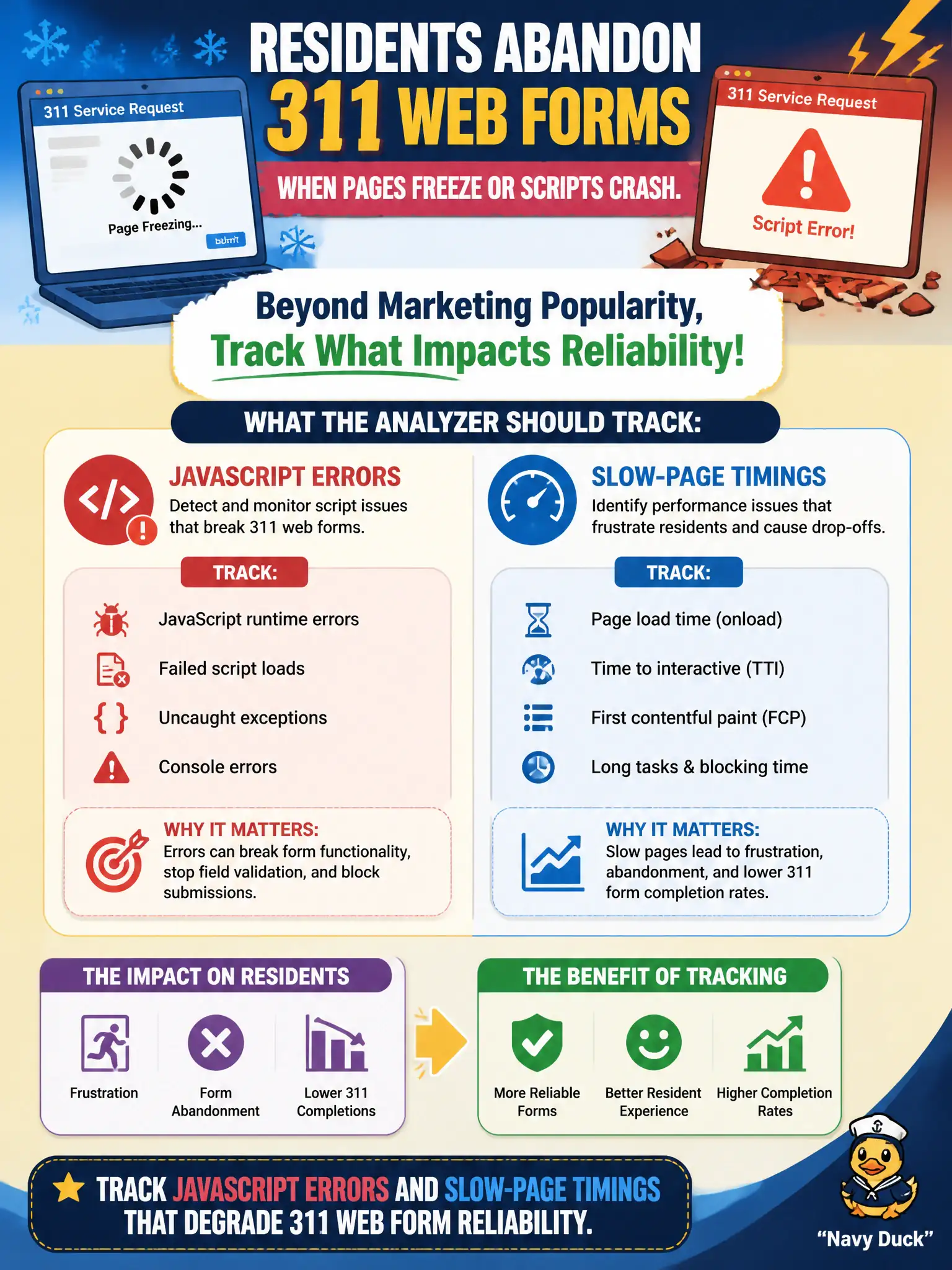
Residents abandon 311 web forms when pages freeze or scripts crash. Beyond marketing popularity, what should the analyzer track?
Select an answer to reveal the explanation.
Short Explanation
Popularity without reliability is a crowded broken elevator. Track JS errors and slow pages on those 311 forms so ops can fix what actually blocks residents. Civic analytics should care about getting through the form, not just landing on it.
Full Explanation
Beyond marketing popularity, the analyzer should track JavaScript errors and slow-page timings that degrade 311 web form reliability when residents abandon frozen or crashing pages. Technical health signals explain completion failures that visit counts alone cannot. Civic web analytics includes reliability telemetry as a first-class product input for municipal digital services.
Tracking only homepage visit counts because performance supposedly never affects form completion ignores a common abandonment cause. Printer toner levels in city hall do not substitute for client-side error rates on 311 forms. Social follower counts measure audience reach elsewhere, not portal technical health during form entry on a storm night.
Exam caveat: error and timing beacons can themselves fail on broken pages—pair client signals with server error rates and synthetic checks for a fuller reliability picture. Operational check: inject a controlled client error on a staging 311 form, confirm it appears in the analyzer’s error metric, and correlate a test slowdown with rising abandonment in the funnel report. Document the verified decision in the municipal architecture runbook so future on-call and audit staff inherit the same standard.