
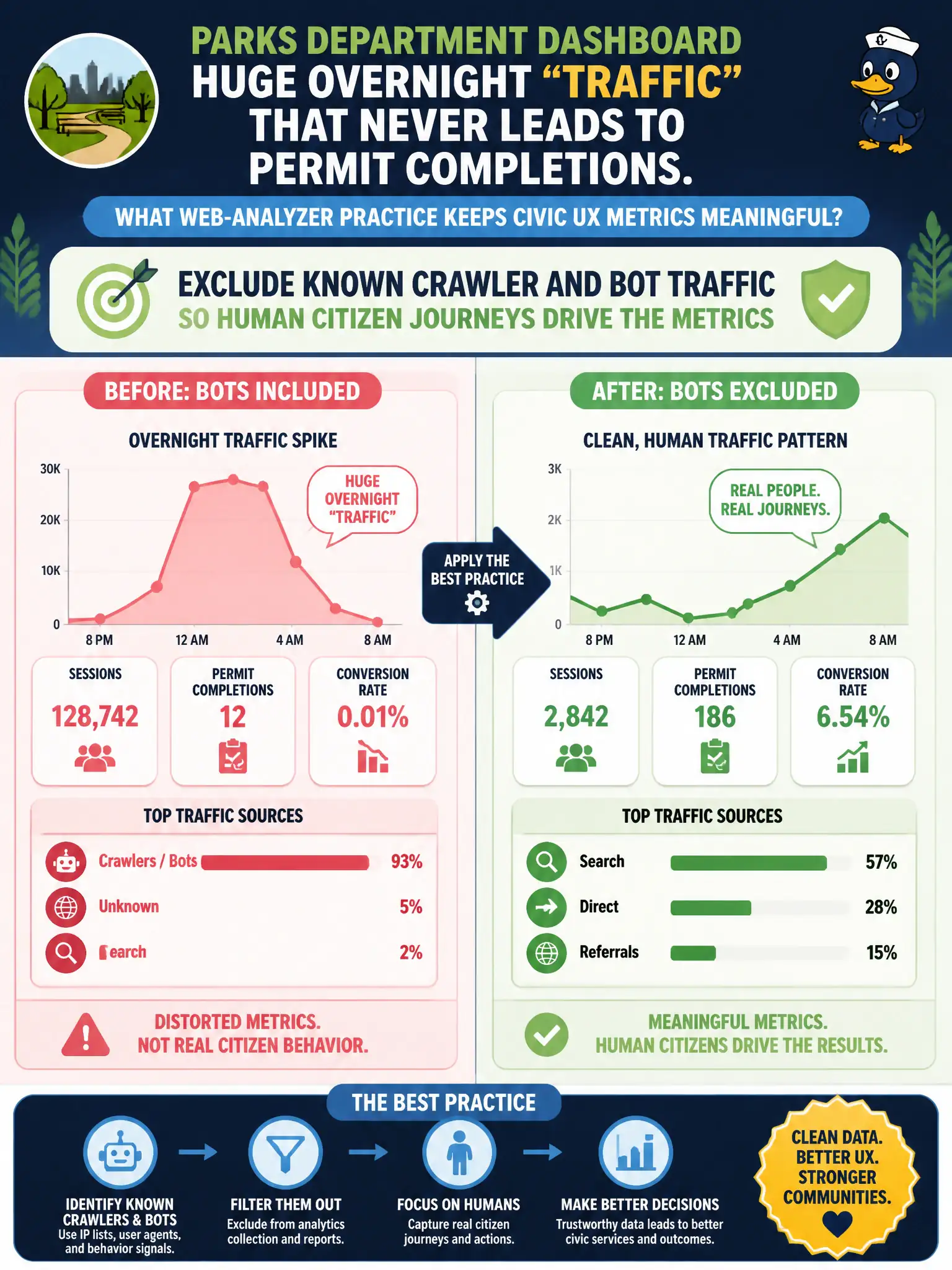
A parks department dashboard shows huge overnight 'traffic' that never leads to permit completions. What web-analyzer practice keeps civic UX metrics meaningful?
Select an answer to reveal the explanation.
Short Explanation
Bots love your sitemap at 3 a.m., but they never renew a dog license. Filter crawlers out or your 'top pages' and funnels tell a science-fiction story. Keep the metrics about people trying to use city services.
Full Explanation
Excluding known crawler and bot traffic keeps parks-department UX metrics meaningful when overnight “traffic” never leads to permit completions. Human citizen journeys should drive adoption and funnel reporting; bots inflate vanity charts without civic outcomes. Bot filtering is a veracity practice inside the municipal web analyzer and protects redesign decisions.
Double-counting bot hits so popularity charts always trend upward for leadership is metric theater, not measurement. Treating search-engine crawlers as high-value citizen sessions in funnel reports corrupts conversion analysis. Disabling all filtering because any HTTP request proves genuine resident intent ignores automated traffic realities on public portals.
Exam caveat: bot lists are imperfect—over-filtering can hide real users on unusual clients, so review filters periodically and monitor completion rates alongside traffic. Operational check: tag a synthetic crawler user-agent in staging, confirm it is excluded from UX dashboards but retained in a raw forensic stream if security needs it. Document the verified decision in the municipal architecture runbook so future on-call and audit staff inherit the same standard. Document the verified decision in the municipal architecture runbook so future on-call and audit staff inherit the same standard.