
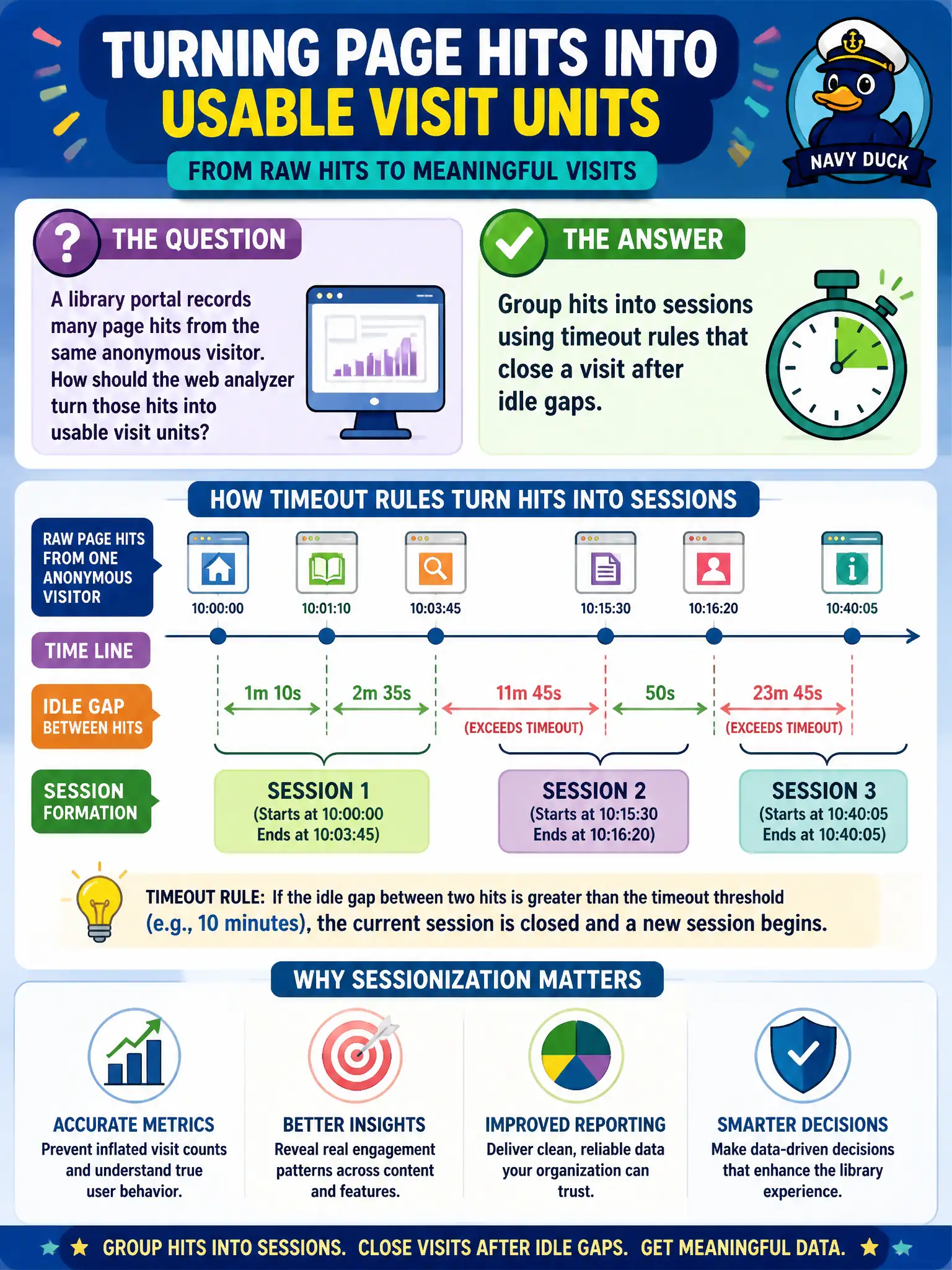
A library portal records many page hits from the same anonymous visitor. How should the web analyzer turn those hits into usable visit units?
Select an answer to reveal the explanation.
Short Explanation
Hits are crumbs; sessions are the meal. A timeout rule says 'if they go quiet long enough, that visit is done.' That simple grouping is what lets civic teams talk about visits instead of a pile of lonely page views.
Full Explanation
Grouping hits into sessions using timeout rules that close a visit after idle gaps turns many page hits from the same anonymous library visitor into usable visit units. Sessionization is how web analyzers translate raw clickstream into journeys civic UX teams can reason about. Timeout-based sessions are a core Cap. 10 concept carried from industry web analytics into municipal portals.
Treating every single page hit as a permanent account that never expires inflates “users” and confuses hits with visits. Ignoring timing and merging all historical hits for a city into one session forever erases journey boundaries. Deleting hits that arrive within thirty minutes so only first page loads remain discards the path evidence sessions need to describe a visit.
Exam caveat: timeout thresholds are policy choices (for example, thirty minutes) and should be documented; mobile apps may need related but distinct session rules. Operational check: replay a sample hit sequence with a long idle gap in a test pipeline and confirm the analyzer splits into two sessions under the published timeout rule. Document the verified decision in the municipal architecture runbook so future on-call and audit staff inherit the same standard.