
Before a municipal portal analyzer can compare renewals across departments, what application-code concern must be settled first?
Select an answer to reveal the explanation.
Short Explanation
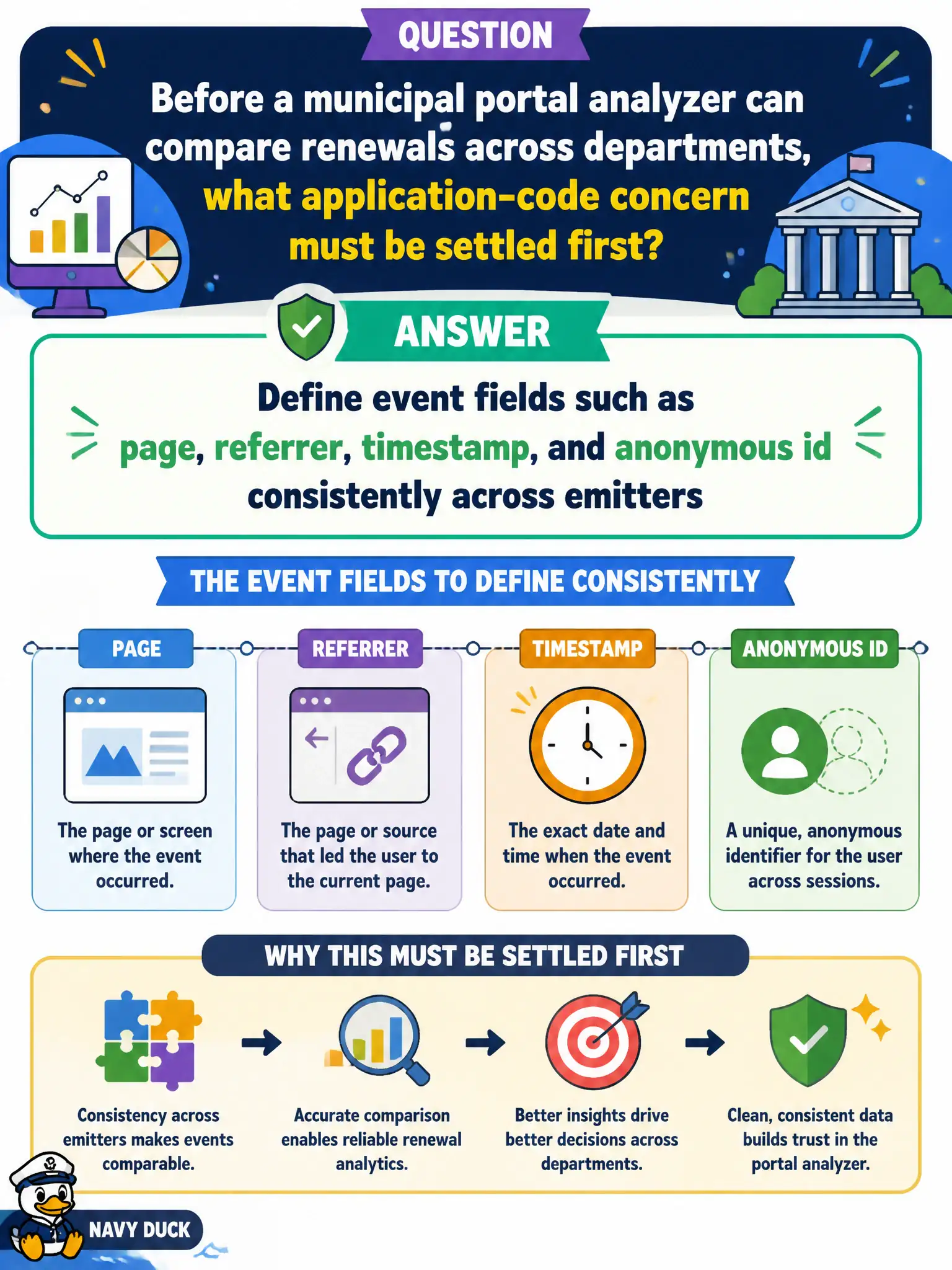
If every department invents its own idea of a 'page' or a 'user,' the analyzer turns into alphabet soup. Lock a shared event schema—page, referrer, time, anonymous id—so the same story can be told across sites. Consistency up front beats heroic cleanup later.
Full Explanation
Consistent event fields such as page, referrer, timestamp, and anonymous id must be defined across emitters before a municipal portal analyzer can compare renewals across departments. Shared contracts make joins and funnels possible; without them, each site speaks a private dialect. Application instrumentation governance is a prerequisite for cross-department civic analytics at Cap. 10.
Replacing every page tag with a different proprietary schema for each department site maximizes fragmentation and blocks comparison. Storing only free-text browser dumps without field names forces analysts to invent columns later and destroys reliability. Disabling timestamps to shrink storage removes the ordering spine sessionization and funnels require for journey analysis.
Exam caveat: consistency does not forbid carefully versioned evolution—additive optional fields can extend the contract if consumers tolerate unknowns. Operational check: validate events from two department portals against a shared schema checklist (page, referrer, timestamp, anonymous id) and fail a staging release that omits required fields. Document the verified decision in the municipal architecture runbook so future on-call and audit staff inherit the same standard.