
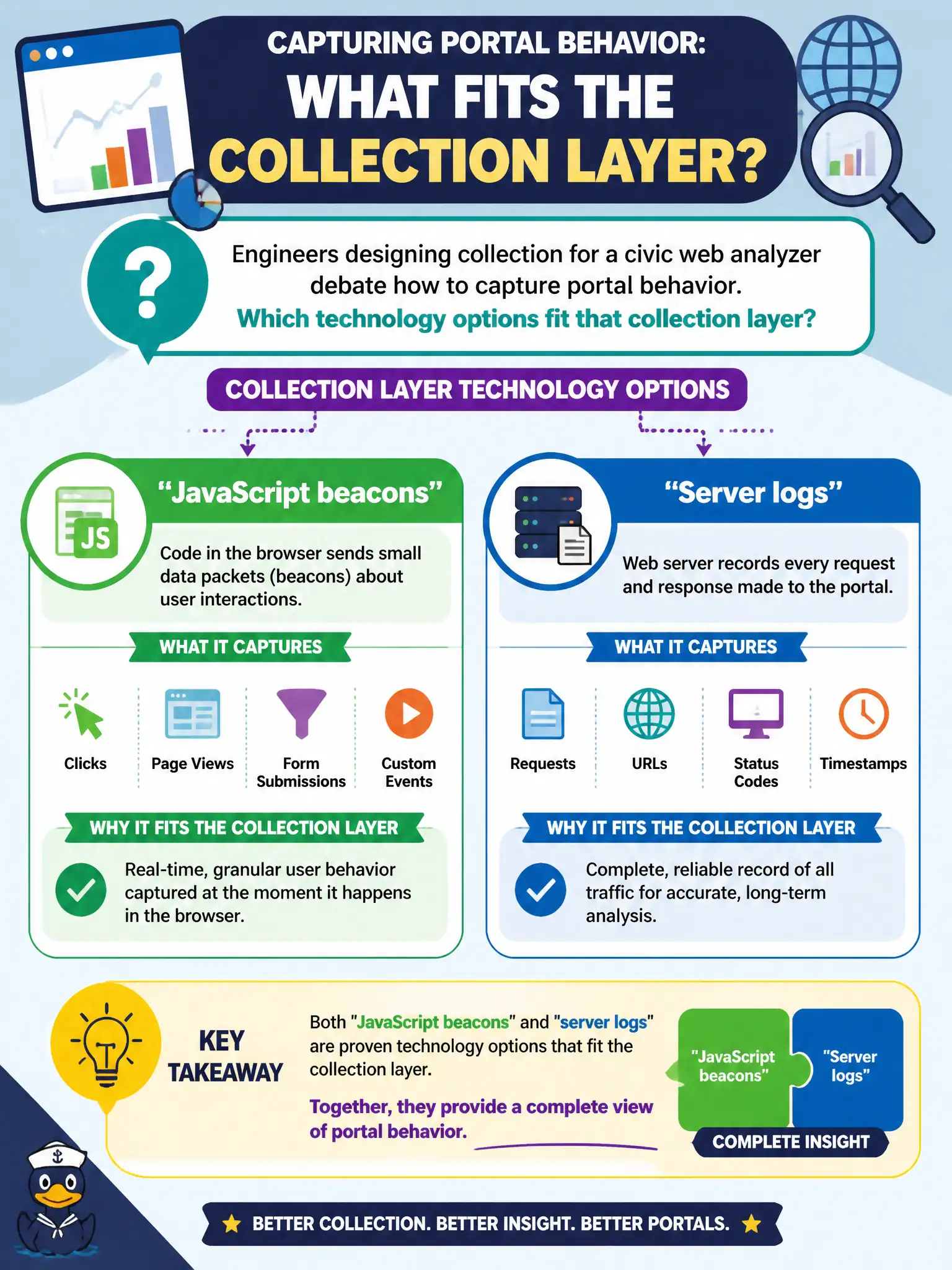
Engineers designing collection for a civic web analyzer debate how to capture portal behavior. Which technology options fit that collection layer?
Select an answer to reveal the explanation.
Short Explanation
Beacons in the page or clues in the server logs—both can catch what happened on the portal. Collection tech is how the analyzer first hears each visit. Clipboards alone do not scale for city-wide web traffic.
Full Explanation
JavaScript beacons or server logs are the technology options that typically capture portal behavior at the collection layer of a civic web analyzer. Beacons emit structured client-side events; server logs capture request-side evidence; many cities use one or both together. Collection design chooses instrumentation that can scale with portal traffic and feed downstream ingest reliably.
Physical turnstiles at city hall measure building entry, not digital portal signal, and cannot replace web collection. Manual clipboard tallies are not a scalable collection method for citywide online journeys. Satellite imagery pipelines that ignore HTTP requests address geospatial sensing, not portal clickstream collection for Cap. 10.
Exam caveat: client beacons can be blocked and server logs can miss client-only UI state—mature designs understand complementary strengths rather than treating either as perfect truth. Operational check: disable JavaScript on a test browser and compare beacon loss versus server-log capture for the same page request, then document which metrics remain trustworthy. Prefer structured beacon payloads with version fields so collection can evolve safely. Document the verified decision in the municipal architecture runbook so future on-call and audit staff inherit the same standard.