
Which primary input typically feeds a municipal portal web-analyzer application?
Select an answer to reveal the explanation.
Short Explanation
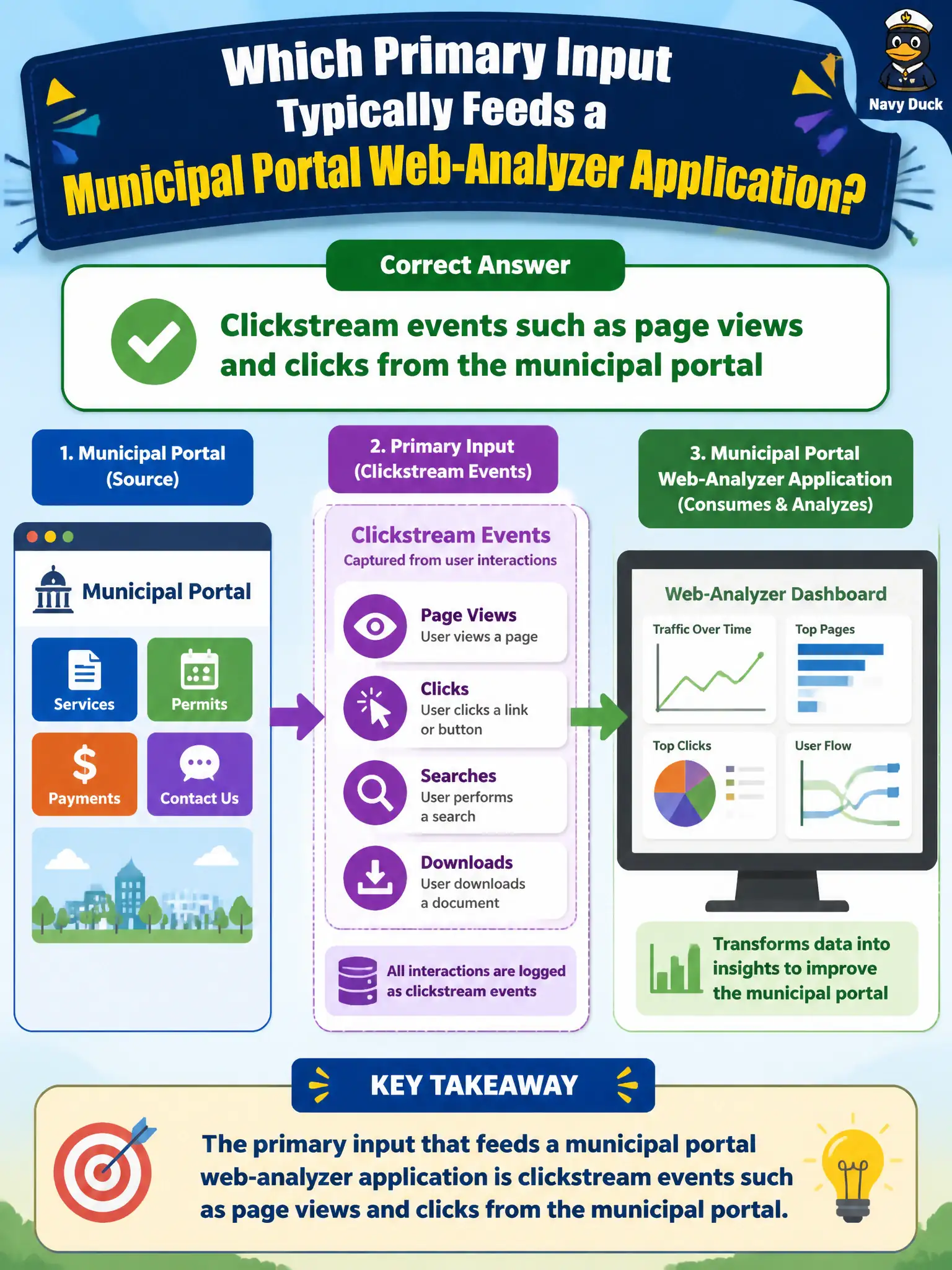
The analyzer listens to the portal’s footsteps—page views and clicks. That clickstream is the main feed, not budget PDFs or printer stickers. Follow the residents’ path through the site.
Full Explanation
Clickstream events such as page views and clicks from the municipal portal are the primary input that feeds a civic web-analyzer application. Those behavioral signals let cities see navigation, drop-offs, and adoption patterns on digital services. Without clickstream or equivalent server-side request events, the analyzer has no raw material for journey analytics at Cap. 10 depth.
Annual budget PDFs from finance are important documents but are not the primary behavioral feed for a portal analyzer. Weather radar frames unrelated to portal navigation belong to other civic analytics domains. Hardware warranty stickers from office printers do not describe resident interaction with online services and cannot substitute for interaction events.
Exam caveat: clickstream may be enriched later with carefully governed attributes, yet the analyzer’s core input remains interaction events—not every municipal dataset. Operational check: inspect a raw event sample from the portal and confirm it contains page, timestamp, and interaction fields suitable for sessionization before building executive charts. Treat server-side request logs as a complementary primary input when client beacons are blocked. Document the verified decision in the municipal architecture runbook so future on-call and audit staff inherit the same standard.