
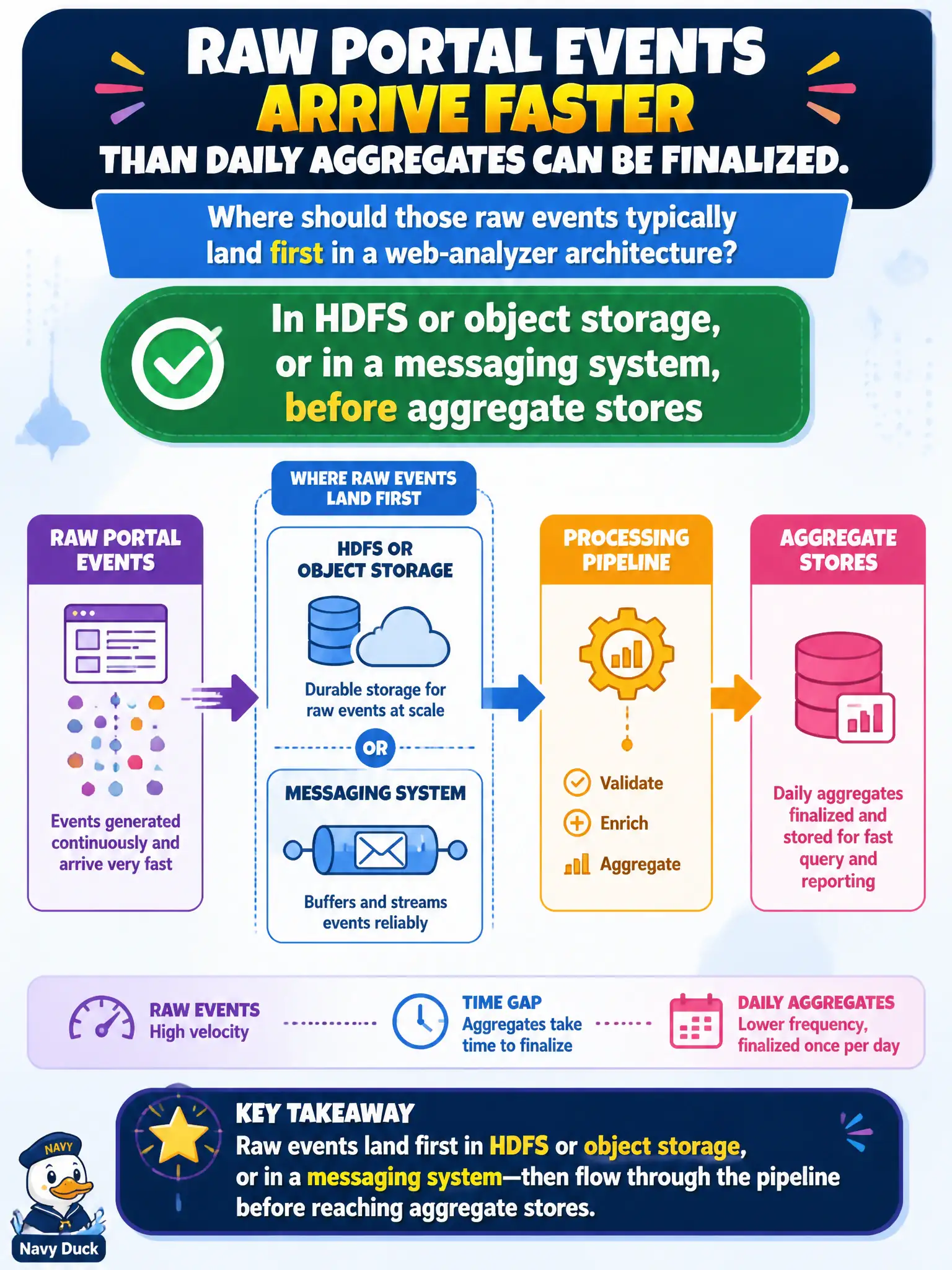
Raw portal events arrive faster than daily aggregates can be finalized. Where should those raw events typically land first in a web-analyzer architecture?
Select an answer to reveal the explanation.
Short Explanation
Catch the rain in a cistern before you bottle drinking water. Raw events land in HDFS, object storage, or messaging first; aggregates come later. Slide decks and browser caches are not the lake.
Full Explanation
Raw portal events that arrive faster than daily aggregates finalize should land first in HDFS or object storage, or in a messaging system, before curated aggregate stores. That landing pattern preserves fidelity for reprocessing while streaming or batch jobs compute sessions and KPIs. Web-analyzer architecture reuses core Big Data landing ideas for clickstream velocity in municipal platforms.
Printed binders updated once per fiscal year cannot absorb raw event velocity or support timely UX decisions. Writing events only into executive slide decks with no durable store loses replay and auditability. Treating end-user browser local storage as the system of record fails durability, central governance, and multi-user analytics for a city portal.
Exam caveat: landing raw events does not mean retaining full fidelity forever—pair landing zones with retention tiers while aggregates live longer. Operational check: trace one staging beacon from collection into the raw landing topic or object prefix, confirm it is readable by a processor, and verify aggregates are built from that landing path rather than from slides. Document the verified decision in the municipal architecture runbook so future on-call and audit staff inherit the same standard.