
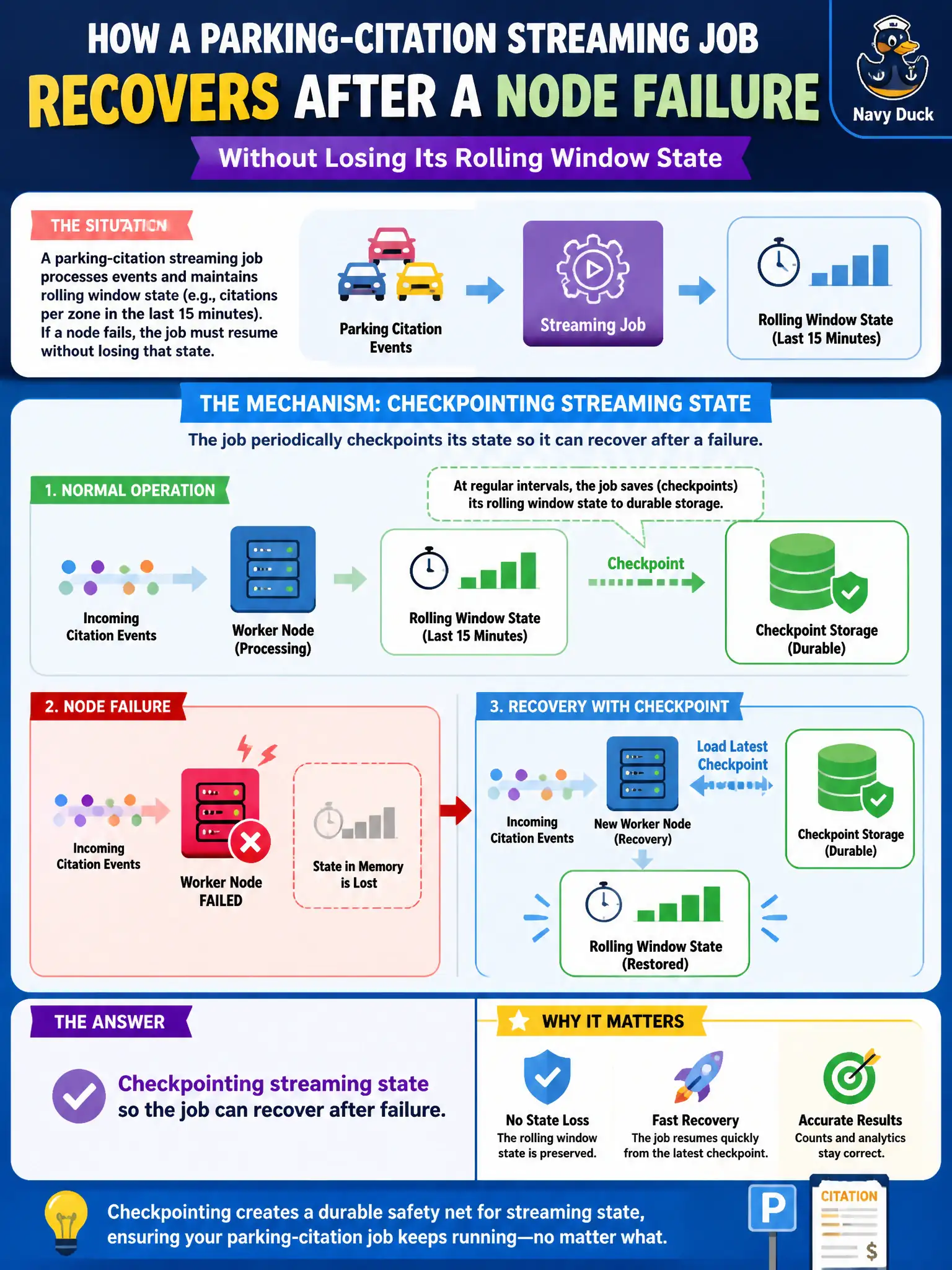
After a node failure, a parking-citation streaming job must resume without losing its rolling window state. What mechanism supports that recovery?
Select an answer to reveal the explanation.
Short Explanation
Checkpoints are like saving your game before a tough boss. When the streaming job crashes, it reloads from that save instead of pretending the whole shift never happened.
Full Explanation
After a node failure, a parking-citation streaming job that must resume without losing rolling window state depends on checkpointing streaming state so recovery can restore windows and offsets. Never persisting state forces blank memory on restart and loses in-flight aggregates. Relying only on printed ticket stubs for application recovery cannot rebuild distributed window state. Disabling fault tolerance because municipal streams never fail is wishful thinking. Exam caveat: checkpoints must be frequent enough for acceptable RPO yet not so frequent they dominate I/O—tune against citation volume. Operational check: kill a worker mid-window, restart from the last checkpoint, and verify rolling citation aggregates match a dual-run control within the documented recovery tolerance. In production terms for streaming state checkpoint recovery, assign an owning team, wire a dashboard that shows the pattern is healthy under peak civic load, and require a staging drill that rehearses failure and recovery before resident impact. Revisit the choice when traffic shape, retention, or integrity needs change, and keep a named rollback owner on the change record. Re-test both the happy path and the failure path for streaming state checkpoint recovery after material dependency upgrades so regressions are caught before the next public release.