
Flood sensors publish faster than a city's stream processors can keep up. What operational concept should architects plan for?
Select an answer to reveal the explanation.
Short Explanation
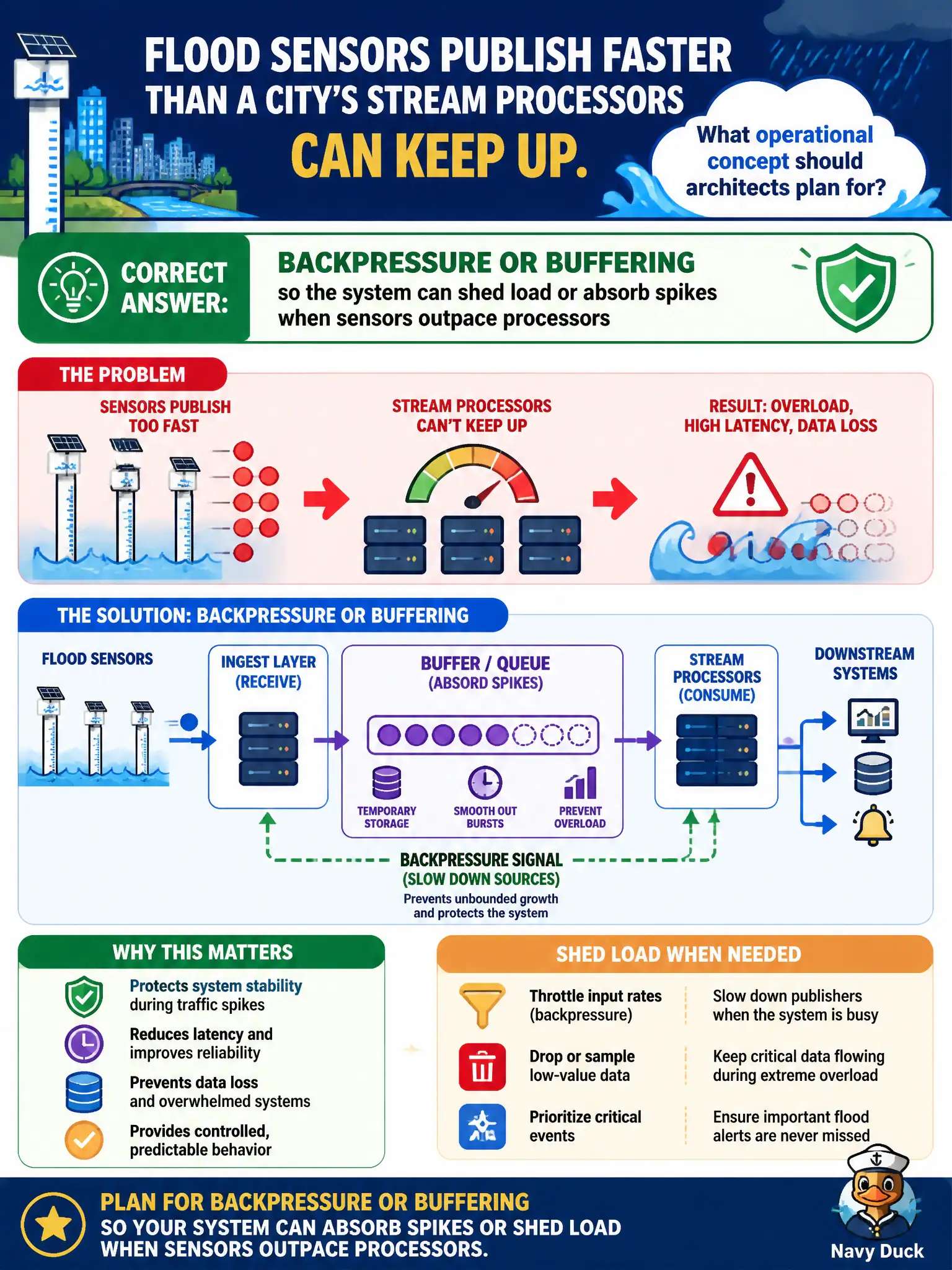
When hydrants spray faster than the tanker can haul water, you either fill temporary tanks or throttle the flow. Streaming systems do the same with buffers and backpressure when sensors outrun processors.
Full Explanation
When flood sensors publish faster than stream processors can keep up, architects must plan for backpressure or buffering so the system can absorb spikes or shed load deliberately rather than fail unpredictably. Infinite processing speed that never needs buffering is not a realistic civic design assumption. Turning off all sensors permanently whenever volume rises blinds the city during the moments monitoring matters most. Replacing every sensor with a single daily paper log abandons real-time flood awareness. Exam caveat: load shedding should be explicit and prioritized—drop or downsample low-priority telemetry before life-safety gauges. Operational check: generate a sensor burst above sustained capacity in staging, confirm buffers/backpressure engage, verify critical gauges still flow, and alert when drop rates exceed policy. In production terms for backpressure under sensor overload, assign an owning team, wire a dashboard that shows the pattern is healthy under peak civic load, and require a staging drill that rehearses failure and recovery before resident impact. Revisit the choice when traffic shape, retention, or integrity needs change, and keep a named rollback owner on the change record. Re-test both the happy path and the failure path for backpressure under sensor overload after material dependency upgrades so regressions are caught before the next public release.