
Developers chain map and filter calls on sensor RDDs, then call a count that finally returns a number. What distinction matters?
Select an answer to reveal the explanation.
Short Explanation
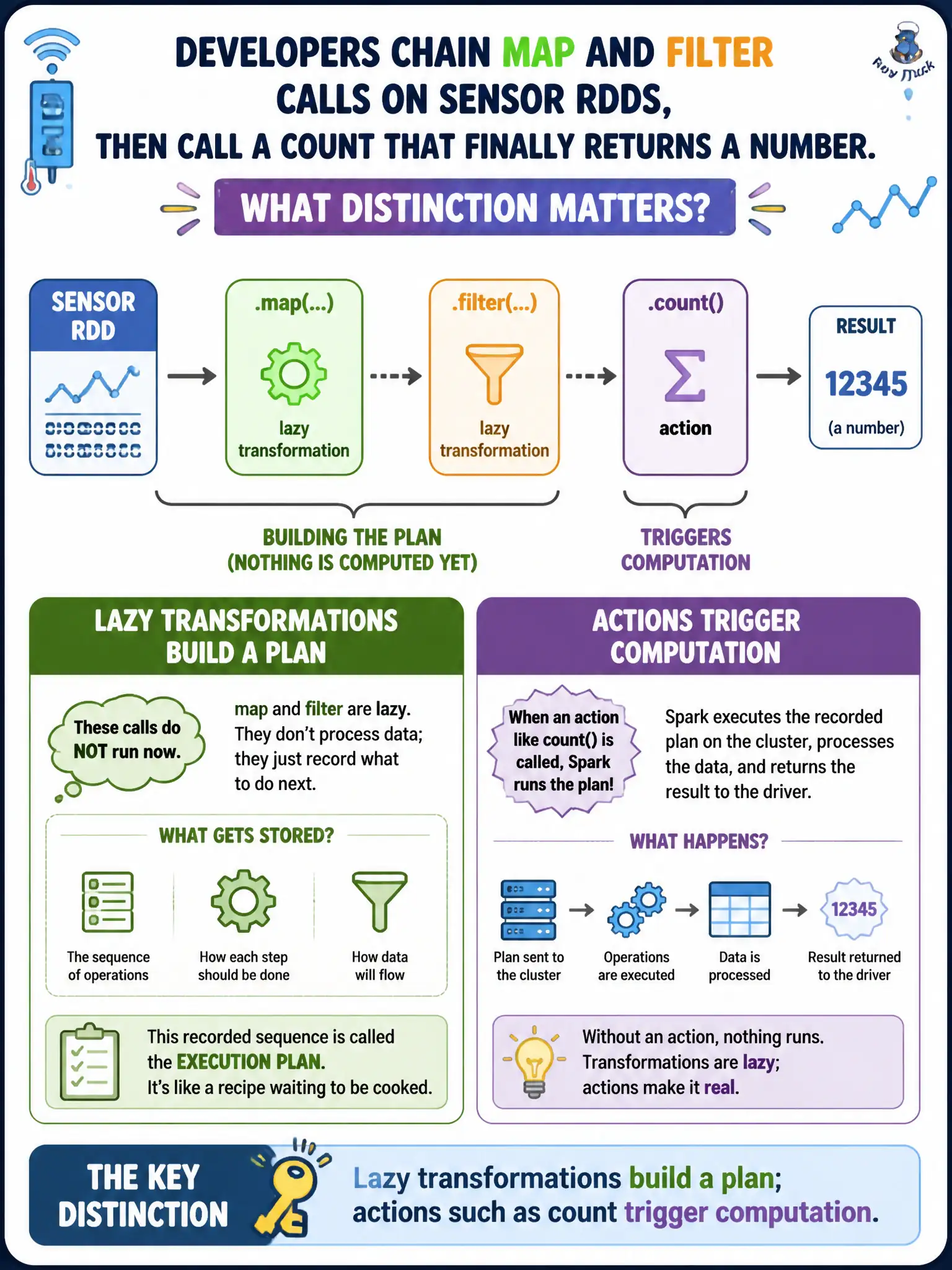
Map and filter are recipe steps taped on the fridge; count is when somebody actually cooks. Transformations stay lazy and build the plan; actions kick off the compute. They are not the same word twice.
Full Explanation
Chained map and filter calls on sensor RDDs are lazy transformations that build a plan; an action such as count triggers computation and finally returns a number. That transformation-versus-action distinction is essential to understanding Spark execution. Believing every transformation immediately writes final PDF reports to disk misunderstands laziness and mixes reporting output with planning. Saying actions only rename columns and never start work reverses roles. Treating transformations and actions as identical synonyms hides when the cluster actually spends CPU. Exam caveat: unexpected actions in loops can recompute large civic DAGs repeatedly—cache or checkpoint intentional reuse. Operational check: instrument a job to show no sensor compute until the action runs, then call count twice without caching and observe repeated work; add cache and confirm the second action reuses data. In production terms for lazy transformations versus actions, assign an owning team, wire a dashboard that shows the pattern is healthy under peak civic load, and require a staging drill that rehearses failure and recovery before resident impact. Revisit the choice when traffic shape, retention, or integrity needs change, and keep a named rollback owner on the change record. Re-test both the happy path and the failure path for lazy transformations versus actions after material dependency upgrades so regressions are caught before the next public release.