
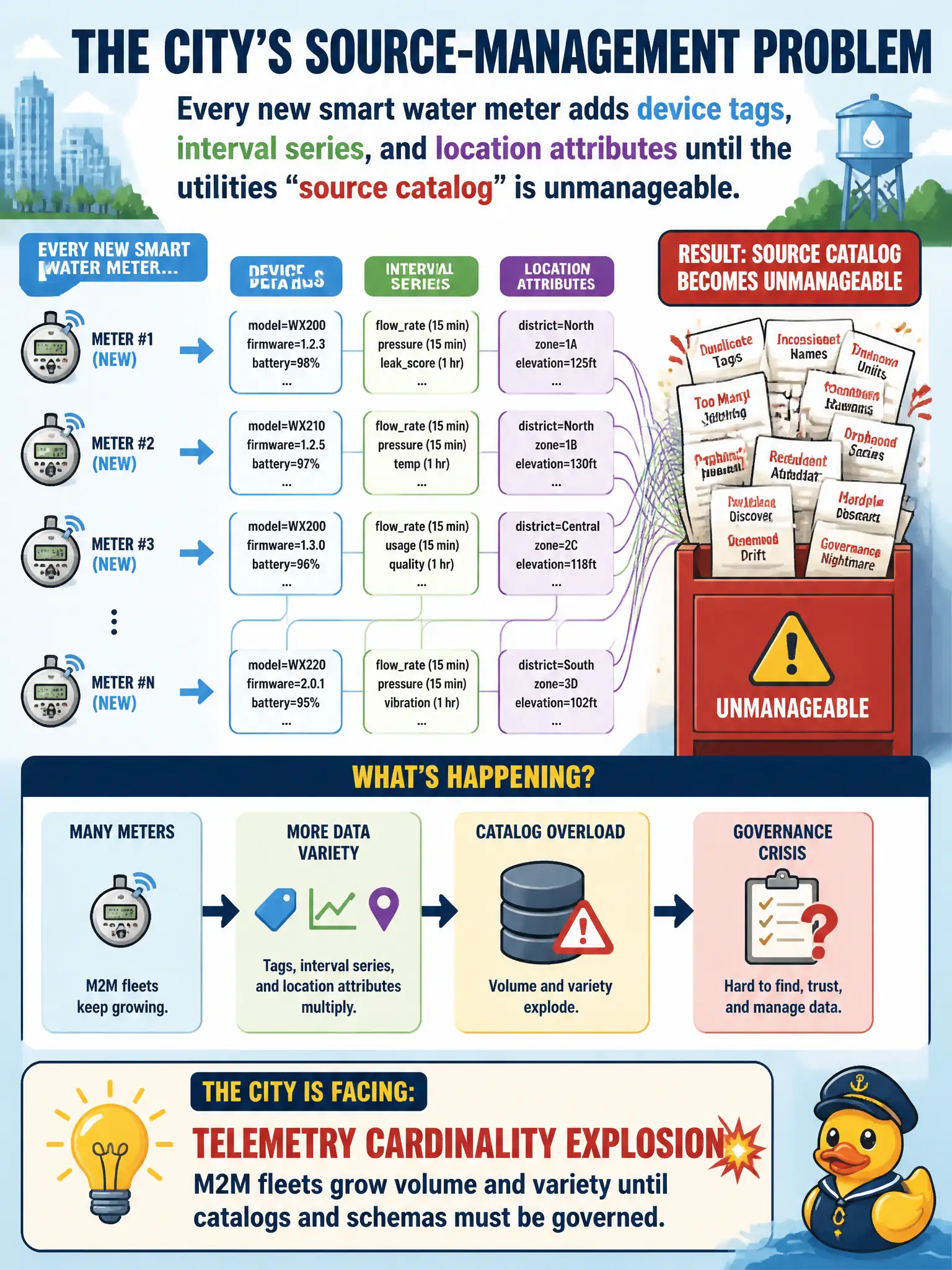
Every new smart water meter adds device tags, interval series, and location attributes until the utilities “source catalog” is unmanageable. What source-management problem is the city facing?
Select an answer to reveal the explanation.
Short Explanation
One meter is a trickle; a whole fleet is a fire hose of tags and intervals. That cardinality blast grows volume and variety until the catalog needs real governance. It is not a CAP trivia quiz or a spreadsheet hobby.
Full Explanation
Every new smart water meter adds device tags, interval series, and location attributes until the utilities source catalog becomes unmanageable. That is telemetry cardinality explosion: M2M fleets grow volume and variety until catalogs and schemas must be governed. Civic utilities that ignore catalog discipline drown in identifiers before they deliver leak insights to ratepayers.
Calling it a CAP theorem outage that forbids storing readings fails by concept: CAP is not the source-management problem described. Claiming meters must be analyzed only inside one spreadsheet fails by concept: spreadsheets cannot govern fleet-scale cardinality. Claiming M2M sources never create Big Data variety fails by concept: tags, series, and locations expand Variety and Volume.
Exam caveat: Recognize M2M cardinality explosion as a catalog/schema governance problem—not CAP mythology, spreadsheet-only analysis, or denial of M2M variety.
Operational check: Impose device metadata standards, cardinality budgets, and catalog stewardship for meter tags and series before onboarding the next meter wave. Document residual risk for civic operators and revisit after the next production change window. Confirm owners, SLAs, and rollback criteria in the runbook before go-live.