
A municipal fleet pilot proposes usage-based insurance-style premiums from vehicle telematics. Which application pattern does that illustrate?
Select an answer to reveal the explanation.
Short Explanation
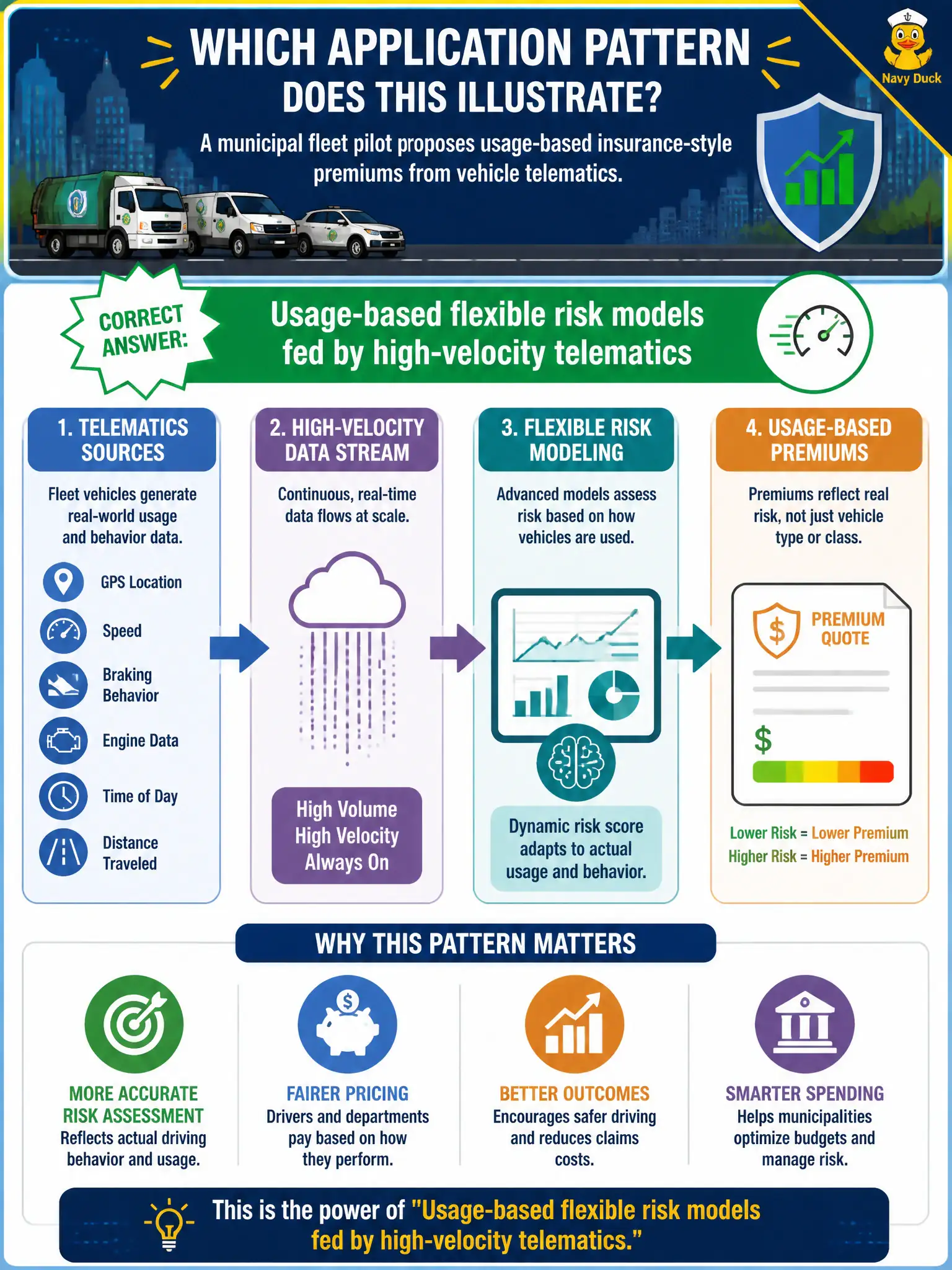
Pay-how-you-drive is the simple picture: the truck’s telematics narrate the risk story in near real time. That is usage-based pricing powered by high-Velocity feeds. Paper odometer snapshots are the old, slow cousin.
Full Explanation
Flexible or usage-based risk pricing is an application pattern that consumes high-Velocity telematics. Municipal fleet pilots exploring premiums or chargebacks tied to driving behavior and utilization illustrate that pattern. Privacy and labor agreements still constrain civic deployments even when the analytic idea is sound.
Static annual premiums with no telemetry at all fails by concept: the pattern depends on continuous or frequent telematics. Person-to-person call-center transcripts as the sole pricing input fails by concept: usage-based models need vehicle telemetry Velocity. Deleting Velocity so billing uses only monthly paper odometer photos fails by concept: that abandons the high-Velocity telematics pattern.
Exam caveat: Usage-based flexible risk models are fed by high-velocity telematics—not static annual assumptions alone, call transcripts alone, or paper odometer substitution.
Operational check: Define telematics features used for chargebacks, negotiate labor and privacy constraints, and compare pilot premiums against a control fleet before citywide rollout. Document residual risk for civic operators and revisit after the next production change window. Confirm owners, SLAs, and rollback criteria in the runbook before go-live.