
Police analysts discuss predictive deployment models fed by historical incidents and sensors. What BDPC-aware framing is appropriate?
Select an answer to reveal the explanation.
Short Explanation
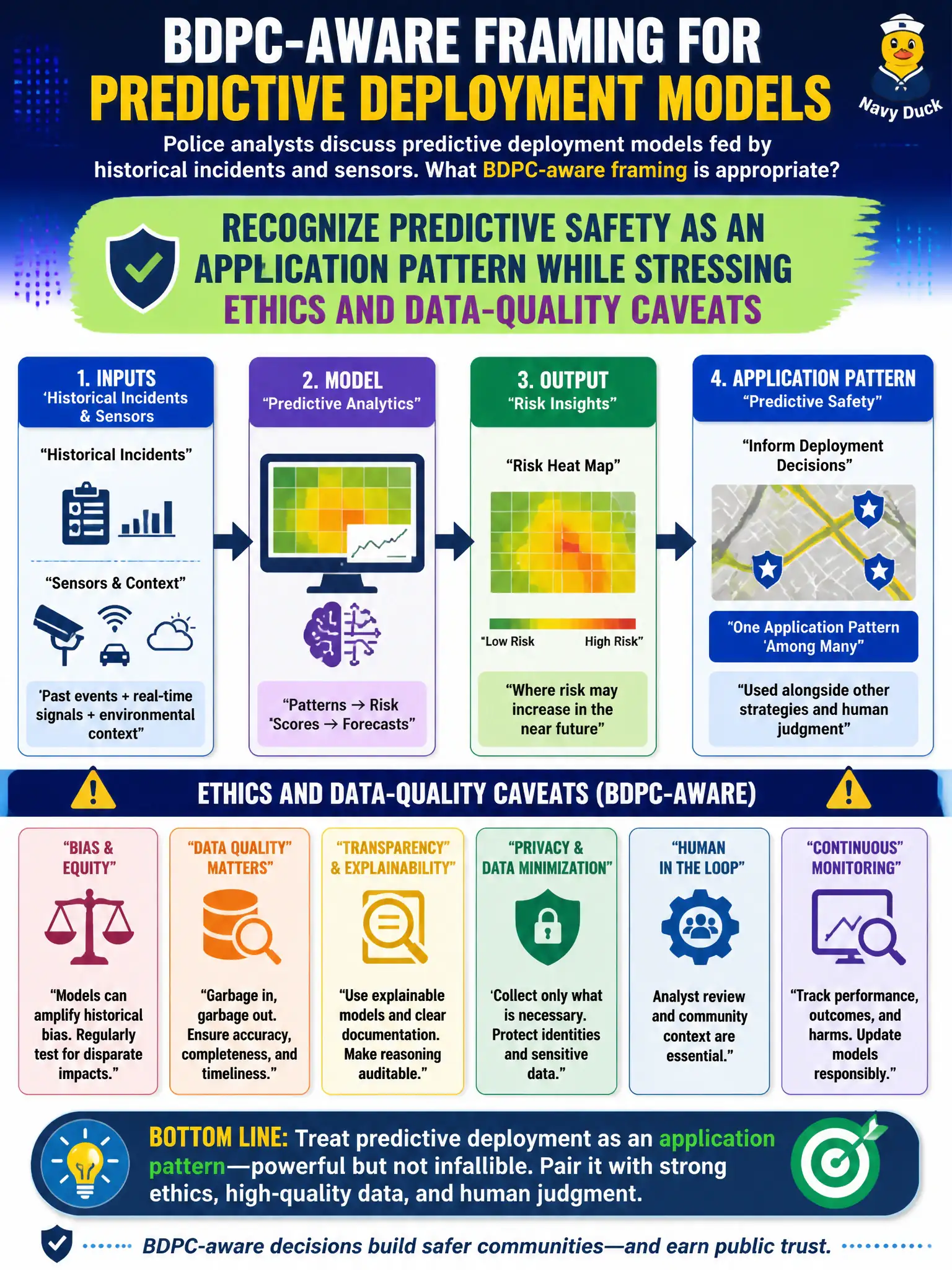
Predictive deployment talk is a named pattern in the Big Data apps family—but it comes with a warning label. Bad data and thin ethics can steer resources the wrong way. Know the pattern; do not treat it as a blank check.
Full Explanation
Syllabus-style application awareness includes predictive safety or surveillance-style uses of historical and sensor data. Professionals should name the pattern and simultaneously flag Veracity, bias, and ethics concerns. BDPC depth for civic agencies is conceptual recognition with caveats—not a how-to for abusive systems or a requirement to implement proprietary stacks.
Claiming predictive models never need Veracity checks if maps look colorful fails by concept: visual appeal is not quality. Automating arrests solely from unverified social posts fails by concept: ethics and evidence standards forbid that leap. Claiming BDPC requires implementing a full proprietary surveillance stack as the exam goal fails by concept: the exam wants pattern literacy and caveats, not product deployment.
Exam caveat: Recognize predictive safety as an application pattern while stressing ethics and data-quality caveats—not colorful-map exemption, social-post arrests, or mandatory vendor stacks.
Operational check: If discussing predictive deployment, document bias and Veracity reviews, legal constraints, and human oversight gates before any pilot that could affect residents’ liberty or policing intensity.