
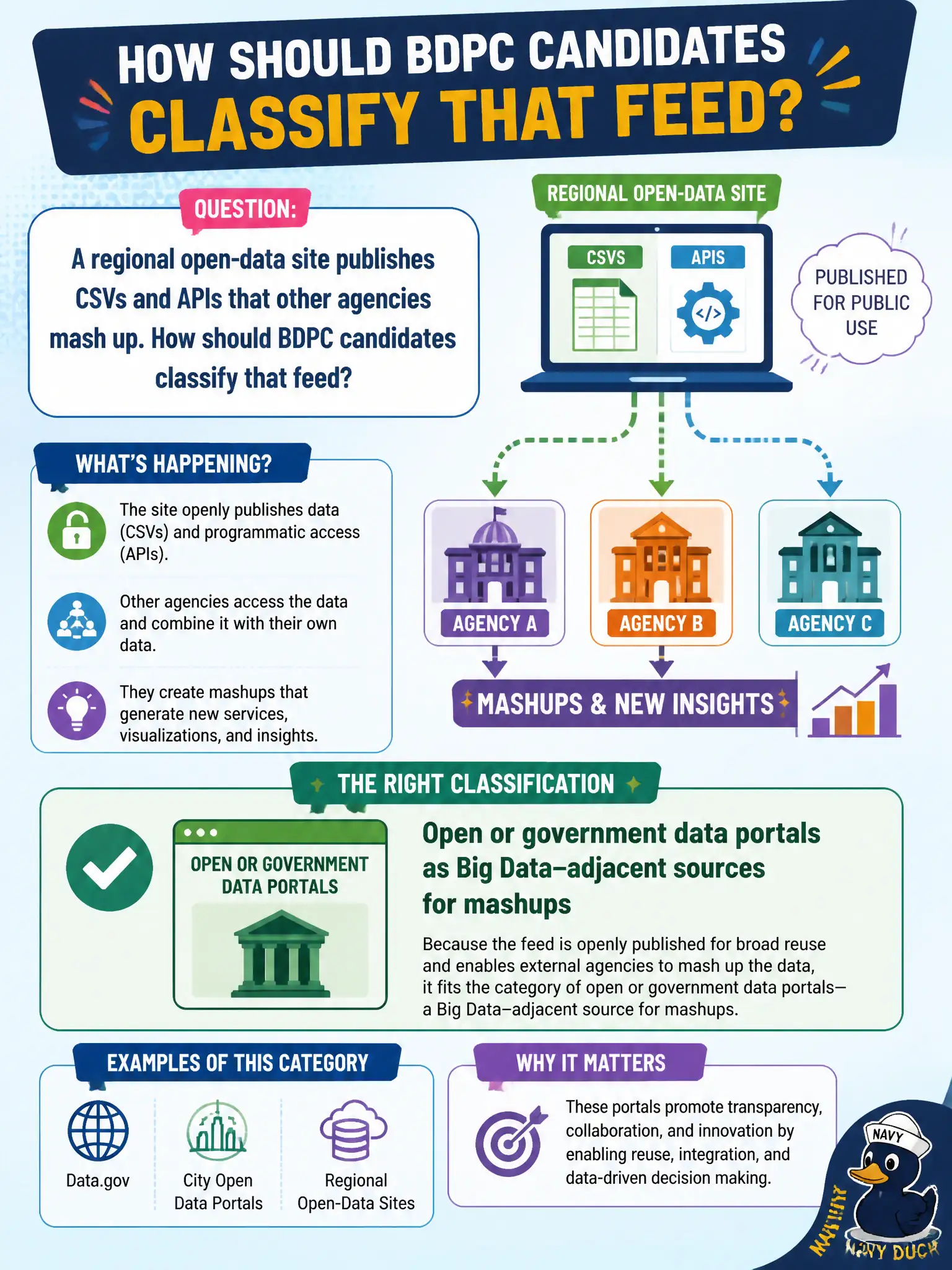
A regional open-data site publishes CSVs and APIs that other agencies mash up. How should BDPC candidates classify that feed?
Select an answer to reveal the explanation.
Short Explanation
Open-data portals are the city’s public pantry—CSVs and APIs others can cook with. They are real sources for mashups, even when they are not your internal system of record. Inventory them; do not pretend they do not exist.
Full Explanation
Open and government data portals are common external or shared sources in civic Big Data work. Published CSVs and APIs enable cross-agency mashups and public applications. They complement, rather than fully replace, authoritative internal systems. Source inventories should include them with freshness and license notes.
Calling portal feeds illegal shadow IT that can never be inventoried fails by concept: open government data is a legitimate, inventoriable class. Claiming only M2M SCADA counts and never files or APIs fails by concept: files and APIs are valid portal sources. Treating portals as a complete substitute for internal systems of record fails by concept: mashups augment; they do not erase authoritative internal databases.
Exam caveat: Classify open/government portals as Big Data–adjacent mashup sources—legitimate, inventoriable, and complementary to internal systems of record.
Operational check: Add regional portal CSVs/APIs to the source catalog with license, freshness, and steward fields, and document which internal systems remain authoritative for each civic decision. Document residual risk for civic operators and revisit after the next production change window. Confirm owners, SLAs, and rollback criteria in the runbook before go-live.