
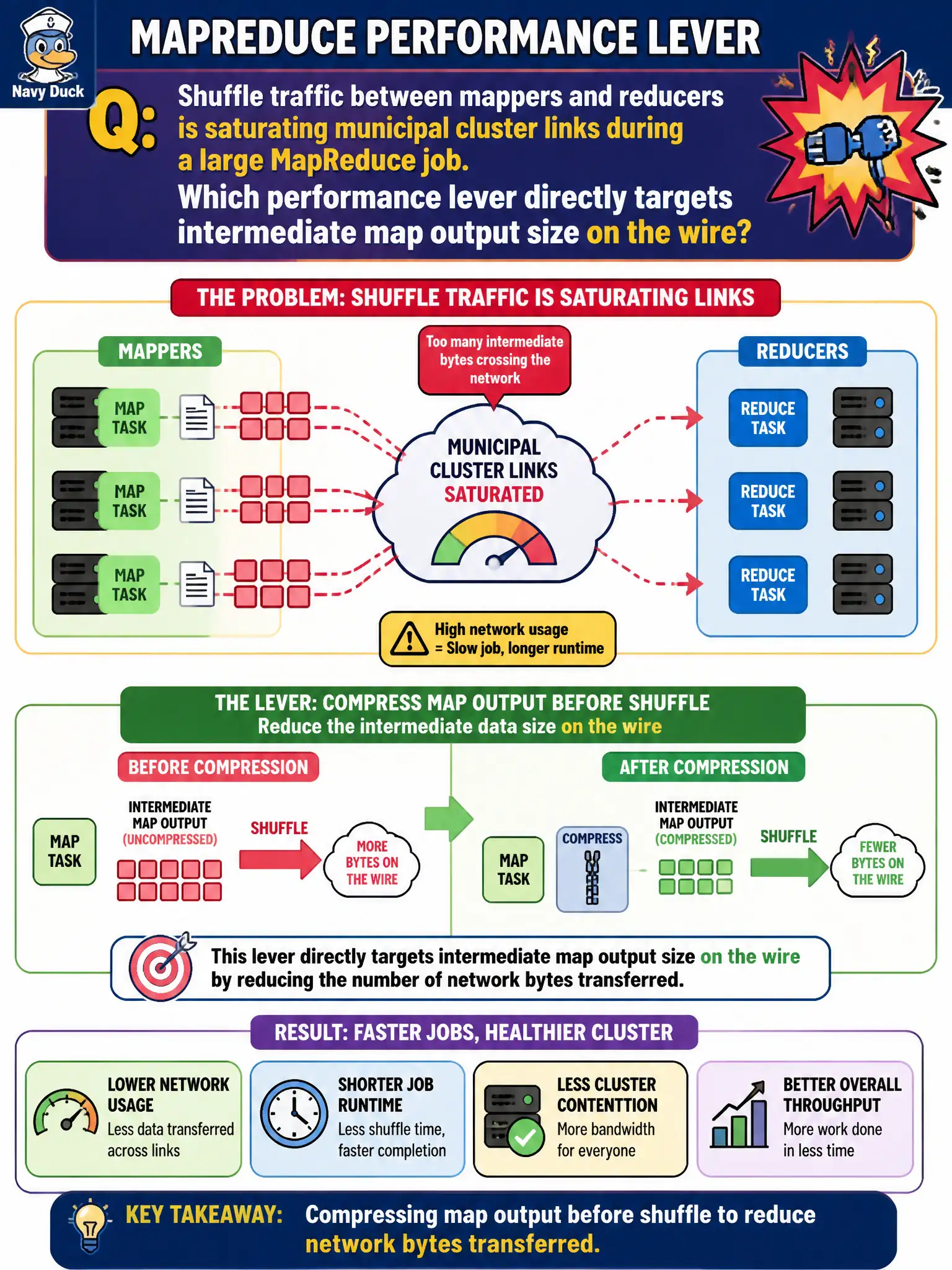
Shuffle traffic between mappers and reducers is saturating municipal cluster links during a large MapReduce job. Which performance lever directly targets intermediate map output size on the wire?
Select an answer to reveal the explanation.
Short Explanation
Smaller packages move through the tunnel faster. Compressing map output shrinks shuffle traffic on busy city networks. Adding skew or printing paper dumps makes things worse.
Full Explanation
When shuffle traffic between mappers and reducers saturates municipal cluster links, compressing map output before shuffle directly targets intermediate map output size on the wire and can relieve fabric pressure for large MapReduce jobs. Printing every intermediate pair to a physical plotter in city hall does not reduce network shuffle bytes. Increasing the number of identical hot keys to maximize skew worsens performance rather than helping the network. Deleting reducer logic so no aggregation can complete abandons the analytical goal. Exam caveat: map-output compression is a standard shuffle-performance lever distinct from HDFS file compression alone. Operational check: enable map-output compression on the heavy job, compare shuffle bytes and job duration, and watch switch utilization during the next production window. In municipal platform operations, record the rationale in the architecture decision record so future on-call staff know which pattern was chosen and which failure modes the rejected options would create for city services. Re-validate after the next maintenance window that monitoring, access paths, and recovery steps still match the documented design for agencies that depend on this platform.