
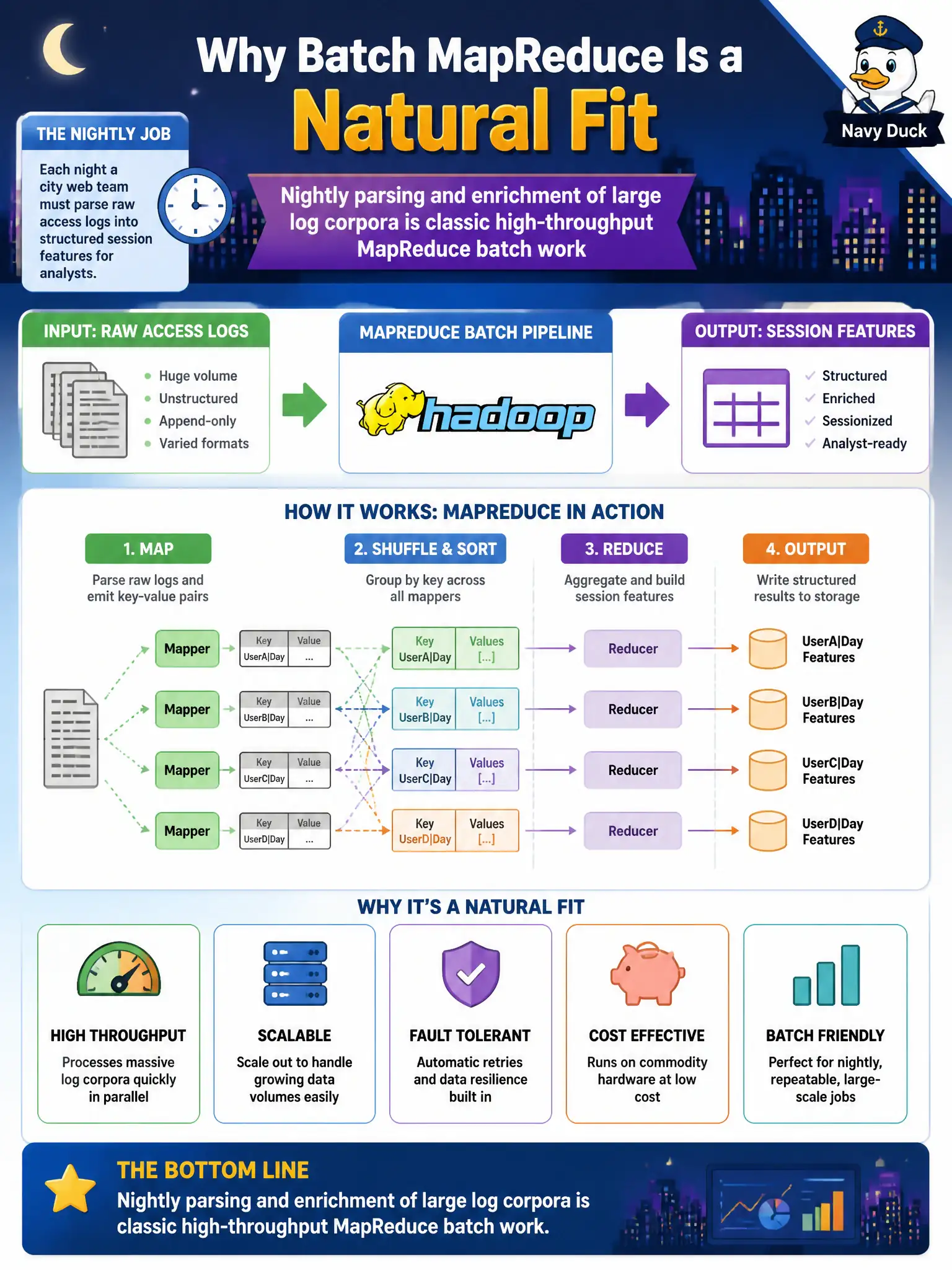
Each night a city web team must parse raw access logs into structured session features for analysts. Why is batch MapReduce a natural fit?
Select an answer to reveal the explanation.
Short Explanation
Last night's clickstream is a mountain of text you crush into tidy session tables by morning. That bulk parse-and-enrich job is MapReduce's comfort zone. Per-request personalization still needs a faster path.
Full Explanation
Nightly parsing of raw web access logs into structured session features for analysts is classic high-throughput MapReduce batch work: large text corpora, scheduled offline enrichment, and durable outputs for municipal web analytics teams. Requiring sub-second personalization inside each HTTP request is an online serving problem, not a reason MapReduce fits the nightly parse. It is false that MapReduce cannot read text files and only accepts live video streams. Computing session features only inside an OLTP shopping cart trigger mismatches batch log analytics with transactional checkout logic. Exam caveat: offline log parse/enrichment is a poster-child MapReduce batch workload. Operational check: land raw logs to HDFS daily, run the MapReduce parse into session feature tables, and gate analyst dashboards on job completion before morning publishing. In municipal platform operations, record the rationale in the architecture decision record so future on-call staff know which pattern was chosen and which failure modes the rejected options would create for city services. Re-validate after the next maintenance window that monitoring, access paths, and recovery steps still match the documented design for agencies that depend on this platform.