
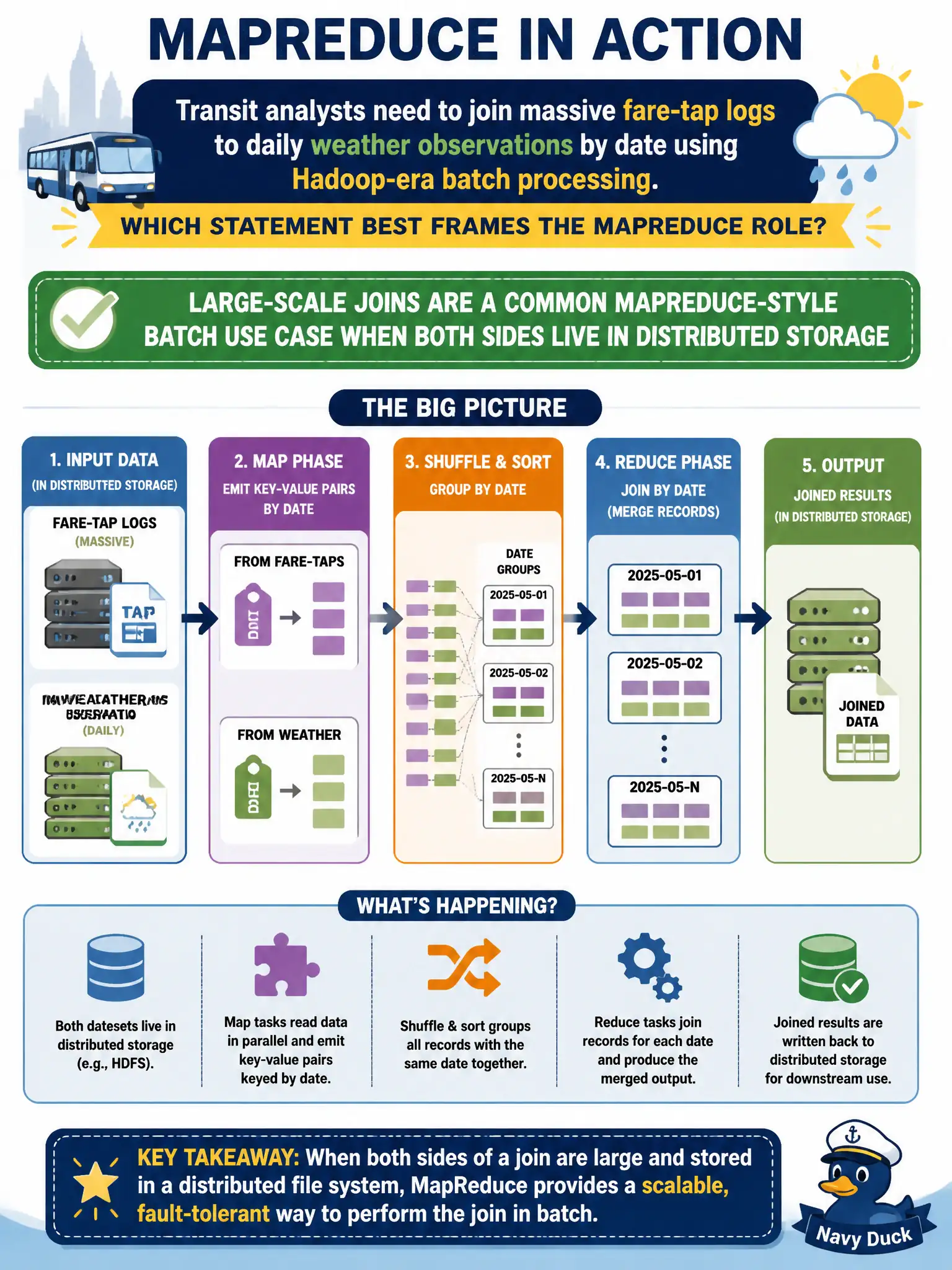
Transit analysts need to join massive fare-tap logs to daily weather observations by date using Hadoop-era batch processing. Which statement best frames the MapReduce role?
Select an answer to reveal the explanation.
Short Explanation
Pairing last month's taps with the weather calendar is a warehouse join, just bigger. MapReduce-style batch jobs are a classic way to pull that off on HDFS-scale data. Laptop RAM limits and "Kafka only" myths miss the batch lane.
Full Explanation
Large-scale joins of massive fare-tap logs to daily weather observations by date are a common MapReduce-style batch use case when both sides live in distributed storage—transit analysts can recompute overnight without fitting tables in laptop RAM. It is false that large joins are impossible unless every table fits in one laptop's RAM. MapReduce does not forbid joining any two datasets that share a key; joins are a standard batch pattern. Only Kafka being able to join historical fare taps to weather for overnight reports confuses streaming ingest with batch join processing. Exam caveat: distributed batch joins are in-scope MapReduce/Hadoop thinking for historical civic datasets. Operational check: run a fare-tap×weather join job on HDFS inputs, validate row counts and null rates, and land the result for morning delay attribution reports. In municipal platform operations, record the rationale in the architecture decision record so future on-call staff know which pattern was chosen and which failure modes the rejected options would create for city services. Re-validate after the next maintenance window that monitoring, access paths, and recovery steps still match the documented design for agencies that depend on this platform.