
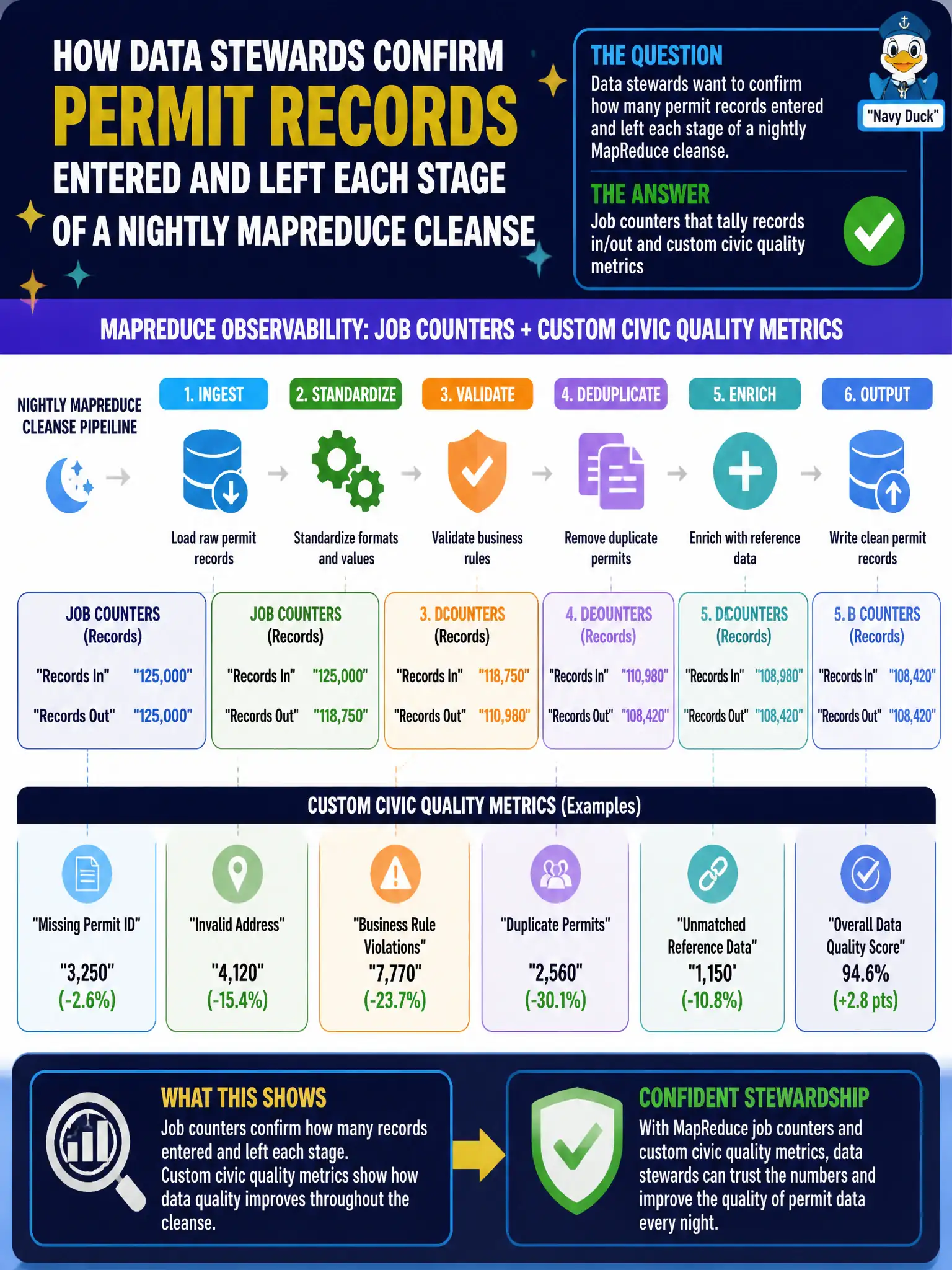
Data stewards want to confirm how many permit records entered and left each stage of a nightly MapReduce cleanse. What MapReduce observability feature supports that check?
Select an answer to reveal the explanation.
Short Explanation
Counters are the trip odometer on the MapReduce truck—records in, records out, weird rejects. Stewards use them to sanity-check civic data quality overnight. Turning metrics off or never committing output hides the truth.
Full Explanation
Data stewards confirming how many permit records entered and left each stage of a nightly MapReduce cleanse should use job counters that tally records in/out and custom civic quality metrics—MapReduce observability built for pipeline accountability. Silencing the JobTracker or job history so no metrics escape the cluster destroys the evidence stewards need. Replacing HDFS paths with anonymous in-memory-only scratch that never commits prevents durable, auditable outputs. Banning Hive metadata so analysts cannot name any table does not help stage-level record reconciliation. Exam caveat: counters are the standard MapReduce observability feature for record flow and custom metrics. Operational check: emit counters for permits in, permits out, and rejects; alert when in/out deltas exceed thresholds; and attach counter screenshots or exports to the nightly data-quality ticket. In municipal platform operations, record the rationale in the architecture decision record so future on-call staff know which pattern was chosen and which failure modes the rejected options would create for city services. Re-validate after the next maintenance window that monitoring, access paths, and recovery steps still match the documented design for agencies that depend on this platform.