
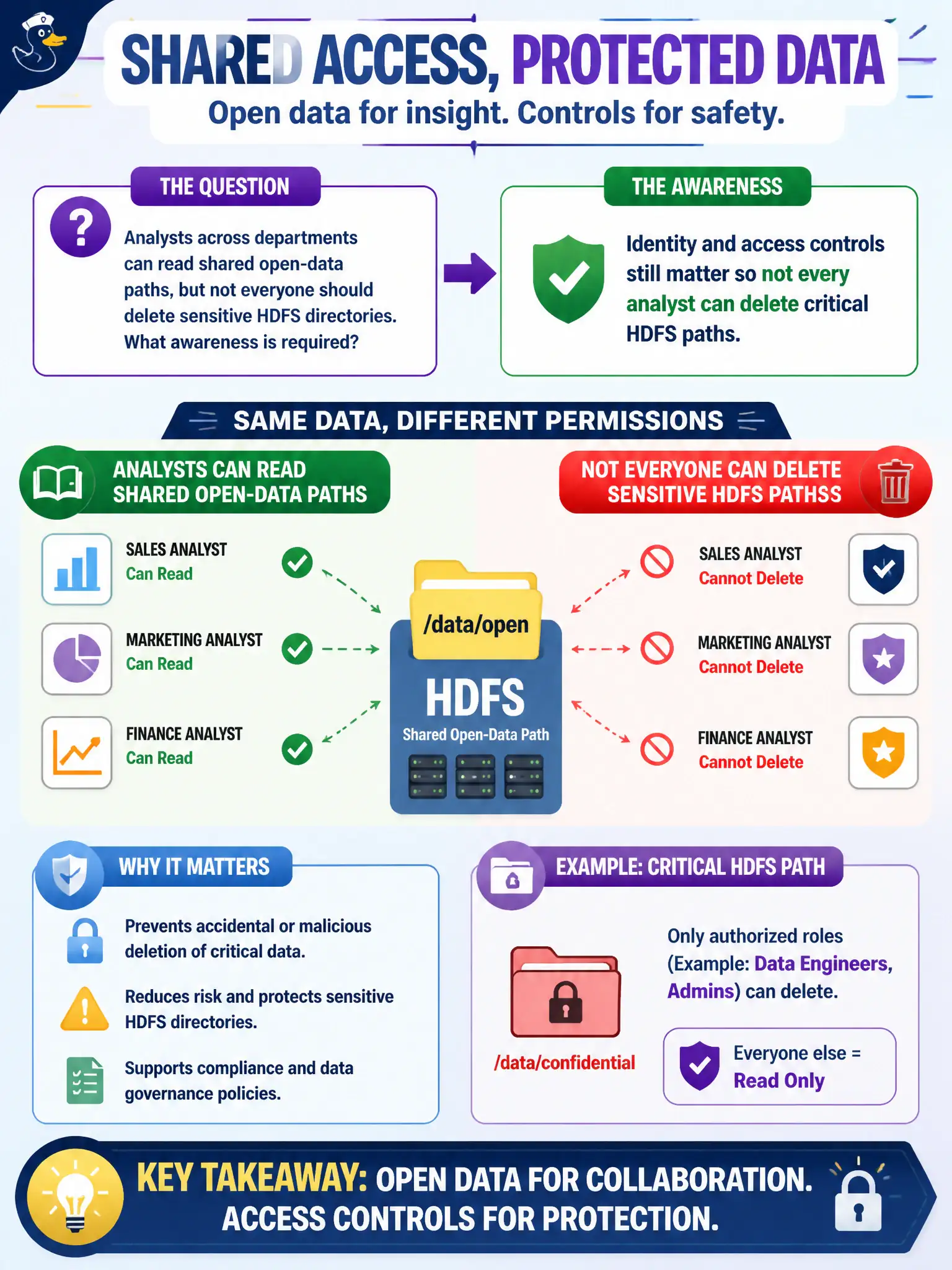
Analysts across departments can read shared open-data paths, but not everyone should delete sensitive HDFS directories. What awareness is required?
Select an answer to reveal the explanation.
Short Explanation
Library cards are not the same as master keys to the rare-books vault. Shared Hadoop still needs identity and access control so casual deletes do not trash sensitive paths. Replication is about durability, not who holds the delete button.
Full Explanation
Shared open-data paths may be broadly readable across departments, but identity and access controls still matter so not every analyst can delete critical HDFS directories holding sensitive municipal data—authorization is separate from replication. HDFS does need identity and access controls; replication provides availability copies, not confidentiality guarantees. Allowing any cluster user to delete any path while claiming governance applies only to slide decks fails public-sector control requirements. Kerberos lab drills are not the only permitted BDPC topic; conceptual ACL and identity awareness remain in exam scope. Exam caveat: confidentiality and least privilege remain necessary even on strongly replicated HDFS. Operational check: apply POSIX ACLs or Ranger-style policies separating read-only open-data from sensitive delete-protected paths, audit delete attempts, and review group membership quarterly. In municipal platform operations, record the rationale in the architecture decision record so future on-call staff know which pattern was chosen and which failure modes the rejected options would create for city services. Re-validate after the next maintenance window that monitoring, access paths, and recovery steps still match the documented design for agencies that depend on this platform.