
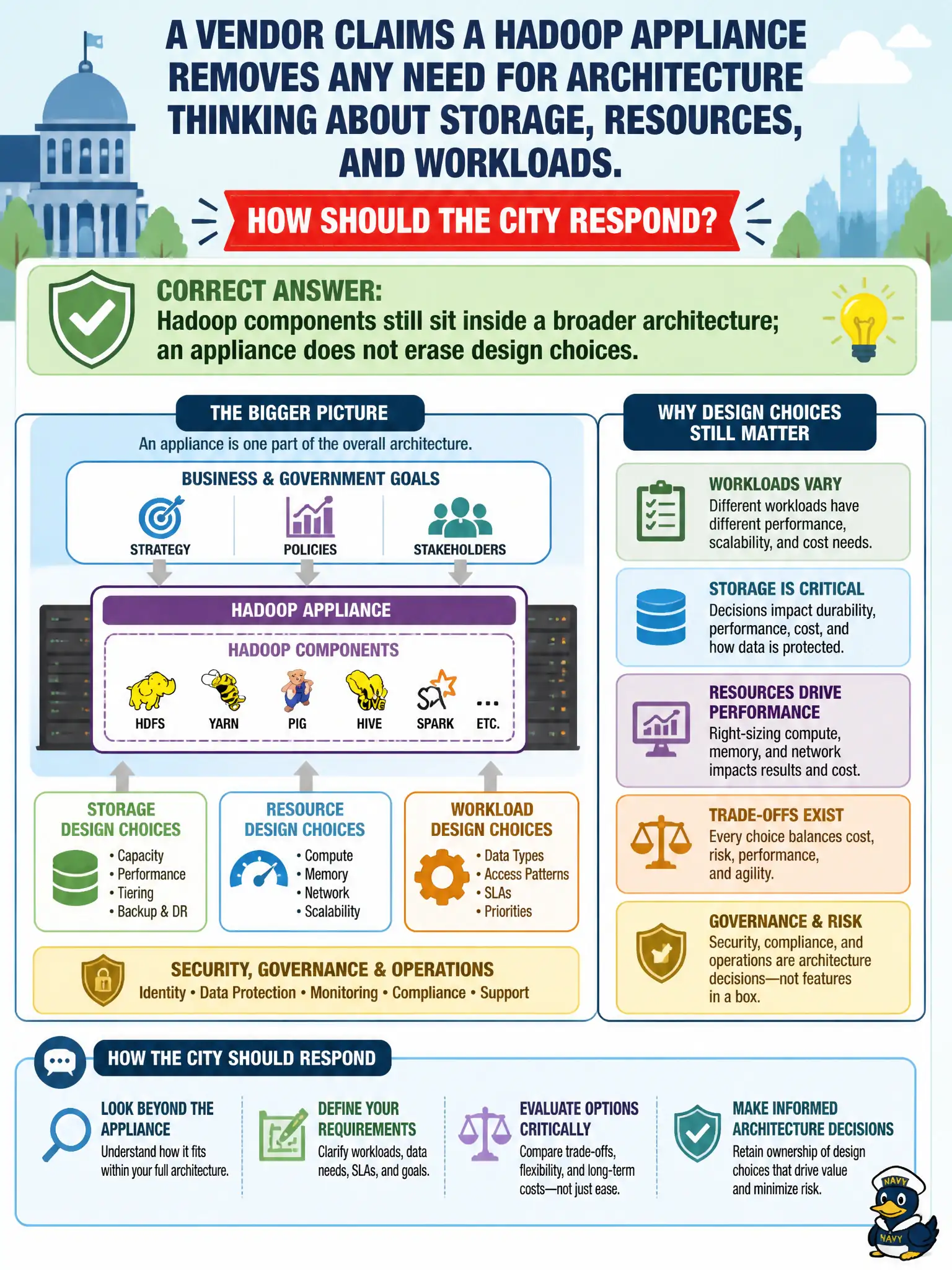
A vendor claims a Hadoop appliance removes any need for architecture thinking about storage, resources, and workloads. How should the city respond?
Select an answer to reveal the explanation.
Short Explanation
Buying a kitchen gadget does not retire the need for a meal plan. A Hadoop appliance still embeds HDFS, YARN, and workload choices inside a wider architecture. Brochures do not replace governance or design judgment.
Full Explanation
Even when a vendor ships a Hadoop appliance, Hadoop components still sit inside a broader municipal architecture; an appliance does not erase design choices about storage, resources, workloads, governance, and service levels. Accepting that HDFS and YARN concepts no longer apply once an appliance ships abandons necessary architectural literacy for city staff. Treating appliances as proof that municipal data no longer needs governance is a compliance and privacy failure waiting to happen. Replacing all architecture reviews with the vendor’s brochure as policy subordinates civic duty to marketing literature. Exam caveat: appliances package components—they do not replace architecture thinking expected on BDPC. Operational check: map appliance services to ingest/process/store/serve layers, keep ADRs for workload placement, and require architecture review before onboarding new agencies onto the appliance cluster. In municipal platform operations, record the rationale in the architecture decision record so future on-call staff know which pattern was chosen and which failure modes the rejected options would create for city services. Re-validate after the next maintenance window that monitoring, access paths, and recovery steps still match the documented design for agencies that depend on this platform.