
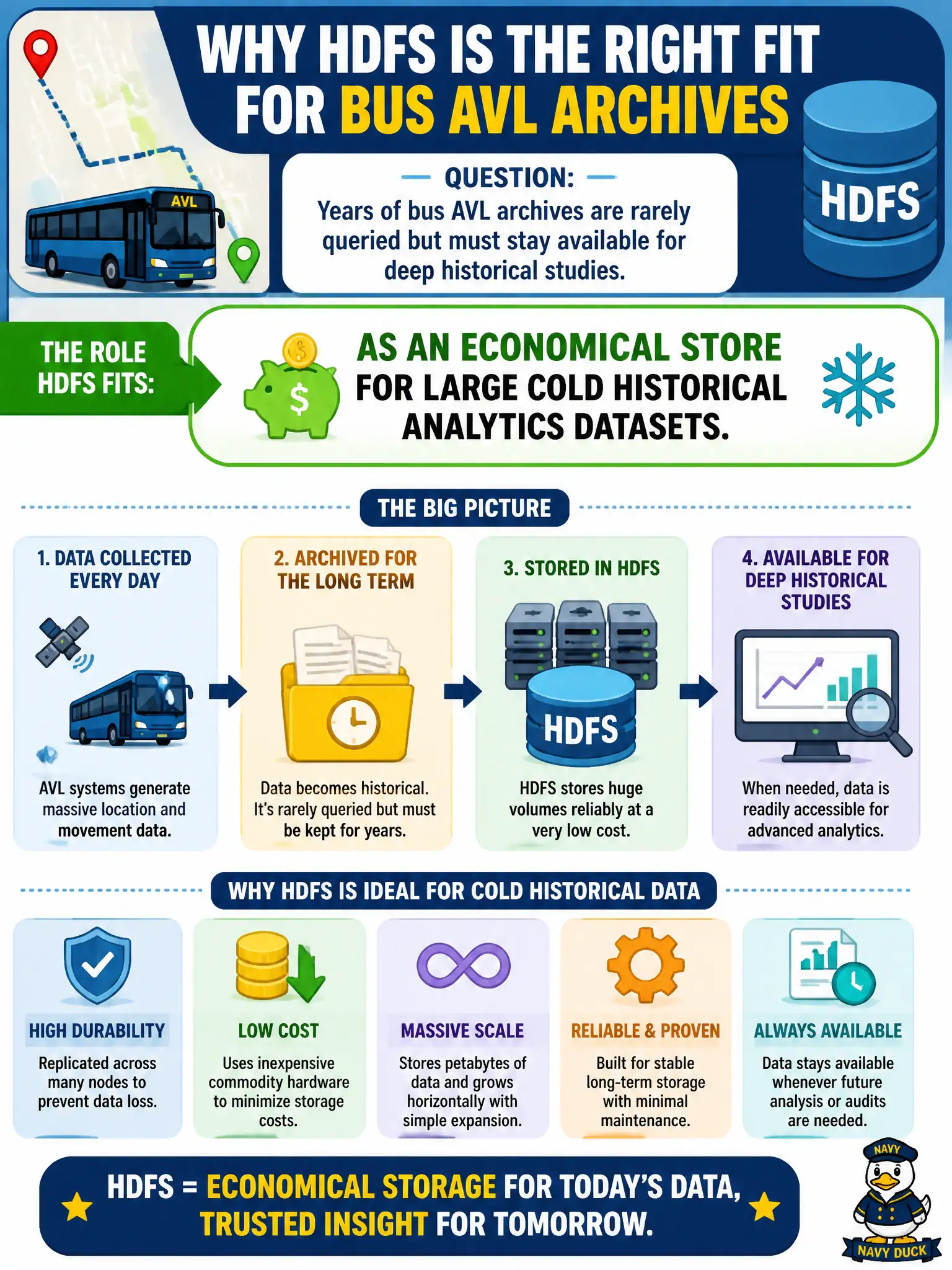
Years of bus AVL archives are rarely queried but must stay available for deep historical studies. What role fits HDFS well?
Select an answer to reveal the explanation.
Short Explanation
Think attic storage for boxes you open a few times a year. Years of bus AVL fit that pattern: HDFS is a solid economical home for cold historical lakes, not the live fare debit path. Keep deep-query archives there; keep turnstile transactions elsewhere.
Full Explanation
Years of bus AVL archives that are rarely queried but must remain available for deep historical studies fit HDFS well as an economical store for large cold historical analytics datasets on the transit platform. HDFS is not the sole system of record for every live fare-card debit at the turnstile—that belongs to transactional payment processing. It is not a replacement for the driver’s real-time radio voice channel used for operations. It is not an in-memory cache that discards data after each interactive dashboard click. Exam caveat: cold/historical analytical storage is a core HDFS sweet spot distinct from OLTP and real-time voice ops. Operational check: tier AVL history onto HDFS with appropriate replication and retention, document restore and access paths for researchers, and keep live fare debiting on the payment system of record. In municipal platform operations, record the rationale in the architecture decision record so future on-call staff know which pattern was chosen and which failure modes the rejected options would create for city services. Re-validate after the next maintenance window that monitoring, access paths, and recovery steps still match the documented design for agencies that depend on this platform.