
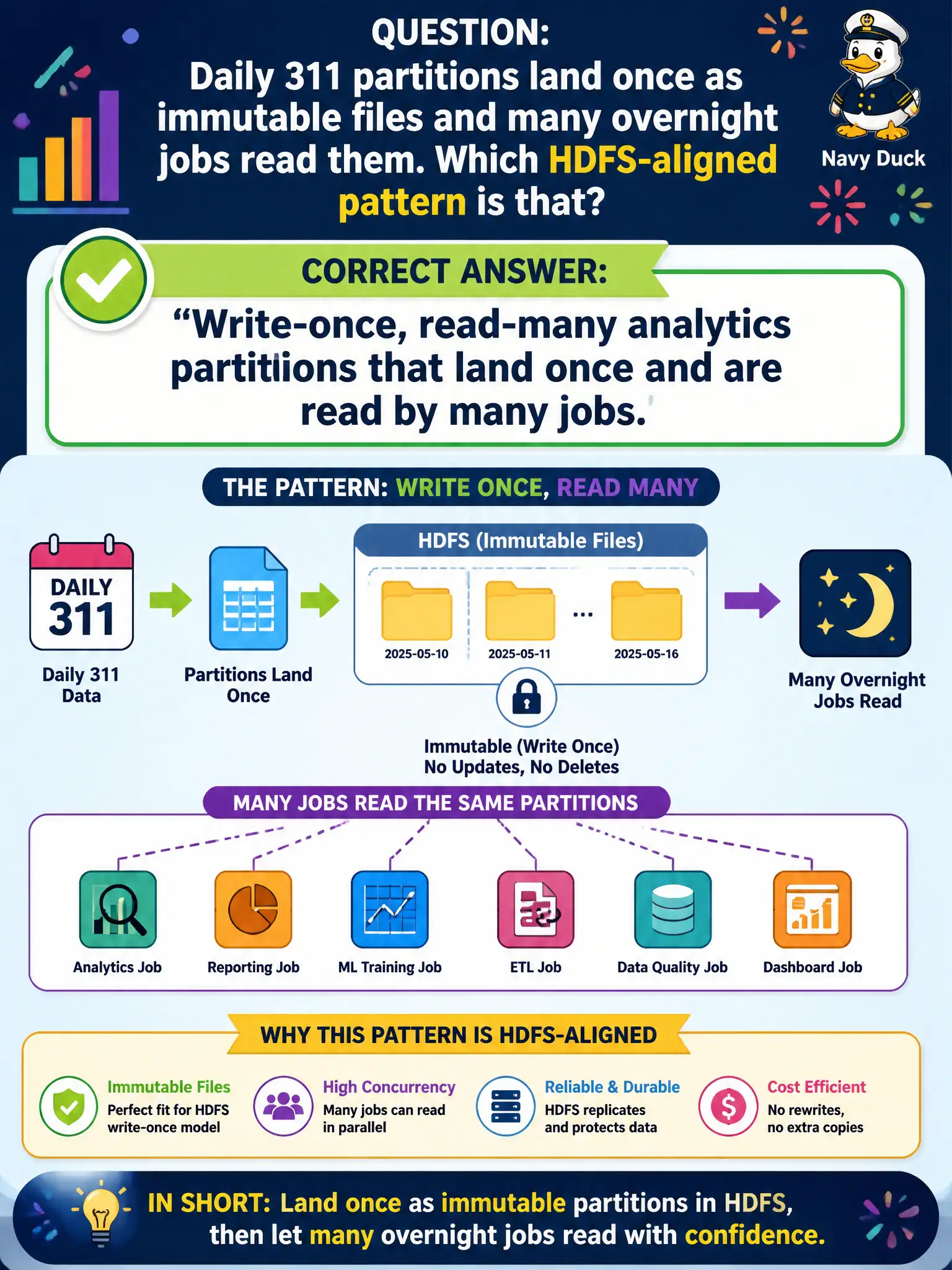
Daily 311 partitions land once as immutable files and many overnight jobs read them. Which HDFS-aligned pattern is that?
Select an answer to reveal the explanation.
Short Explanation
Stamp the daily newspaper once, then let the whole office read copies. Immutable 311 partitions work the same on HDFS: land once, read often. Constant in-place rewrites fight the grain of classic HDFS analytics layouts.
Full Explanation
Daily 311 partitions that land once as immutable files and are read by many overnight jobs exemplify the write-once, read-many analytics pattern aligned with HDFS strengths for municipal batch pipelines and shared consumption. Continuous in-place row updates to a single mutable master file each second describe OLTP behavior, not typical HDFS analytics partitions. Exclusive write locks so only one analyst may ever read a partition defeat shared analytical consumption across departments. Deleting each partition immediately after the first MapReduce task starts destroys reuse for downstream civic jobs that need the same day of 311. Exam caveat: WORM partition landing is the expected HDFS analytics pattern on BDPC questions. Operational check: land immutable daily 311 partitions, grant multiple overnight jobs read access, and forbid in-place mutation of those landed files without publishing a new partition version. In municipal platform operations, record the rationale in the architecture decision record so future on-call staff know which pattern was chosen and which failure modes the rejected options would create for city services. Re-validate after the next maintenance window that monitoring, access paths, and recovery steps still match the documented design for agencies that depend on this platform.