
Planning’s equity model and public-works’ pavement job both submit heavy work to the shared city cluster. What multi-tenant concern should capacity planning address?
Select an answer to reveal the explanation.
Short Explanation
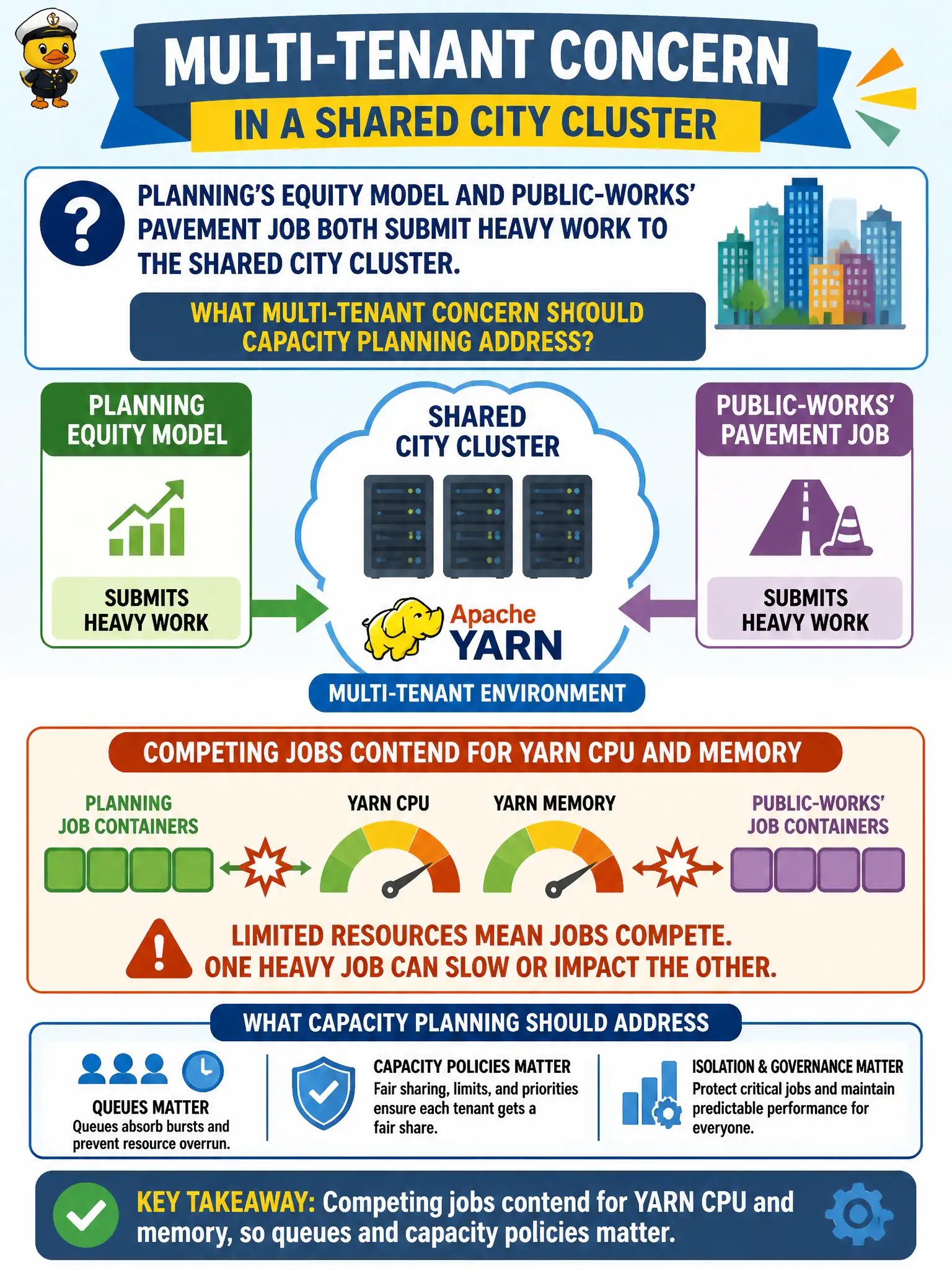
Two road crews cannot occupy the same intersection without a traffic plan. On a shared cluster, planning and public-works jobs fight for YARN CPU and memory—queues and limits keep the peace. Pretending contention cannot happen is wishful thinking.
Full Explanation
When planning’s equity model and public-works’ pavement job both submit heavy work, capacity planning must address that competing jobs contend for YARN CPU and memory, so queues and capacity or fair-share policies matter on multi-tenant municipal clusters. HDFS does not automatically delete the slower department’s datasets without review as a capacity feature. YARN does not remove the need for queues, limits, or fair-share policies; those policies are how YARN shares the cluster. Claiming only one municipal job may ever exist so contention cannot occur denies real shared-cluster operations across agencies. Exam caveat: multi-tenancy on Hadoop is largely a YARN scheduling and queue-design problem. Operational check: place departments in separate queues with guarantees and limits, run a contention test, and confirm neither equity nor pavement overnight jobs starve the other beyond policy. In municipal platform operations, record the rationale in the architecture decision record so future on-call staff know which pattern was chosen and which failure modes the rejected options would create for city services. Re-validate after the next maintenance window that monitoring, access paths, and recovery steps still match the documented design for agencies that depend on this platform.