
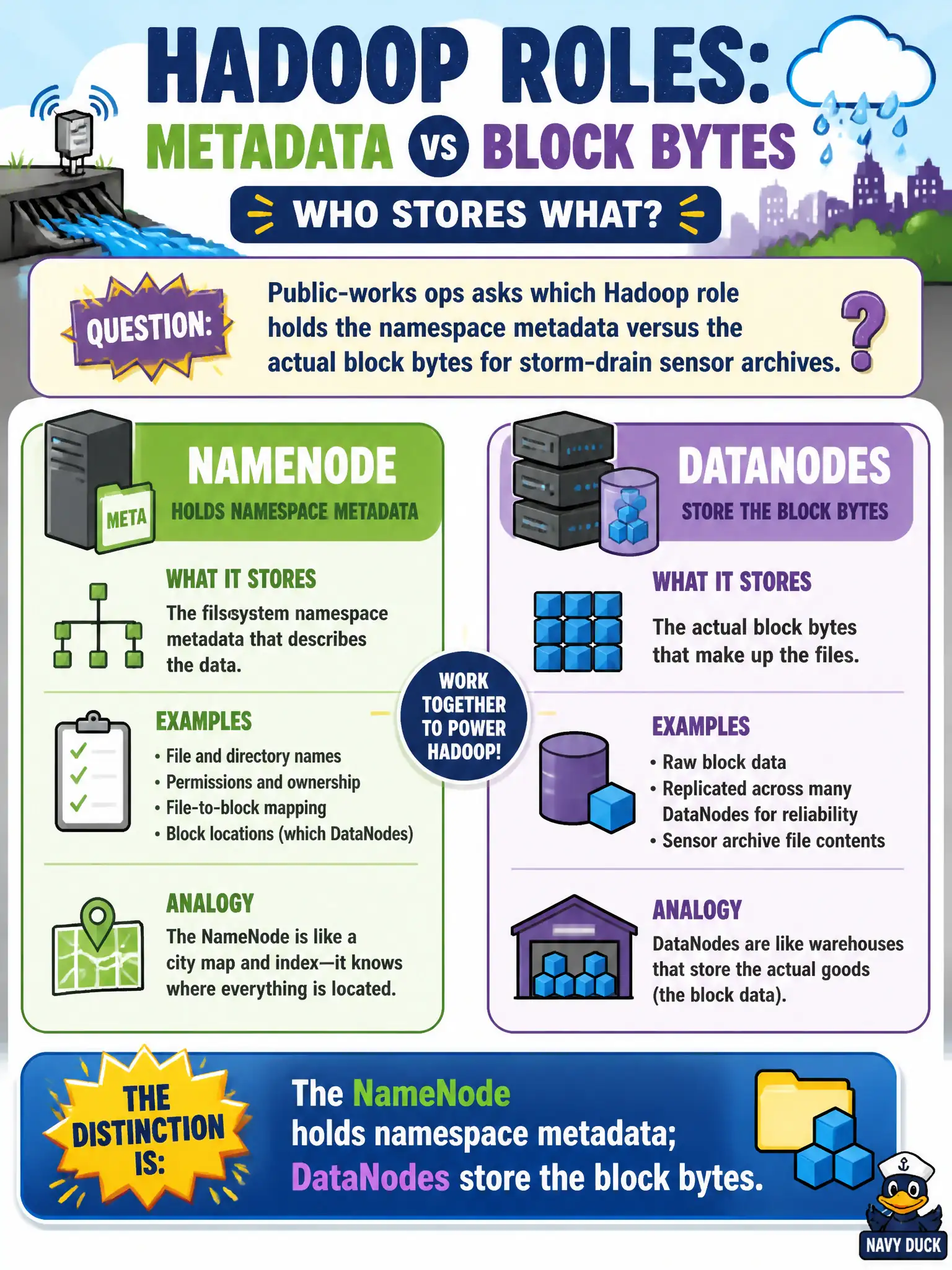
Public-works ops asks which Hadoop role holds the namespace metadata versus the actual block bytes for storm-drain sensor archives. Which distinction is correct?
Select an answer to reveal the explanation.
Short Explanation
Metadata is the map of the library; the shelves hold the books. On HDFS the NameNode keeps the namespace map, and DataNodes keep the block bytes. Mixing those jobs up breaks how the cluster finds storm-drain archives.
Full Explanation
For storm-drain sensor archives, the correct role distinction is that the NameNode holds namespace metadata while DataNodes store the actual block bytes—public-works ops must know who to call when paths versus payloads fail. Claiming the DataNode holds the file-system namespace while the NameNode stores only job logs reverses the classic HDFS roles. Saying both roles store identical full copies of every file byte and every path name collapses the metadata/data split and misstates how replication works. YARN’s ResourceManager does not permanently store HDFS block contents for all jobs; it allocates compute resources, not HDFS payloads. Exam caveat: NameNode=metadata, DataNode=blocks, YARN=resources—mixing any pair is a frequent wrong answer on BDPC. Operational check: during an incident drill, practice diagnosing a missing path (NameNode/metadata) versus a missing block replica (DataNode/storage) on the sensor archive. In municipal platform operations, record the rationale in the architecture decision record so future on-call staff know which pattern was chosen and which failure modes the rejected options would create for city services. Re-validate after the next maintenance window that monitoring, access paths, and recovery steps still match the documented design for agencies that depend on this platform.