
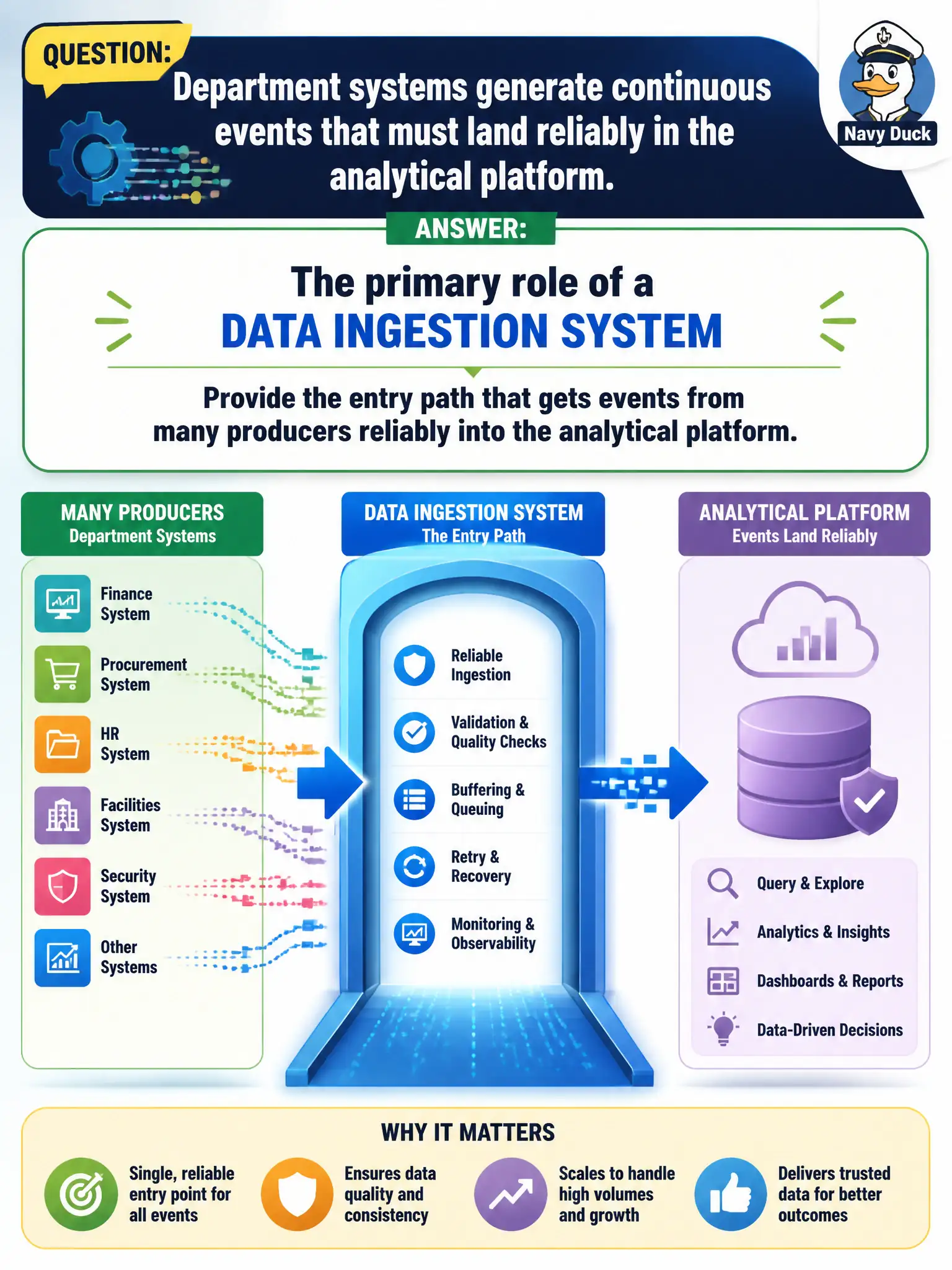
Department systems generate continuous events that must land reliably in the analytical platform. What is the primary role of a data ingestion system?
Select an answer to reveal the explanation.
Short Explanation
Ingestion is the loading dock for Big Data. Trucks from many departments drop off events so the warehouse and analytics floor can actually use them.
Full Explanation
The primary role of a data ingestion system is to provide the entry path that gets events from many department producers reliably into the analytical platform. It is the civic on-ramp for continuous and batch feeds alike. Replacing every source system with a single spreadsheet overnight is not ingestion architecture. Deleting arriving events so analysts never see operational data defeats the purpose. Serving only finished dashboard pixels with no upstream capture path skips the collection problem ingestion solves. Exam caveat: reliable ingestion includes delivery guarantees, schema handling, and dead-letter paths—not merely opening a TCP port. Operational check: send test events from two department systems, confirm they land in the analytical landing zone with lineage metadata, and verify failures route to a monitored dead-letter queue rather than vanishing. In production terms for reliable data ingestion entry paths, assign an owning team, wire a dashboard that shows the pattern is healthy under peak civic load, and require a staging drill that rehearses failure and recovery before resident impact. Revisit the choice when traffic shape, retention, or integrity needs change, and keep a named rollback owner on the change record. Re-test both the happy path and the failure path for reliable data ingestion entry paths after material dependency upgrades so regressions are caught before the next public release.