
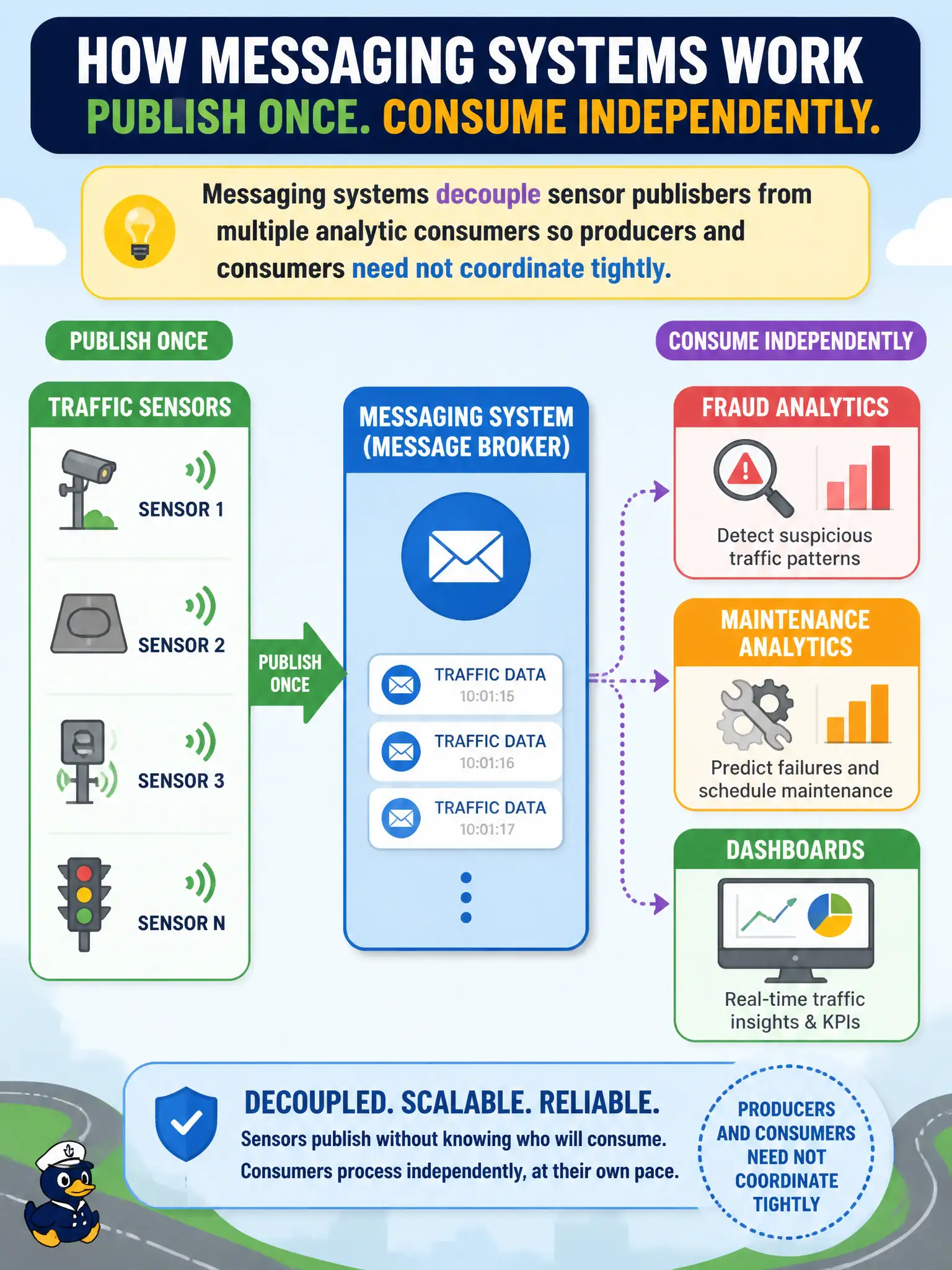
Traffic sensors should publish once while fraud, maintenance, and dashboards each consume independently. What role do messaging systems play?
Select an answer to reveal the explanation.
Short Explanation
Messaging is the bulletin board: sensors pin a note once, and as many readers as need it can grab a copy on their own schedule. Nobody waits in a chain at the sensor itself.
Full Explanation
When traffic sensors should publish once while fraud, maintenance, and dashboards each consume independently, messaging systems decouple sensor publishers from multiple analytic consumers so producers and consumers need not coordinate tightly. One publish fan-outs to many interests. Forcing every sensor to call each consumer API synchronously in turn couples failure domains and slows ingest. Requiring consumers to share one process with the publisher destroys independent scaling. Eliminating all consumers so sensors only write local files removes enterprise analytics. Exam caveat: decoupling still needs shared contracts (topic names, schemas, SLAs) or consumers reinterpret events incorrectly. Operational check: add a new dashboard consumer to an existing sensor topic without changing the publisher, and confirm fraud and maintenance consumers continue unaffected. In production terms for messaging decoupling of producers and consumers, assign an owning team, wire a dashboard that shows the pattern is healthy under peak civic load, and require a staging drill that rehearses failure and recovery before resident impact. Revisit the choice when traffic shape, retention, or integrity needs change, and keep a named rollback owner on the change record. Re-test both the happy path and the failure path for messaging decoupling of producers and consumers after material dependency upgrades so regressions are caught before the next public release.