
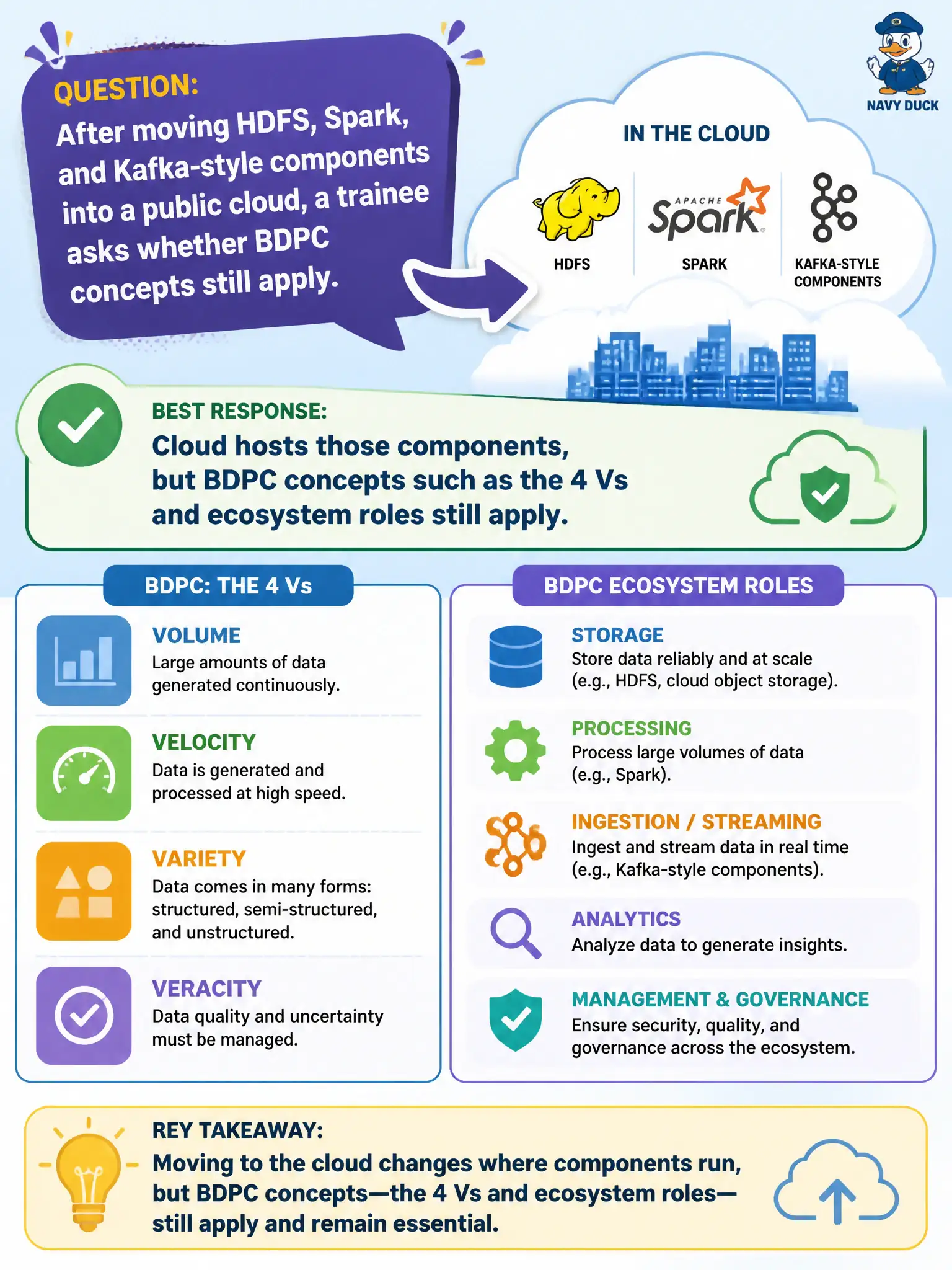
After moving HDFS, Spark, and Kafka-style components into a public cloud, a trainee asks whether BDPC concepts still apply. What is the best response?
Select an answer to reveal the explanation.
Short Explanation
Moving the workshop to a new building does not retire the craft. Cloud is the hosting substrate; Volume, Velocity, and component roles still matter. BDPC is not swapped out for a generic cloud trivia exam.
Full Explanation
After HDFS, Spark, and Kafka-style components move into a public cloud, BDPC concepts such as the 4 Vs and ecosystem roles still apply; the cloud hosts the components rather than replacing the discipline. Volume, velocity, variety, veracity, messaging patterns, and processing roles remain the language for designing civic pipelines. Trainees should keep studying the concepts, not only console clicks on a provider portal.
Cloud hosting does not replace the need to understand Volume, Velocity, or ecosystem components when those engines still process municipal data at scale. Vendor associate cloud exams may be useful career tools but do not void BDPC conceptual coverage after the first virtual machine boots. HDFS, Spark, and Kafka do not become obsolete the moment a cloud console opens; they often reappear as managed or self-built services in that console.
Exam caveat: managed service names differ by provider, yet exam items usually test portable concepts—topics, lag, elasticity, shared responsibility—more than one vendor’s product SKU. Operational check: map each production cloud service in use to a BDPC concept (for example, object store to volume landing, managed Kafka to ingestion bus) and use that map in onboarding for new engineers.