
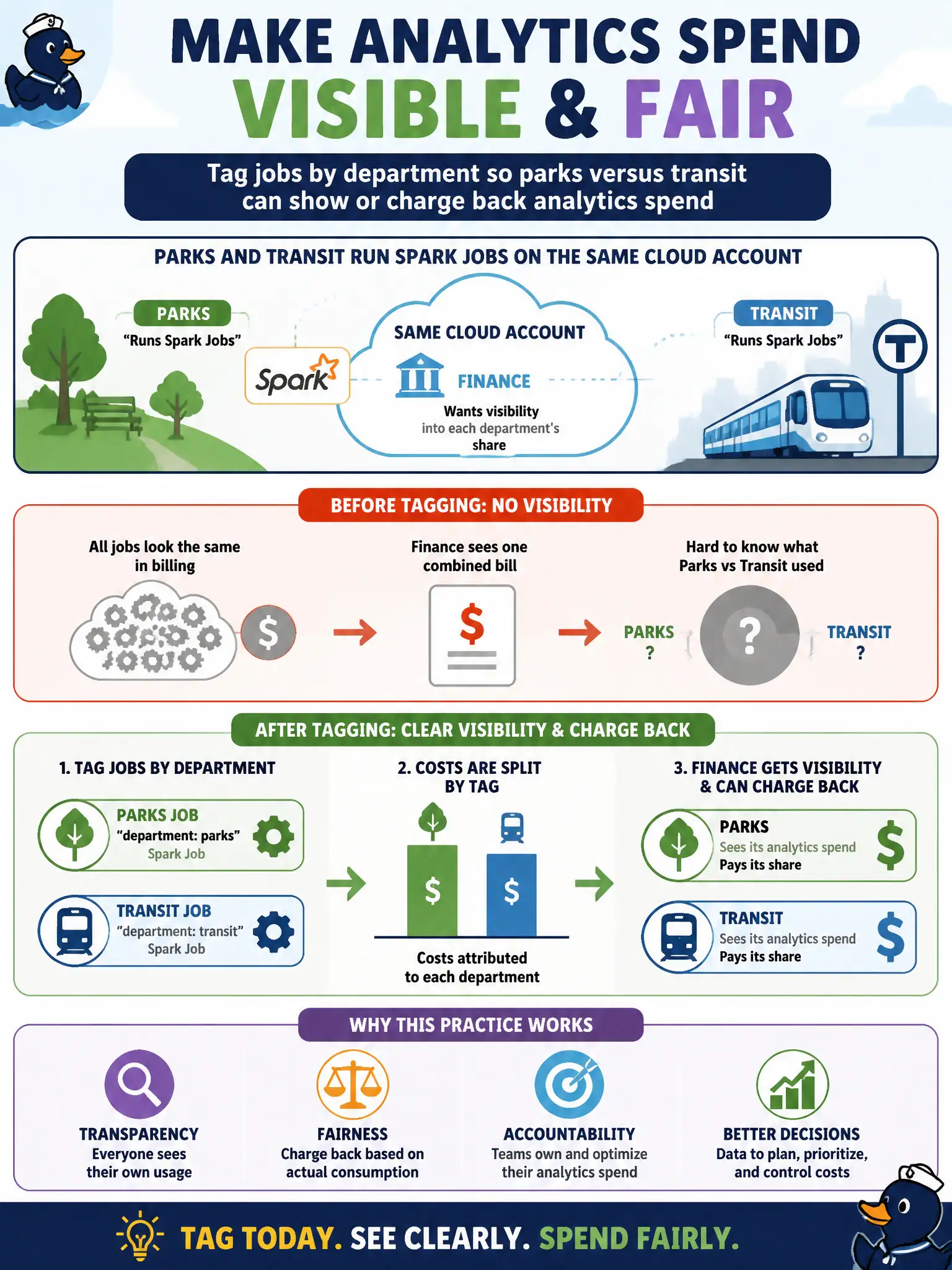
Parks and transit both run Spark jobs on the same cloud account, and finance wants each department to see its share. Which practice supports that visibility?
Select an answer to reveal the explanation.
Short Explanation
Colored stickers on tool bags tell you whose overtime to bill. Tagging cloud jobs by department makes parks-versus-transit spend visible. Mystery bills and hallway guesses are not showback.
Full Explanation
Tagging Spark jobs by department so parks versus transit can show or charge back analytics spend gives finance the visibility it needs on a shared cloud account. Cost allocation metadata is a practical FinOps-lite practice for municipal multi-tenant cloud analytics shared across agencies that otherwise fight over one opaque invoice. Without tags, shared bills become political arguments instead of measurable usage conversations rooted in evidence.
Hiding all billing details from department leads reduces questions while also reducing accountability for wasteful or zombie jobs. Charging the entire cloud bill only to the mayor’s discretionary fund forever masks which programs drive spend and blocks stewardship. Ignoring job metadata so finance approximates costs from hallway rumors is not a control practice worthy of public money or audit scrutiny.
Exam caveat: tags must be mandatory at submit time and enforced by policy; optional tagging collapses as soon as a team is in a hurry before a grant deadline. Operational check: run sample parks and transit jobs with required department tags, generate a cost report split by tag, and fail a job submission missing the tag in a non-production policy test.