
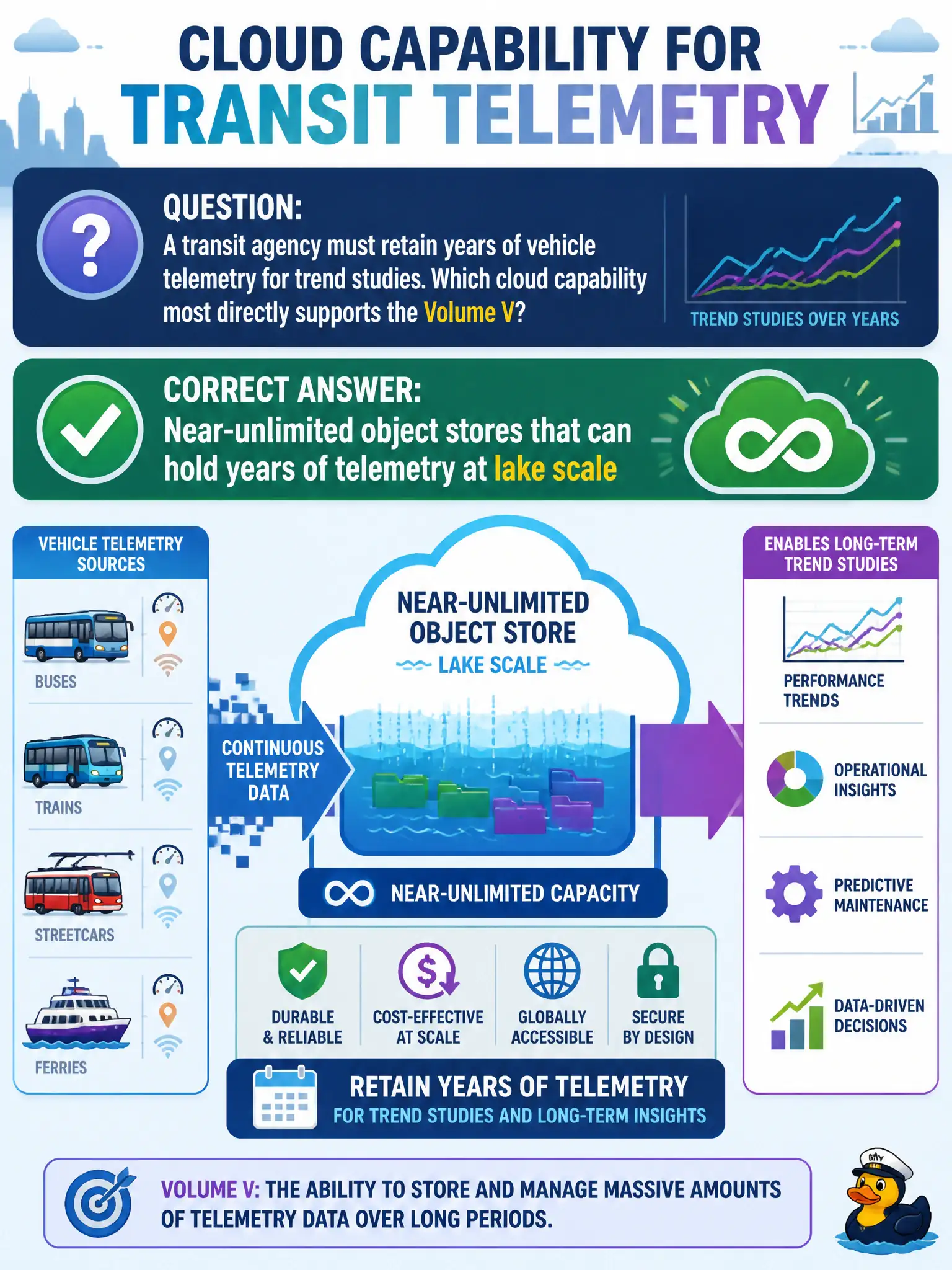
A transit agency must retain years of vehicle telemetry for trend studies. Which cloud capability most directly supports the Volume V?
Select an answer to reveal the explanation.
Short Explanation
Volume is the mountain of history, not the last sip of water. Near-unlimited object stores let cities keep years of telemetry without outgrowing a laptop. Caches and day-only chatbots serve other jobs.
Full Explanation
Near-unlimited object stores that can hold years of vehicle telemetry at lake scale most directly support the Volume V for a transit agency’s trend studies. Cloud lakes absorb historical depth that laptop disks and short caches cannot retain for multi-year fleet and ridership analysis. Volume awareness in Chapter 9 cloud contexts centers on durable, elastic storage for long civic histories rather than only hot slices.
Chatbots that summarize one day’s tickets address interaction patterns, not multi-year volume retention for fleet trends. Laptop disk images limited to a single analyst workstation cap volume at personal hardware and create bus-factor risk for the agency. In-memory caches sized only for the last five minutes of GPS pings serve hot velocity slices, not years of telemetry volume needed for planning studies.
Exam caveat: “near-unlimited” still meets budget and lifecycle reality—tiering, compression, and retention schedules keep volume affordable without deleting analytically important history. Operational check: estimate yearly telemetry growth, place a multi-year partition plan in object storage with lifecycle rules, and confirm a trend job can read older years without pulling data back onto laptop disks.