
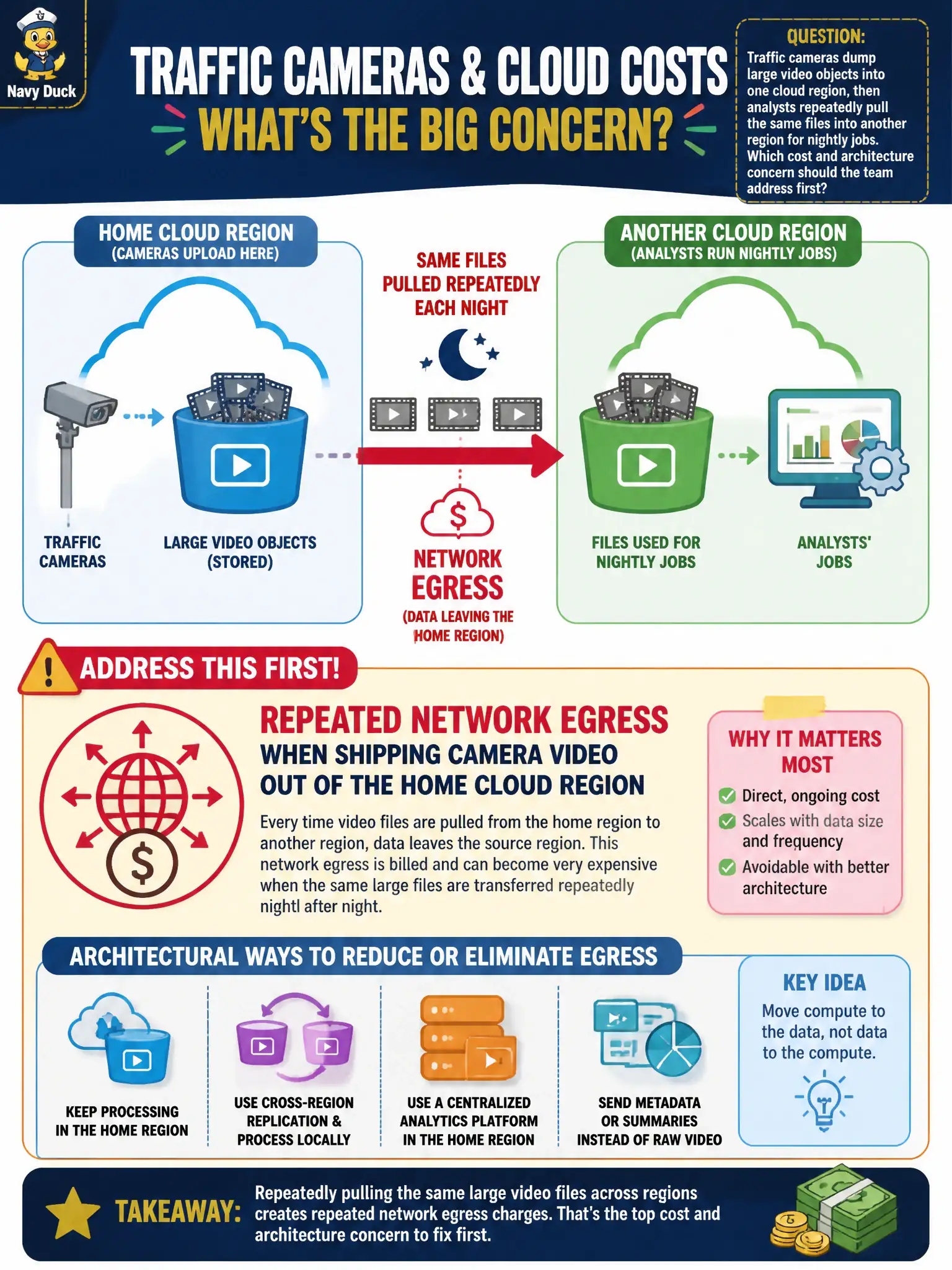
Traffic cameras dump large video objects into one cloud region, then analysts repeatedly pull the same files into another region for nightly jobs. Which cost and architecture concern should the team address first?
Select an answer to reveal the explanation.
Short Explanation
Hauling the same truckload of video across a toll bridge every night gets expensive fast. Cloud egress charges punish repeated cross-region pulls of bulky camera objects. Park the processing closer to the data instead of paying the toll again and again.
Full Explanation
Repeated network egress when shipping bulky traffic-camera video out of the home cloud region is the primary cost and architecture concern when analysts pull the same objects into another region for nightly jobs. Cloud pricing commonly charges for data leaving a region, so chatty cross-region pipelines punish municipal video lakes. Architecture should move processing closer to the objects or stage copies deliberately rather than re-hauling nightly.
License fees for unused spreadsheet macros on analyst laptops are unrelated noise beside video egress at lake scale. Printer toner used when staff screenshot a single frame is trivial compared with repeated object transfers. Focusing only on idle CPU while clusters wait for human approval misses the dominant transfer cost pattern described in the scenario.
Exam caveat: egress is not the only cloud cost—storage class, request rates, and compute still matter—but for large camera objects repeatedly leaving a region, egress usually deserves first attention. Operational check: measure gigabytes transferred cross-region for a typical nightly window, estimate egress charges, then pilot running the job in the home region or using a controlled one-time replica and compare the bill.