
Policy requires resident analytics datasets to remain inside the national region. How should that rule shape cloud selection for the municipal lake?
Select an answer to reveal the explanation.
Short Explanation
Think of a library that must keep certain books inside the county line. Residency policy tells you which cloud regions are even on the shortlist. Cheapest worldwide replicas can break the rule even if they look fast on a spreadsheet.
Full Explanation
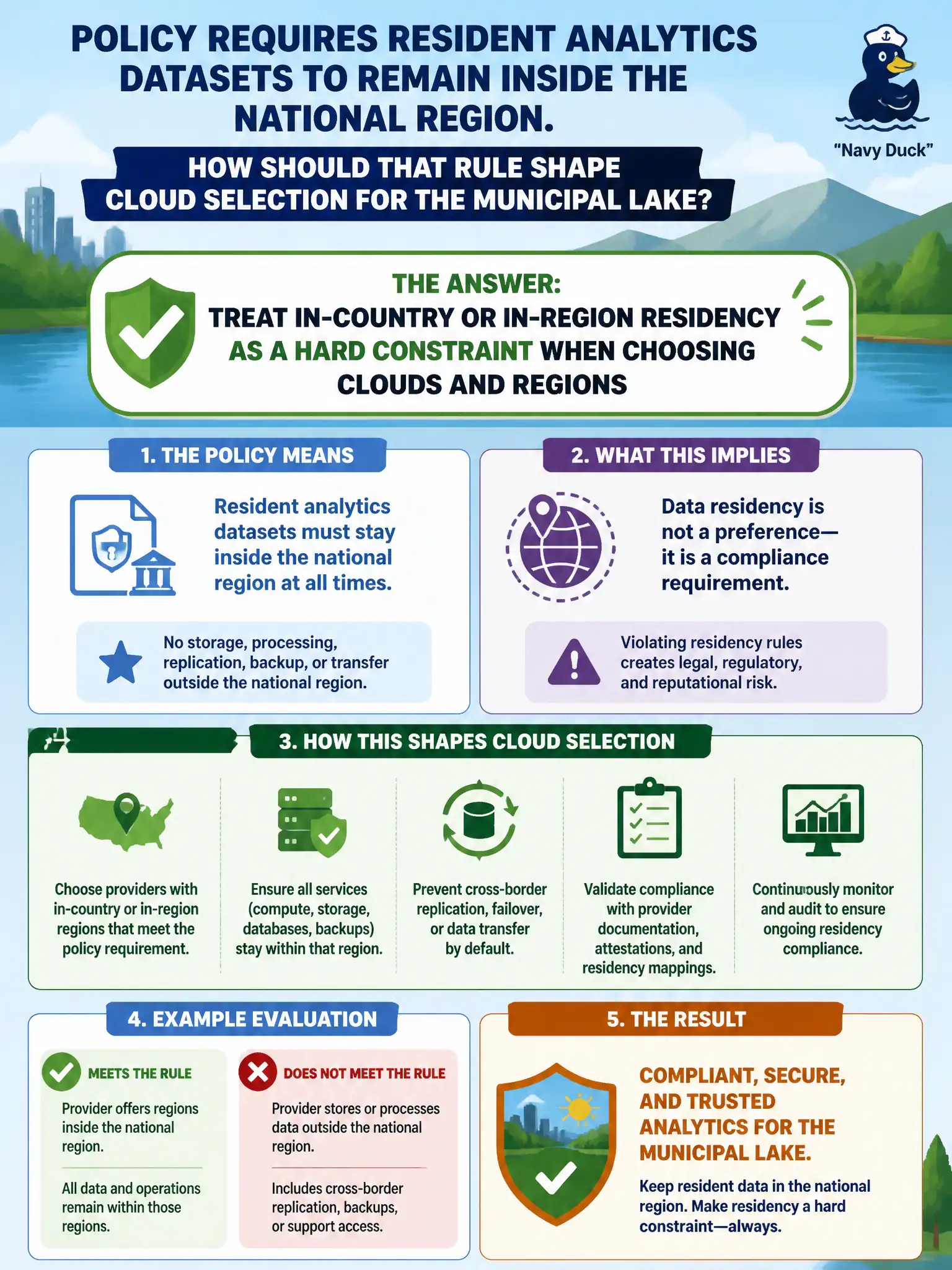
In-country or in-region residency rules are hard constraints when selecting clouds and regions for a municipal lake that holds resident analytics datasets. Policy that requires data to remain inside the national region must shape the shortlist before price or feature comparisons dominate. Chapter 9 cloud awareness includes placement and residency as first-class design inputs for civic data estates.
Ignoring region catalogs because Big Data always replicates worldwide by default risks unlawful or policy-breaking placement of citizen records. Preferring the cheapest global region even when it stores citizen records offshore elevates cost over residency mandates and can fail audits. Claiming residency rules apply only to email archives and never to analytical object stores invents an exemption auditors will not accept for lake data.
Exam caveat: residency may also constrain disaster-recovery replicas, vendor support access, and telemetry exported by managed services—not only the primary bucket location. Operational check: list every region and replica target for the municipal lake, confirm each is inside the allowed residency boundary, and document exceptions with legal sign-off before enabling cross-region features.