
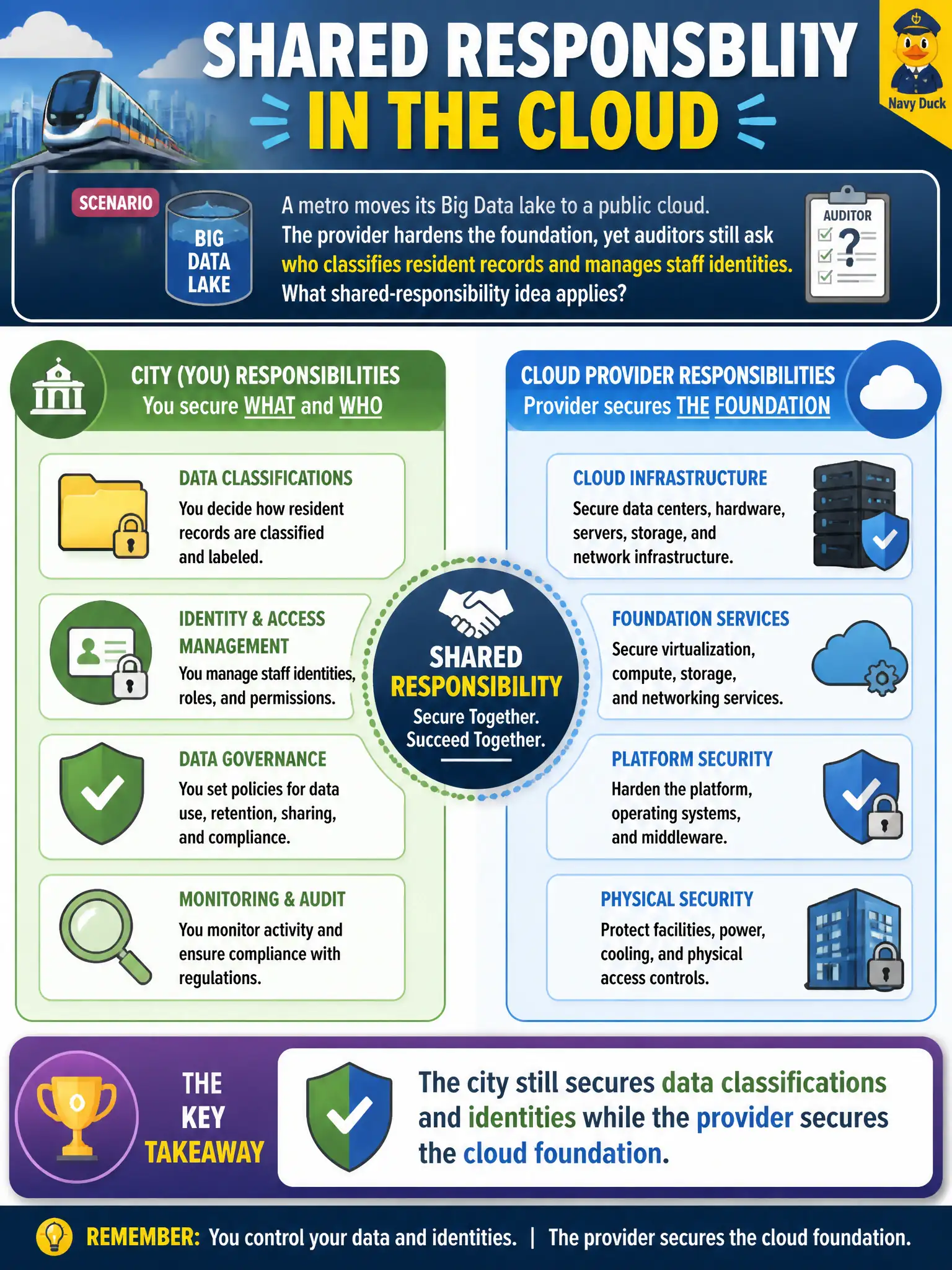
A metro moves its Big Data lake to a public cloud. The provider hardens the foundation, yet auditors still ask who classifies resident records and manages staff identities. What shared-responsibility idea applies?
Select an answer to reveal the explanation.
Short Explanation
Cloud is like a secured apartment building: the landlord locks the structure, but tenants still lock their own doors. The provider covers the foundation; the city still owns classifications, identities, and how resident data is used. Handing over the rack does not hand over accountability for the contents.
Full Explanation
Shared responsibility in public cloud means the provider hardens the foundation while the city still secures data classifications, identities, and how resident records are used in the analytical lake. Moving a metro lake to the cloud does not outsource stewardship of labels, entitlements, or staff access reviews. Auditors correctly keep asking who classifies data and manages identities after migration.
Claiming the provider alone owns every classification label once data leaves city racks misstates the shared model and invites uncontrolled exposure. Saying shared responsibility applies only to email and never to analytical lakes invents a false exemption for Big Data platforms. Treating identity management as optional after the first successful migration creates orphaned access paths that auditors will fail.
Exam caveat: the precise split varies by IaaS versus PaaS versus SaaS, but customer duties for data and identity nearly always remain for civic tenants. Operational check: map provider-owned controls versus city-owned controls for the lake in a shared-responsibility matrix, then sample whether classification tags and identity lifecycle reviews are actually performed by city staff. Document the verified decision in the municipal architecture runbook so future on-call and audit staff inherit the same standard.