
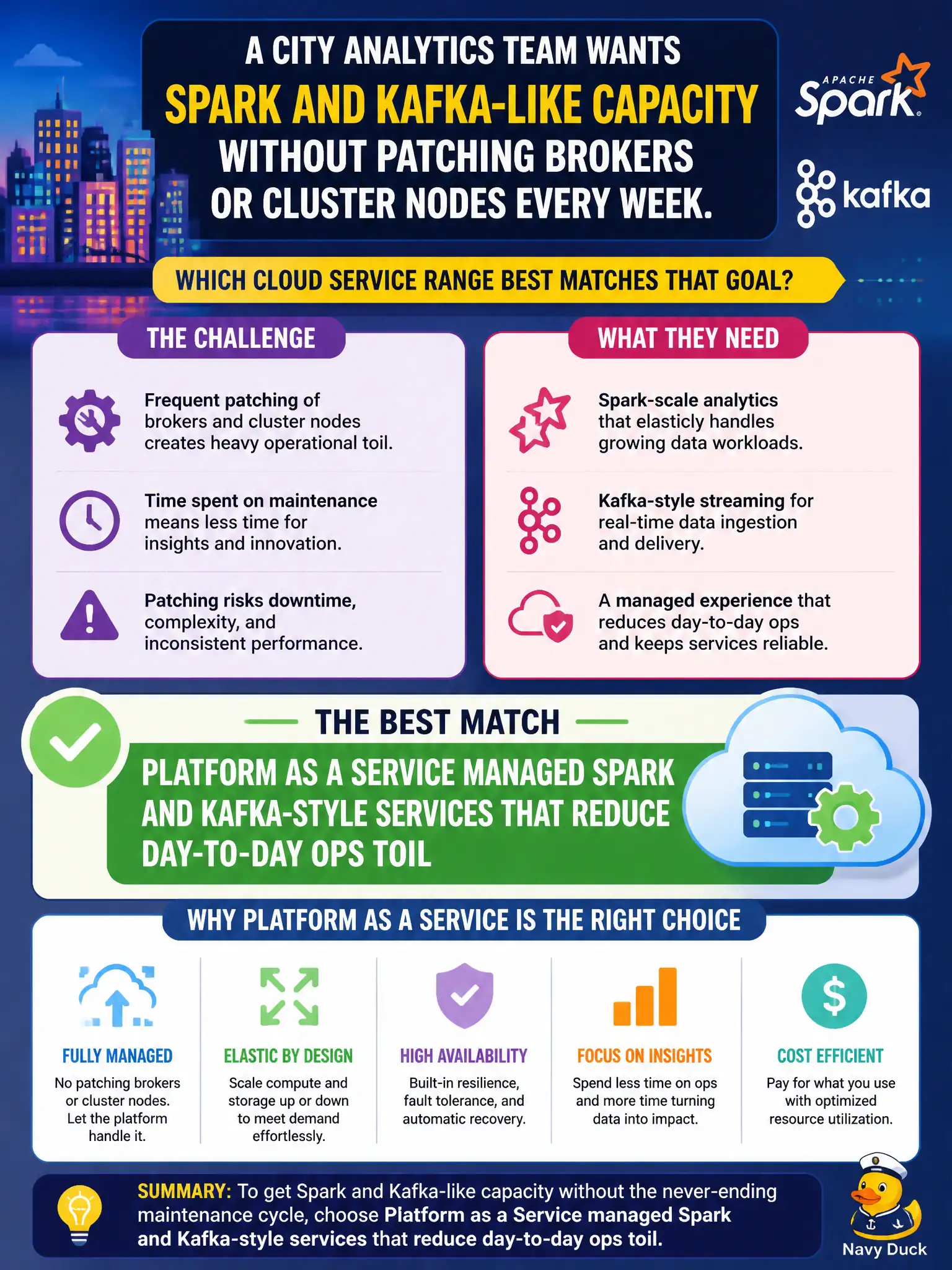
A city analytics team wants Spark and Kafka-like capacity without patching brokers or cluster nodes every week. Which cloud service range best matches that goal?
Select an answer to reveal the explanation.
Short Explanation
Picture renting a kitchen where the stove stays tuned for you, not buying the whole building. Managed Spark and Kafka-style PaaS keeps the engines available while the provider handles much of the patching and cluster babysitting. Bare VMs and pure dashboards sit on different parts of the service ladder.
Full Explanation
Platform as a Service managed Spark and Kafka-style offerings reduce day-to-day patching and cluster operations while still exposing the engines civic analytics teams need. The city consumes framework capacity as a service instead of babysitting every broker and worker node each week. That service-range choice matches teams that want Spark and Kafka-like capability without owning full middleware operations on raw VMs.
Infrastructure as a Service that only rents bare virtual machines still leaves the team patching and operating brokers and nodes—the very toil they want to escape. On-premises appliances that keep every daemon under city data-center ownership preserve control but do not deliver the managed ops reduction described. Software as a Service dashboards that hide the underlying event and compute engines entirely may serve visualization, yet they are the wrong altitude when the team still needs Spark and Kafka-style processing capacity.
Exam caveat: PaaS shifts responsibility but does not remove shared duties for data classification, IAM, network exposure, or cost governance of the managed services. Operational check: compare a month of patch tickets and on-call pages for self-managed brokers versus the managed PaaS, and confirm job submit paths and topic operations still meet the analytics team’s required controls.