
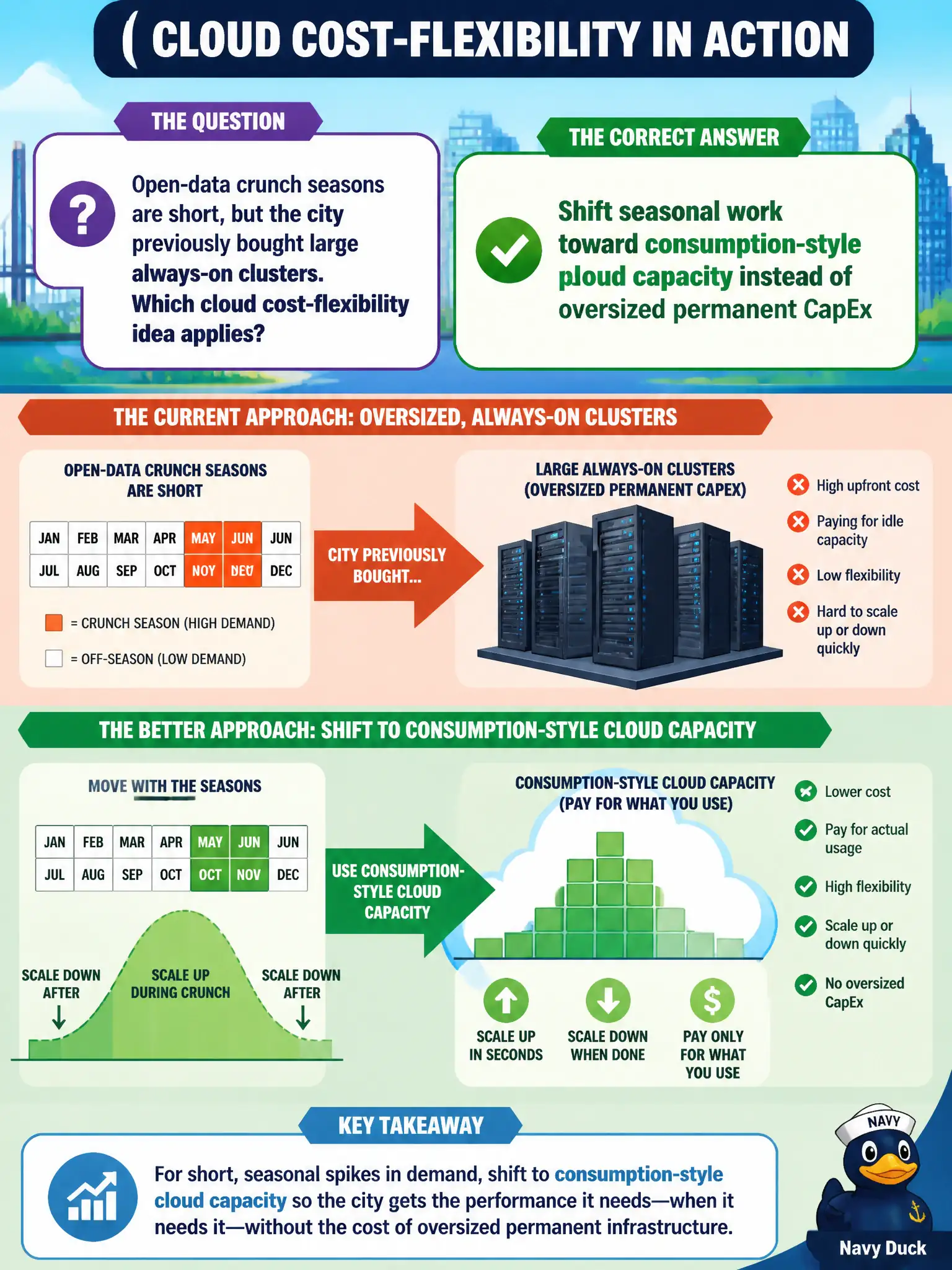
Open-data crunch seasons are short, but the city previously bought large always-on clusters. Which cloud cost-flexibility idea applies?
Select an answer to reveal the explanation.
Short Explanation
Buying a banquet hall you use two weekends a year is pricey CapEx theater. Cloud consumption lets seasonal open-data crunches rent capacity when needed. Flexibility beats idle iron for short seasons.
Full Explanation
Shifting seasonal open-data crunch work toward consumption-style cloud capacity reduces the need for oversized permanent CapEx clusters that sit idle most of the year. Cloud cost flexibility matches spend tempo to short civic analytics seasons without requiring a full FinOps specialty exam. Chapter 9 presents that flexibility as a practical benefit for municipalities balancing budgets with bursty open-data calendars.
Keeping maximum CapEx clusters idle most of the year for ownership pride preserves waste, not capability, and crowds out other civic priorities. Ignoring cost models because Big Data platforms never have budgets is unrealistic for public finance stewards. Mandating that every seasonal job purchase new unshareable hardware multiplies spend and undermines pooled cloud capacity that other departments could reuse.
Exam caveat: consumption pricing can surprise teams with egress, idle managed services, or forgotten experiments—flexibility still needs budgets, tags, and shutdown discipline. Operational check: compare last season’s always-on cluster cost to a consumption run of the same crunch jobs with idle capacity released, and present both numbers to finance with workload hours attached.