
Election-night traffic analytics need a large burst of capacity, then quiet days afterward. Which cloud benefit should the city leverage?
Select an answer to reveal the explanation.
Short Explanation
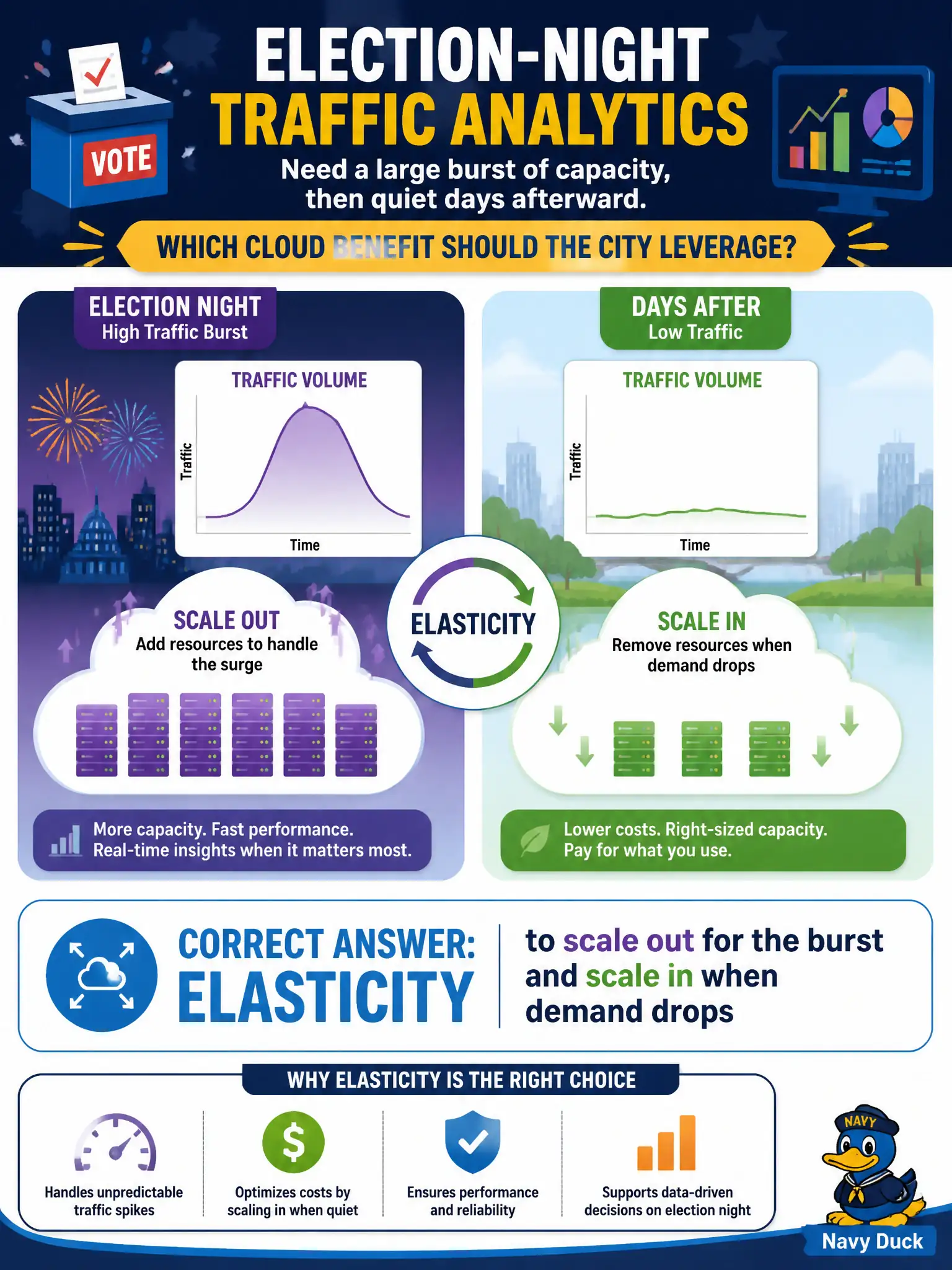
Election night is a stadium crowd; Wednesday is empty seats. Elasticity lets you swell the analytics farm for the spike and shrink it after. Pay for the roar, not the empty arena all year.
Full Explanation
Elasticity lets election-night traffic analytics scale out for a short burst and scale in when demand drops, aligning capacity with civic peak patterns. Cloud Big Data benefits include adding and removing resources as intensity changes rather than owning permanent stadium seating for one night a year. That is a primary Chapter 9 benefit framed for municipal workloads that spike around elections, storms, or filing deadlines.
Buying permanent peak hardware sized only for election night every year wastes capital across quiet days and locks the city into idle iron. Freezing cluster size at the yearly average and dropping peak events loses the very insight leadership needs during the burst. Turning off all analytics during elections avoids capacity planning by abandoning the mission when visibility matters most.
Exam caveat: elasticity requires automated or rehearsed scale policies, quotas, and cost controls—manual ticket-driven growth may be too slow for election-night velocity. Operational check: run a load test that triggers scale-out of the analytics tier, confirm processing keeps up with the synthetic spike, then verify scale-in after load drops and capture the cost delta versus permanent peak sizing.