
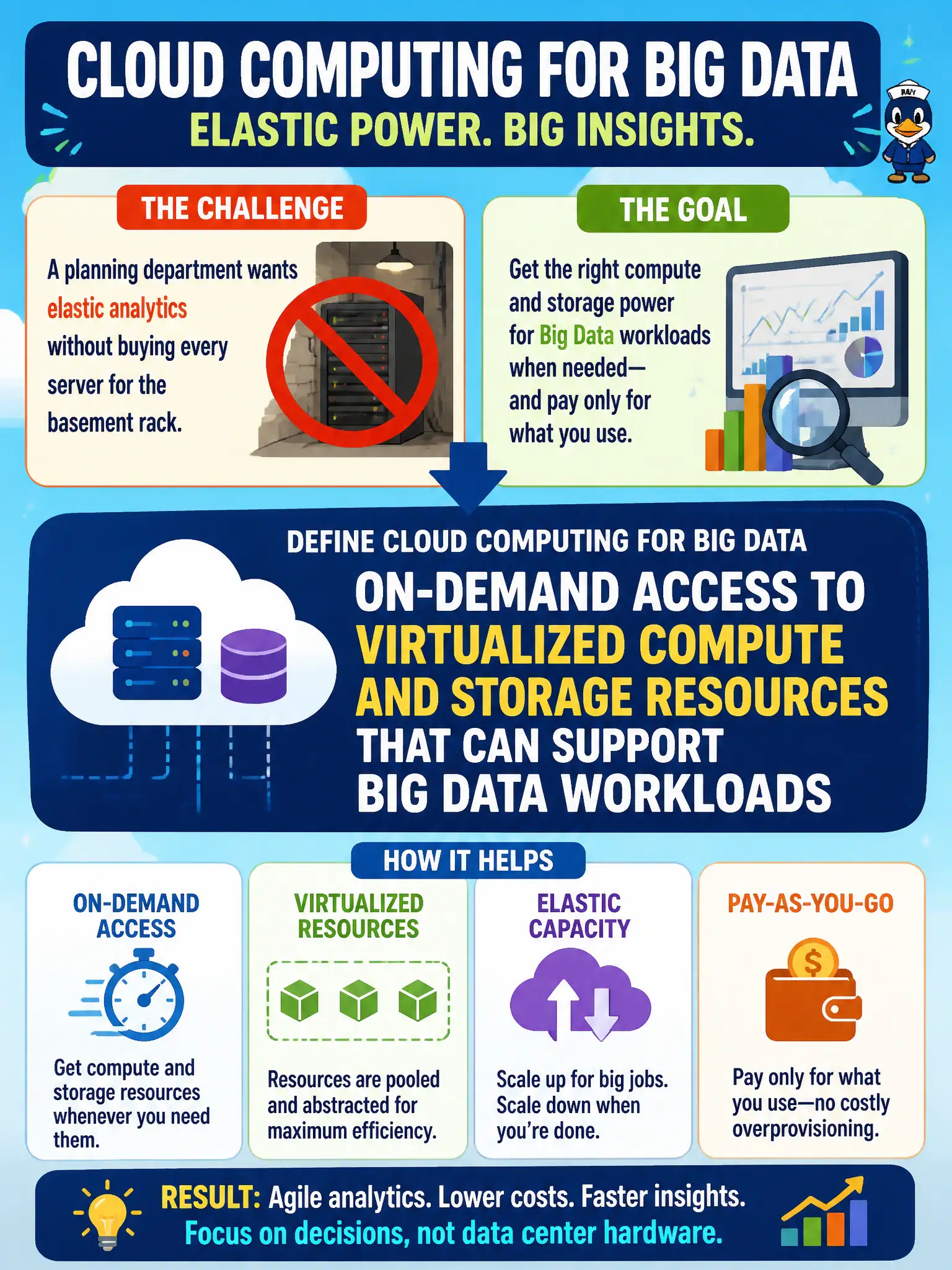
A planning department wants elastic analytics capacity without buying every server for the basement rack. How should they define cloud computing for Big Data in that context?
Select an answer to reveal the explanation.
Short Explanation
Cloud for Big Data means tapping virtualized compute and storage on demand—like metering power instead of wiring your own generator farm. Basement ownership is optional; elastic capacity is the point. That is the civic cloud idea in one line.
Full Explanation
For Big Data planning, cloud computing means on-demand access to virtualized compute and storage resources that can support analytics workloads without purchasing every server for a basement rack. That definition emphasizes network-delivered elasticity and abstraction rather than a single physical room full of owned iron. Chapter 9 awareness starts from this resource model for municipal planning and analytics teams that need capacity without forever CapEx.
Defining cloud as only privately owned mainframes that never leave city property describes a traditional on-premises posture, not the elastic access model the question seeks. Any spreadsheet emailed between analysts is collaboration tooling, not cloud Big Data infrastructure. A single unused desktop under a desk reserved for overnight jobs is leftover capacity, not on-demand virtualized cloud capacity for elastic analytics.
Exam caveat: “cloud” in BDPC spans public, private, and hybrid placements; the shared idea is abstracted, network-accessible capacity—not a requirement that every dataset leave the building. Operational check: provision a short-lived analytics workspace from a service catalog without a hardware purchase ticket, run a sample job, and tear it down to demonstrate on-demand virtualized access for the planning department.