
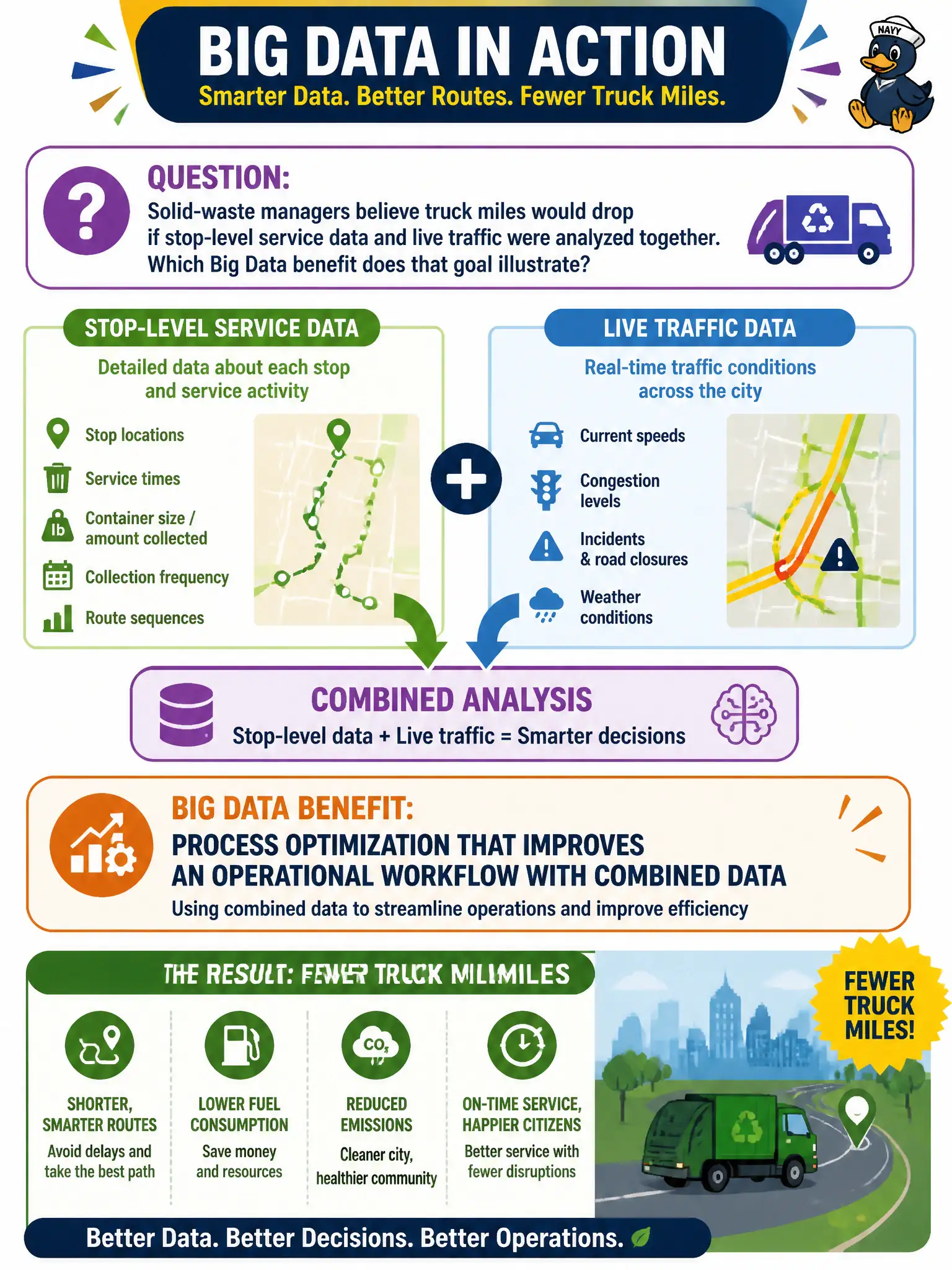
Solid-waste managers believe truck miles would drop if stop-level service data and live traffic were analyzed together. Which Big Data benefit does that goal illustrate?
Select an answer to reveal the explanation.
Short Explanation
Routing trucks smarter is classic ‘fix the process,’ not invent a new city department. Stop lists plus traffic are the fuel; fewer wasted miles are the payoff. That is process optimization with Big Data.
Full Explanation
Operational benefits of Big Data include process optimization—using large, varied inputs to improve workflows such as routing. Solid-waste managers combining stop-level service history with live traffic to cut truck miles illustrate that civic process-optimization benefit: fewer miles, lower cost, and better service windows without claiming perfect data.
Replacing all drivers with automated legal policy documents fails by concept: process analytics optimize routes; they do not swap humans for policy PDFs. Veracity guarantees that traffic feeds never contain errors fails by concept: optimization still faces imperfect inputs. Mandatory open publication of every household’s trash weight fails by concept: the benefit described is operational routing, not forced public disclosure of household waste.
Exam caveat: Process optimization improves workflows with combined data; it is not driver replacement, perfect Veracity guarantees, or mandatory household data publication.
Operational check: Pilot route recommendations on a subset of trucks, measure miles and on-time stops, and keep privacy rules for household-level waste data out of the open portal by default. Document residual risk for civic operators and revisit after the next production change window.