
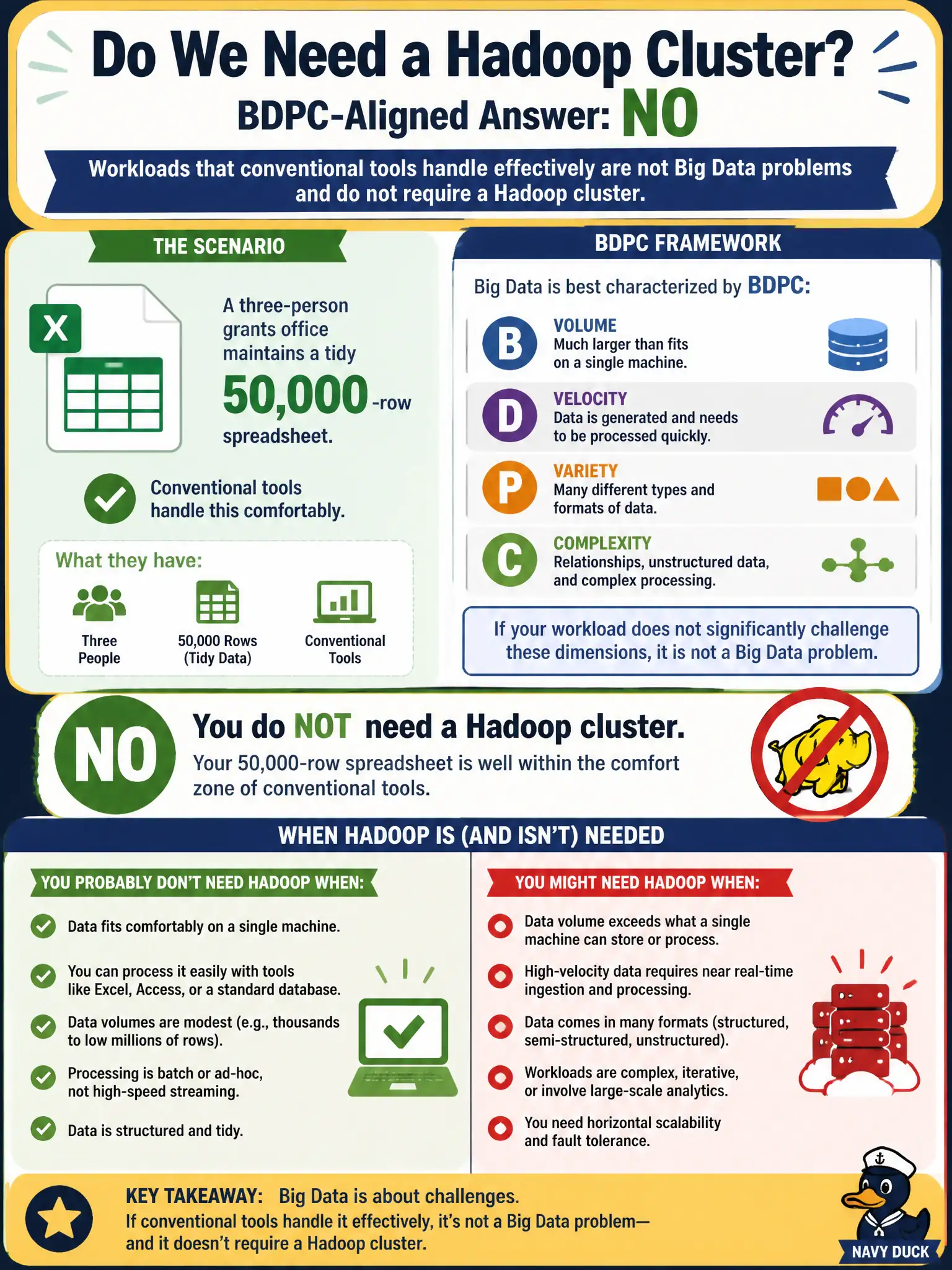
A three-person grants office maintains a tidy 50,000-row spreadsheet that conventional tools handle comfortably and asks if they need a Hadoop cluster. What is the best BDPC-aligned answer?
Select an answer to reveal the explanation.
Short Explanation
If a neat fifty-thousand-row sheet still dances fine in ordinary tools, you do not need a Hadoop parade. Big Data platforms earn their keep when the old tools choke—not because the team is small or the file exists. Save the cluster budget for a real scale fight.
Full Explanation
BDPC distinguishes Big Data workloads from conventional ones that existing tools can capture, manage, process, and analyze effectively. A tidy 50,000-row grants spreadsheet that poses no such strain does not justify a Hadoop cluster. Civic thrift means not buying distributed platforms for problems ordinary tools already solve well.
Mandating Hadoop for every spreadsheet of any size fails by concept: size alone without tooling failure is not the threshold. Mandating Hadoop because the team has three or fewer people fails by concept: headcount is not the workload test. Banning all analytics for grants because Hadoop is marketing-only fails by concept: grants data can use appropriate analytics without a false Hadoop mandate or a total analytics ban.
Exam caveat: If conventional tools handle the workload effectively, it is not a Big Data problem requiring Hadoop—row count or team size alone do not force a cluster.
Operational check: Confirm grants queries, joins, and refresh still meet SLAs on current tools; document that finding; defer Hadoop until measured Volume, Velocity, or Variety breaks those tools. Document residual risk for civic operators and revisit after the next production change window.