
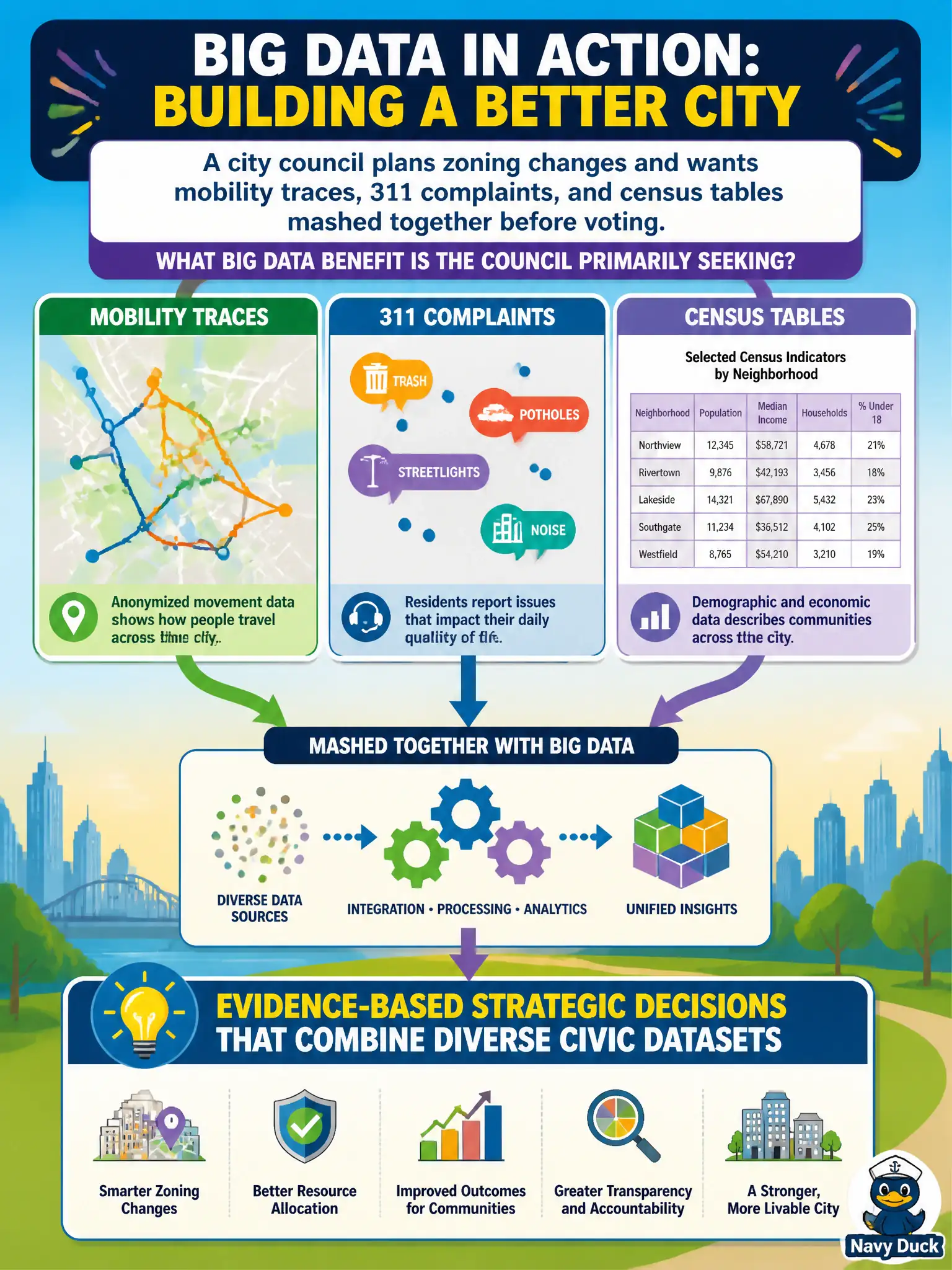
A city council plans zoning changes and wants mobility traces, 311 complaints, and census tables mashed together before voting. What Big Data benefit is the council primarily seeking?
Select an answer to reveal the explanation.
Short Explanation
Think of council as needing a wide-angle lens, not a selfie stick. Mobility, complaints, and census mashups let leaders see patterns before they redraw zones. That is strategic decision support—not a vanity metric board.
Full Explanation
Big Data’s commercial and civic value includes supporting strategic decisions with large, varied evidence rather than anecdotes or single KPIs. When a city council mashes mobility traces, 311 complaints, and census tables before zoning votes, it seeks evidence-based strategic decisions that combine diverse civic datasets. That framing keeps land-use choices accountable to multi-source public evidence.
A vanity dashboard that only tracks social-media follower growth fails by concept: follower vanity is not zoning evidence. A single spreadsheet that replaces all operational systems fails by concept: strategic mashups do not mean collapsing every system of record into one sheet. Guaranteed elimination of public hearings and stakeholder input fails by concept: analytics inform civic process; they do not erase democratic participation.
Exam caveat: The benefit is multi-source evidence for strategic decisions—not vanity metrics, monoculture spreadsheets, or abolishing public input.
Operational check: Before the zoning vote, publish which mobility, 311, and census fields informed each recommendation, and keep hearing schedules intact while using the mashup as decision support. Document residual risk for civic operators and revisit after the next production change window.