
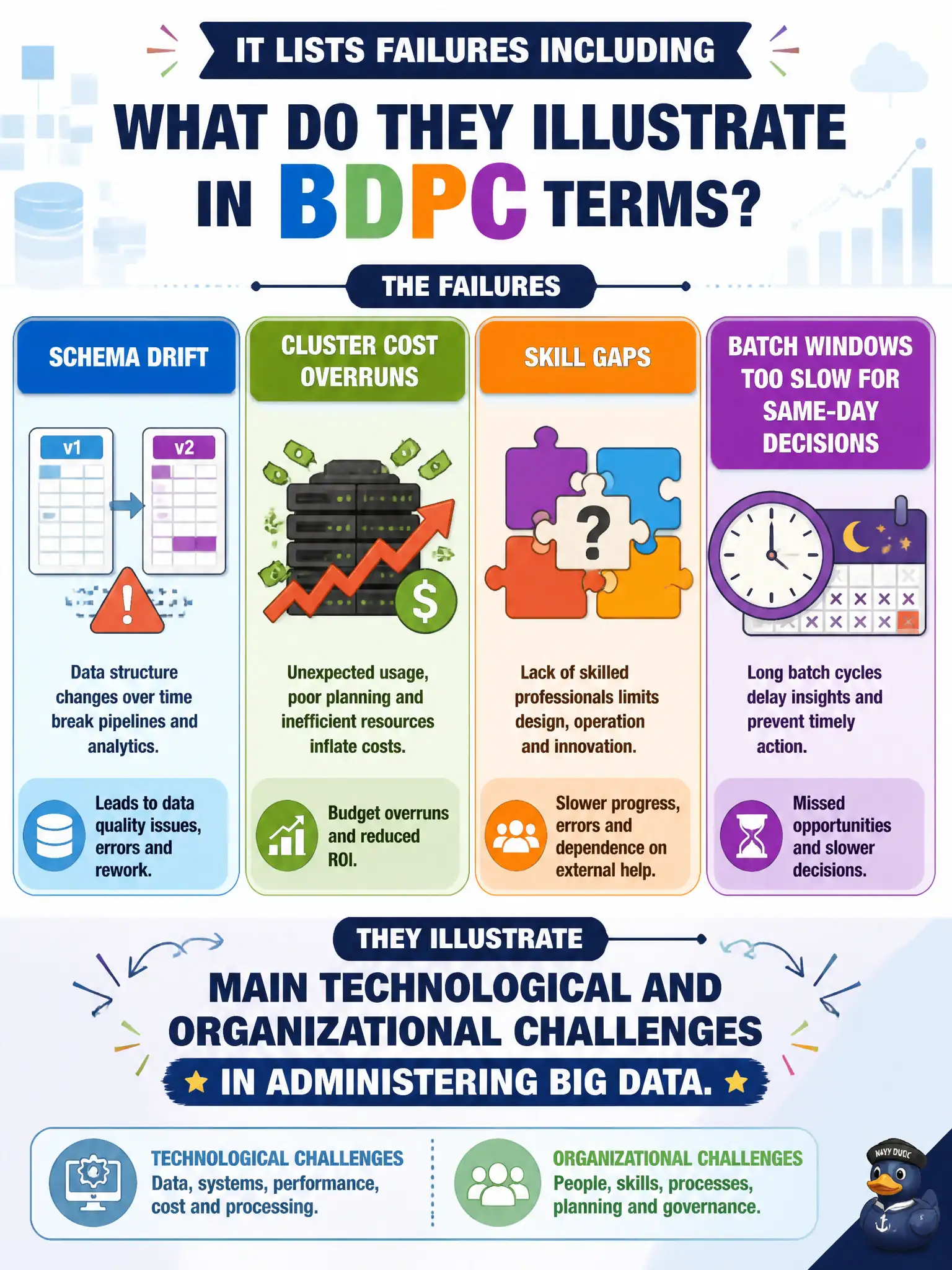
IT lists failures including schema drift, cluster cost overruns, skill gaps, and batch windows too slow for same-day decisions. What do these illustrate in BDPC terms?
Select an answer to reveal the explanation.
Short Explanation
Schema chaos, surprise cluster bills, missing skills, and batch jobs that finish after the decision deadline—that is the challenge checklist, not a victory parade. Administering Big Data means expecting those pains and planning for them. Toner jokes aside, people and platforms both strain.
Full Explanation
BDPC learning objectives include valuing main technological and organizational challenges in Big Data administration—such as evolving schemas, infrastructure cost, workforce skills, and processing latency that misses decision windows. IT listing those failures is correctly naming the challenge set so civic programs can plan remedies instead of pretending Big Data runs itself.
Claiming there are no technological or organizational challenges fails by concept: administration is full of them. Reducing issues to printer toner shortages fails by concept: consumables are not the BDPC challenge frame. Denying that skill gaps affect outcomes fails by concept: workforce capability is a recognized organizational challenge.
Exam caveat: Name technological and organizational challenges (schema, cost, skills, latency) as in-scope; do not deny them or swap them for unrelated consumables.
Operational check: Maintain a living risk register for civic Big Data programs covering schema drift, cost overruns, skill coverage, and decision-latency misses, with owners and mitigation dates. Document residual risk for civic operators and revisit after the next production change window. Confirm owners, SLAs, and rollback criteria in the runbook.